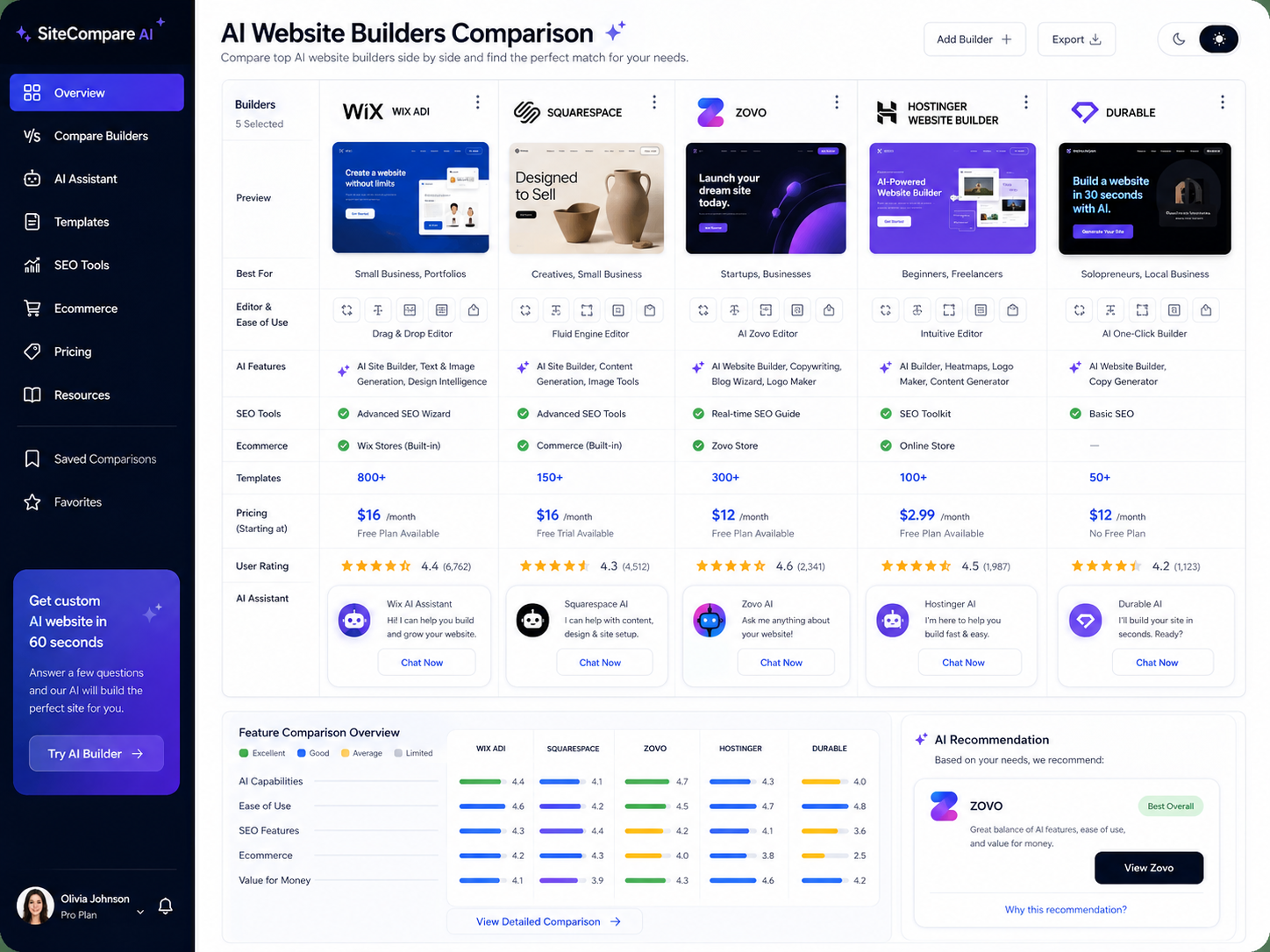
The best platform depends on what the website needs to accomplish after the first AI-generated draft appears. What is the best AI website builder? Wix is a strong overall choice for small businesses that need flexible editing and built-in business tools. Squarespace often fits brands that value polished design and a guided setup. Hostinger can suit budget-conscious users who want a fast launch, while Framer appeals to designers and startups that want more visual control. No single builder leads every category. Ecommerce features, content management, integrations, ownership, SEO controls, pricing, and future growth all affect the right choice.
Businesses should compare how well each platform supports their long-term plans instead of selecting the tool that produces the fastest homepage. AI website builders usually create a draft from a prompt or set of guided questions. That speed helps users move past the blank-page stage, but it does not guarantee a strong business website. Generated copy may remain generic, layouts may need refinement, and important conversion paths can be missing. The best platform should make later editing simple and provide enough control to improve the site after launch. A tool that creates an attractive draft but limits future changes can become expensive when the business grows.
Wix Offers A Strong Mix Of AI And Business Features
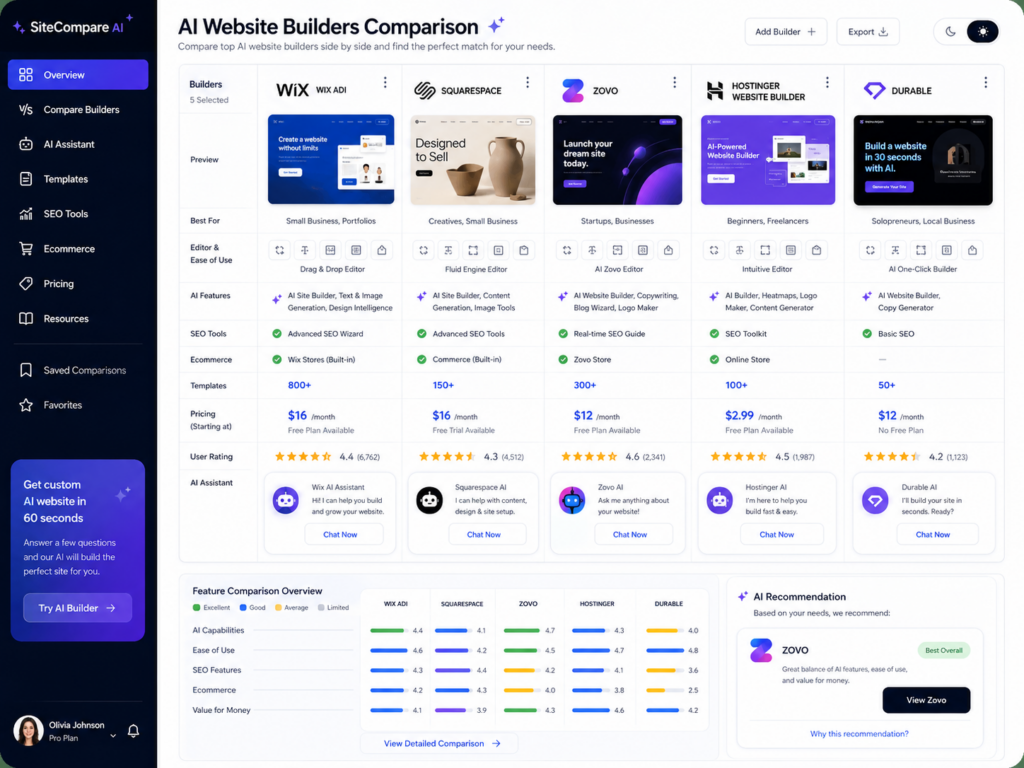
Wix remains one of the broadest options for users who want artificial intelligence without giving up visual editing. Its AI builder uses a conversational setup that asks about the business, goals, and required features before producing a tailored website. The generated draft can include relevant pages, text, images, and business functions. Users can then edit the result through the wider Wix platform. This approach makes Wix useful for service companies, restaurants, consultants, events, and smaller online stores that need more than a simple brochure site.
Its main strength comes from combining AI generation with a mature website ecosystem. Scheduling, forms, customer management, e-commerce, and marketing tools can remain inside the same platform. This reduces the need to connect many separate systems during the early stages. However, that convenience also ties the website closely to Wix. Businesses should review pricing, data portability, advanced SEO needs, and integration requirements before committing. Wix may answer what is the best AI website builder for a general small business, but a highly customized operation may eventually need a more flexible development approach.
Squarespace Blueprint AI Prioritizes Design Consistency
Squarespace Blueprint AI focuses on helping users create a personalized site through guided brand and design choices. The system asks for business information and preferences before generating a website that can be refined in the standard Squarespace editor. This makes the platform attractive to photographers, consultants, restaurants, creative professionals, and service brands that want a clean visual presentation without making every design decision manually. The AI works within Squarespace’s larger design system, which helps maintain consistent typography, spacing, and page styling.
The platform often suits businesses that value simplicity and presentation more than deep technical control. Its editor lets users adjust the generated result, but some businesses may find the platform’s structure more limiting than a fully custom site. Companies should consider how much control they need over integrations, templates, checkout functions, and future features. Squarespace can provide a polished starting point quickly, yet the finished site still needs original content, strong calls to action, and careful mobile testing before it can support serious business growth.
Hostinger AI Website Builder Emphasizes Speed And Simplicity
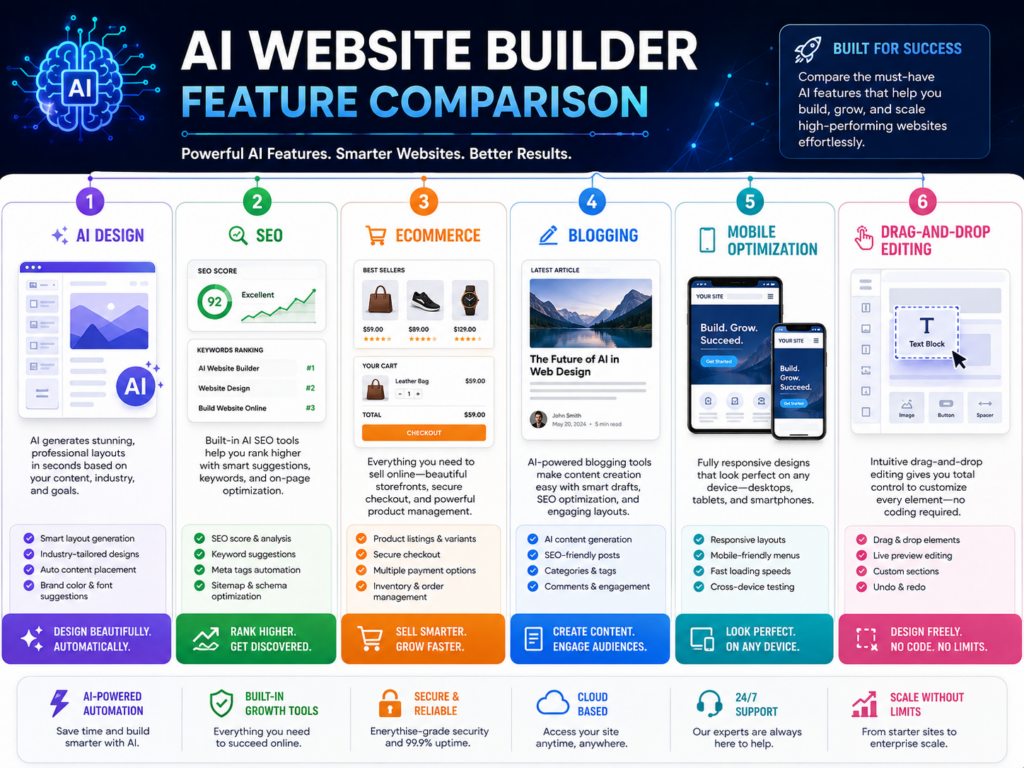
Hostinger’s AI website builder allows users to describe a site in a prompt and receive a ready-made draft that they can refine through drag-and-drop editing. The platform also connects the builder with hosting and other AI tools for content, branding, and basic website management. This packaged approach can appeal to new businesses that want to establish an online presence without managing separate hosting and design systems. Users can move from an idea to an editable site quickly, which lowers the barrier for small projects and early-stage companies.
Speed should not become the only deciding factor. A fast launch has limited value when the website cannot support future marketing, content expansion, integrations, or customer workflows. Businesses should inspect the editor, ecommerce limits, SEO settings, support options, and migration path before choosing the lowest-cost plan. Hostinger may provide enough control for a straightforward service website or small store. A company with complex requirements may need a platform that supports deeper customization. Professional Ecommerce Website Design can help businesses compare those needs before committing to a platform that may restrict future sales growth.
Framer Gives Designers More Visual Freedom
Framer combines AI-generated structure with a freeform visual canvas, content management, hosting, publishing, and SEO controls. Users can begin with a prompt, brief, blank canvas, or early design idea. This flexibility makes Framer attractive to startups, creative teams, agencies, and designers who want a modern marketing site with more visual control than many guided builders provide. The platform can generate responsive pages quickly, while the editor gives experienced users room to refine layouts and interactions in greater detail.
Framer may not suit every business workflow. A content-heavy publication, large ecommerce operation, or website that depends on specialized plugins may require a different platform. Teams should also consider who will maintain the site after launch. A visually capable editor provides little value when staff members cannot update pages confidently. Framer often performs best for polished landing pages, startup sites, portfolios, and marketing-focused websites. It becomes less obvious as the best choice when the project requires extensive business logic, advanced store management, or highly specialized integrations.

Look Beyond AI Generation Before Choosing A Platform
AI-generated websites can save hours of planning, but the quality of the finished business website depends on much more than automatic page creation. Before choosing a platform, businesses should examine editing flexibility, content management, SEO controls, analytics, security, ecommerce features, third-party integrations, and customer support. A platform that creates an attractive homepage but limits future customization may become frustrating as the business expands. Long-term growth often depends more on flexibility than on how quickly the first version of the website appears.
Businesses should also consider ownership and portability. Some website builders make it difficult to migrate content or redesign the website outside their ecosystem. Others provide greater freedom to expand into custom development later. Understanding these differences before launch helps avoid expensive migrations in the future. The best AI website builder should continue supporting the business as customer needs, products, and marketing strategies evolve.
Search Engine Optimization Still Requires Human Expertise
Most AI website builders generate page titles, headings, basic metadata, and introductory content automatically. These features provide a helpful starting point, but successful search engine optimization requires much more than automatically generated text. Businesses still need valuable content, proper keyword targeting, internal linking, technical optimization, page speed improvements, and ongoing updates. Search engines reward websites that demonstrate expertise and provide useful information rather than relying solely on automated content.
Every AI-generated page should be reviewed before publication. Generic wording should be replaced with company-specific expertise, real customer benefits, and accurate service information. Businesses that want stronger long-term visibility often combine AI-assisted development with professional Technical SEO Services to improve website performance, crawlability, and overall search rankings.
Test The Website Before Publishing
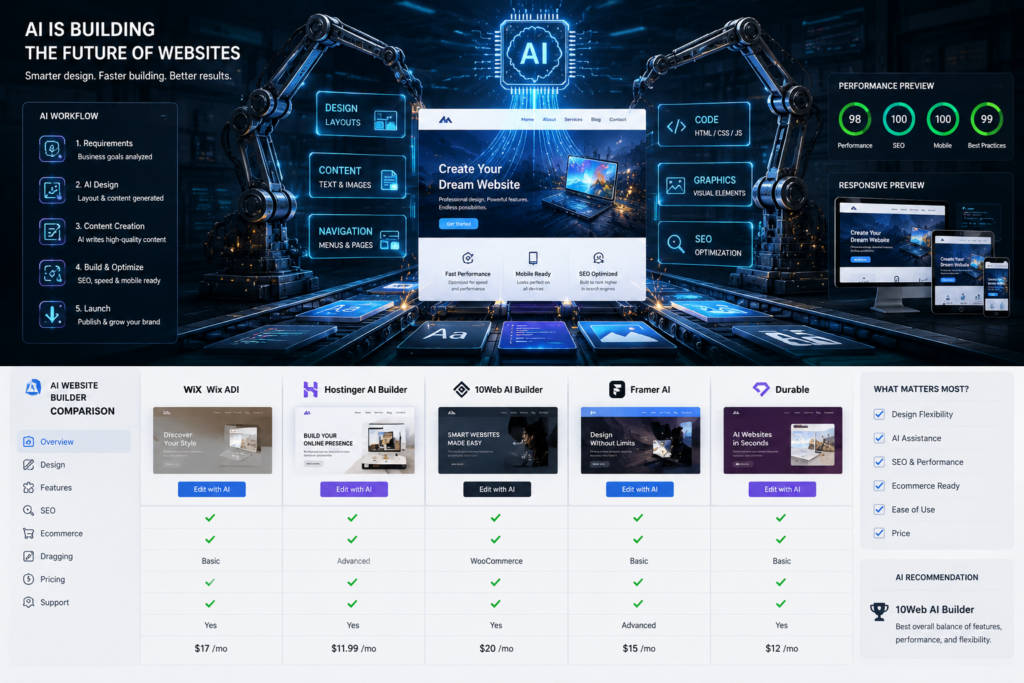
An AI-generated website should always be treated as a first draft rather than a finished product. Before launching, businesses should test every page on desktop computers, tablets, and mobile devices. Navigation should remain simple, forms should work correctly, images should load properly, and calls to action should guide visitors toward meaningful next steps. Broken links, confusing layouts, or slow-loading pages can reduce customer confidence even when the design looks professional.
It is equally important to review accessibility and usability. Visitors should be able to navigate the website easily regardless of device or browsing preferences. Testing with real users often reveals navigation problems or unclear messaging that automated systems cannot detect. Small improvements before launch usually create a better customer experience while reducing future maintenance.
When A Custom Website Makes More Sense
AI website builders work well for many small businesses, but they are not always the best long-term solution. Organizations with complex workflows, advanced ecommerce requirements, custom integrations, membership systems, or unique branding often benefit from professionally developed websites instead. Custom websites provide greater flexibility, stronger scalability, and more control over performance, security, and future development. Although custom development usually requires more time initially, it often supports business growth more effectively over the long term.
Businesses should evaluate where they expect to be several years from now rather than focusing only on immediate convenience. According to the World Wide Web Consortium (W3C), websites should prioritize accessibility, usability, and open web standards regardless of how they are created. AI can accelerate development, but thoughtful planning and professional implementation remain essential for building high-quality digital experiences.
Conclusion
What is the best AI website builder? The answer depends on the business. Wix offers a strong balance of AI generation and business tools, Squarespace emphasizes polished design, Hostinger focuses on simplicity and affordability, and Framer provides greater creative flexibility for designers. Each platform serves different needs, so businesses should compare editing freedom, scalability, SEO capabilities, integrations, and long-term ownership before making a decision.
The most successful websites combine the speed of artificial intelligence with careful human planning, editing, and optimization. AI can create an excellent starting point, but professional strategy transforms that draft into a website that supports marketing, lead generation, and business growth. Companies looking for expert guidance beyond AI-generated templates often partner with Best Website Builder Group to build websites designed for long-term performance and measurable results.