Dealer website design case study: Hartville Golf Carts From a Thanksgiving 2022 launch to one of the fastest growing golf cart dealers in the country.
This dealer website design case study follows a golf cart startup that opened with a brand new domain and zero rankings. Three years later it serves 98,000 users a year, ranks for more than 9,000 keywords, sells carts in the off season, and has grown into a group of showrooms and a second dealership.
Hartville Golf Carts began as an expansion of Hartville Outdoor Products. The building lot had grown so big that the owner bought golf carts to drive shoppers around it, then decided he could sell them too. We launched the site at Thanksgiving 2022 on a brand new domain, with no rankings, no reviews and no history.
The timing was right. Golf carts have grown from course equipment into everyday transportation. A family can take a Denago Rover XL to the grocery store around the corner without spending a dollar on gas. Buyers were searching, comparing makes and learning, and they needed a dealer that could answer them.
Three years later Hartville Golf Carts is one of the fastest growing golf cart dealers in the country, with showrooms in Hartville, Medina and Mentor, more locations reaching from Ohio toward New York, and a second company, Mentor Golf Carts & Trailers. It sells carts all year, even in the off season.
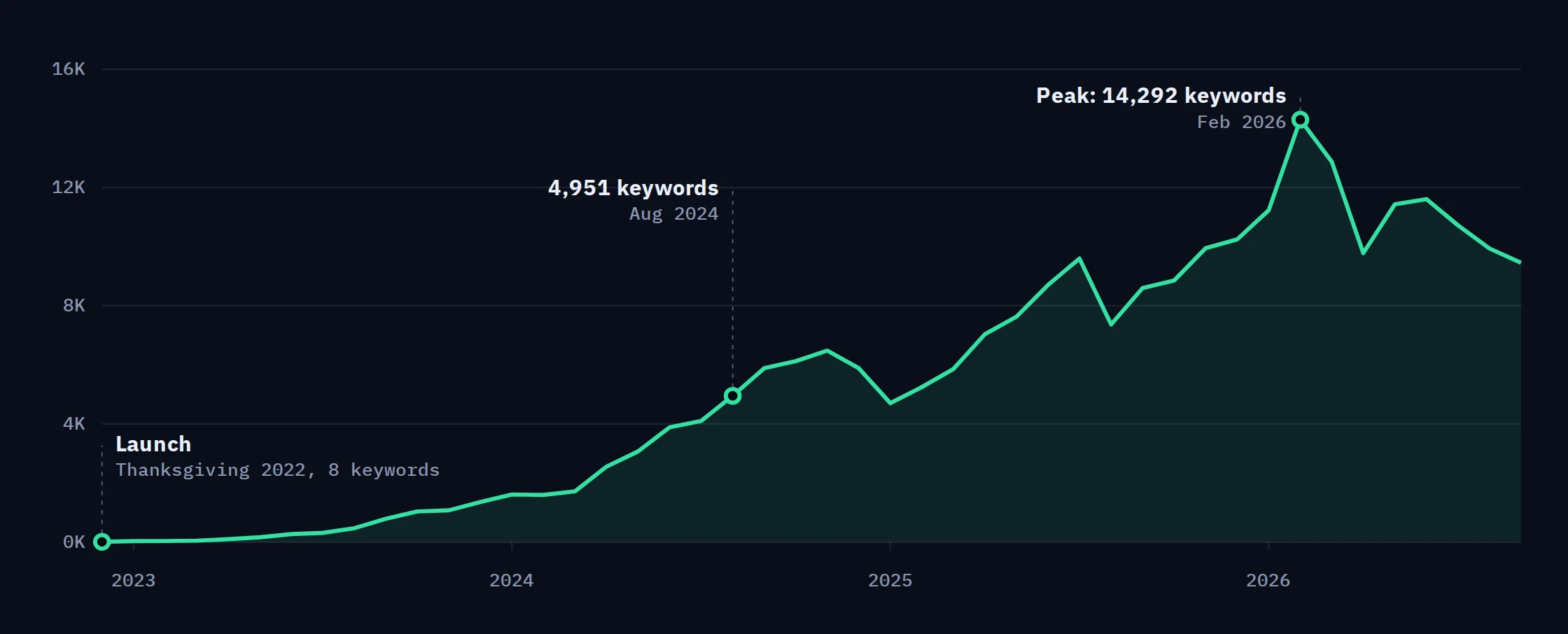
The site launches at Thanksgiving with 8 ranking keywords.
Oct 2023
Ranking keywords pass 1,000 in under a year.
Aug 2024
Nearly 5,000 keywords and 95 in Google’s top three.
2025
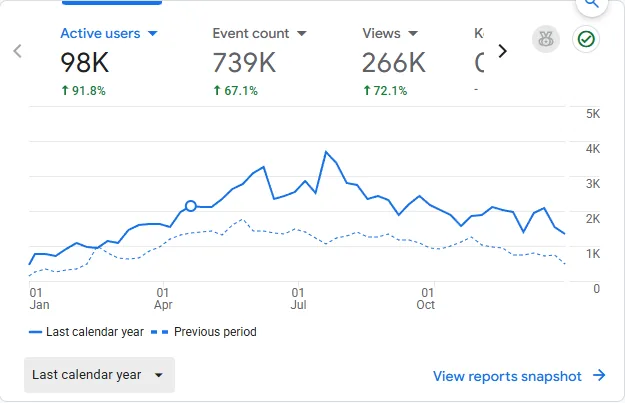
98,000 users for the year, up 91.8%.
Jan 2026
218 keywords in Google’s top three.
Feb 2026
Ranking keywords peak at 14,292.
Aug 2026
29 new model pages built and shipped in one batch.
2026
The same system now runs Mentor Golf Carts & Trailers.
The build
Golf carts sell on sight.
A shed buyer reads. A golf cart buyer looks. This is a vehicle that can sell itself in one good photo, so every template was built around imagery first, then the facts, then a fast path to a person.
A homepage that gets to the point
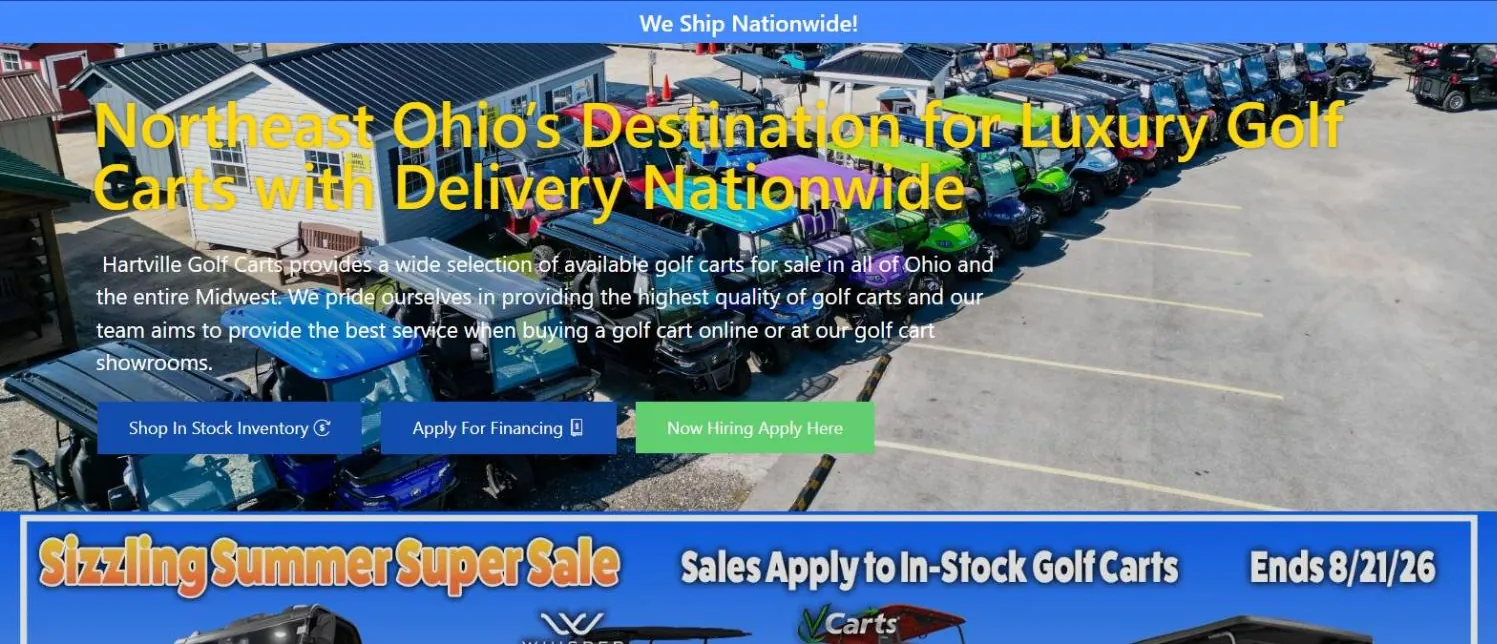
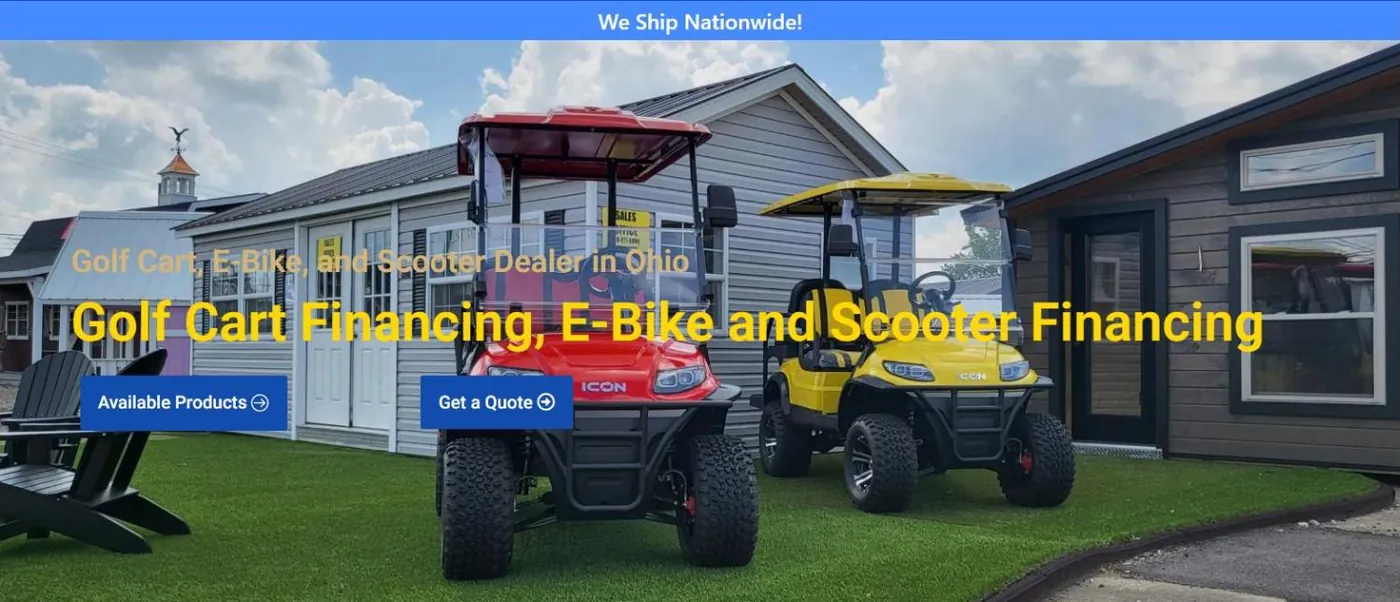
The top bar carries a phone number for every showroom and a link straight to in-stock inventory. The banner says what the dealership is, where it is, and that it ships nationwide, with buttons for inventory and financing.
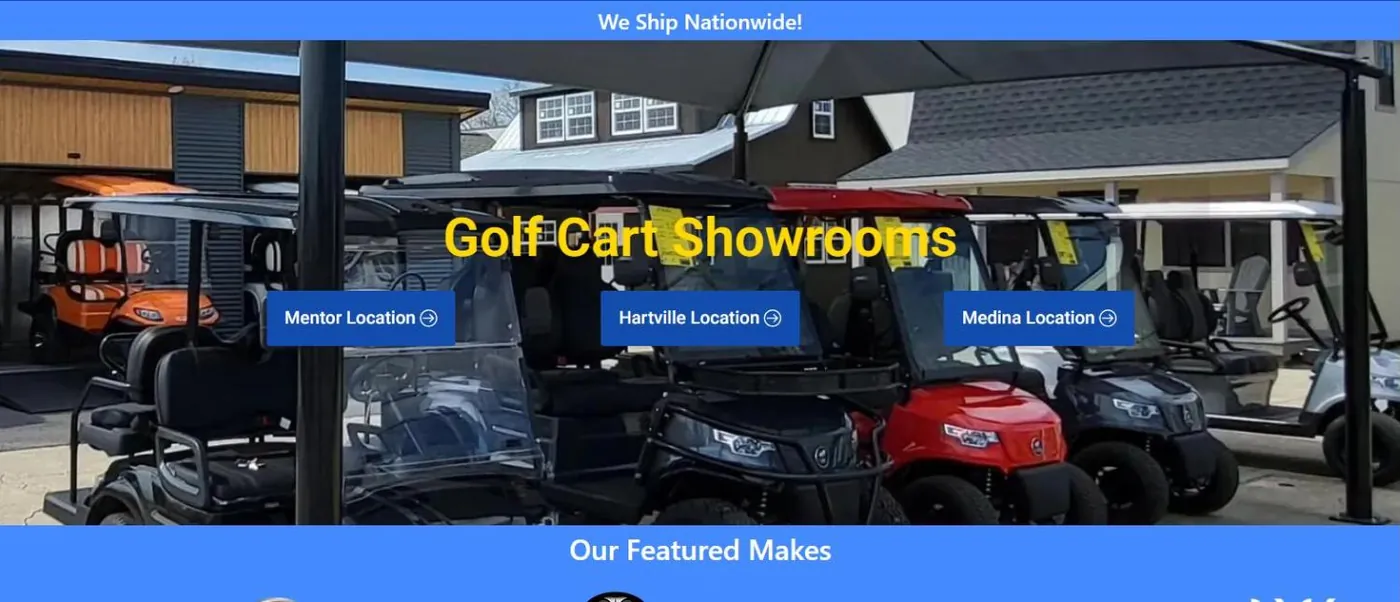
Below it, the homepage speaks to every part of the business in order: the current sale, the featured makes, the latest in-stock carts by brand, financing, the service department, e-bikes and scooters, and a button for each showroom.
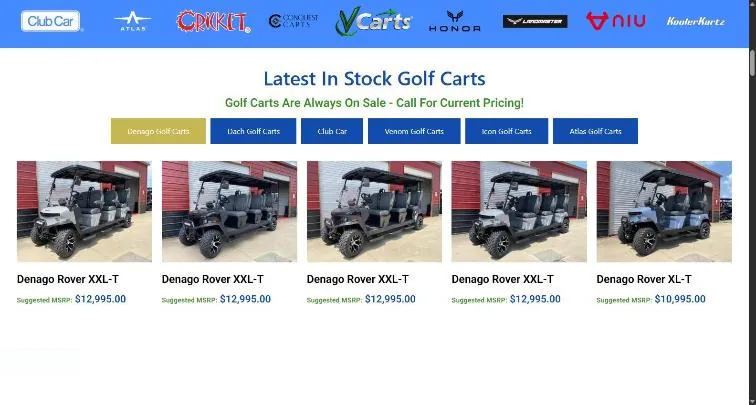
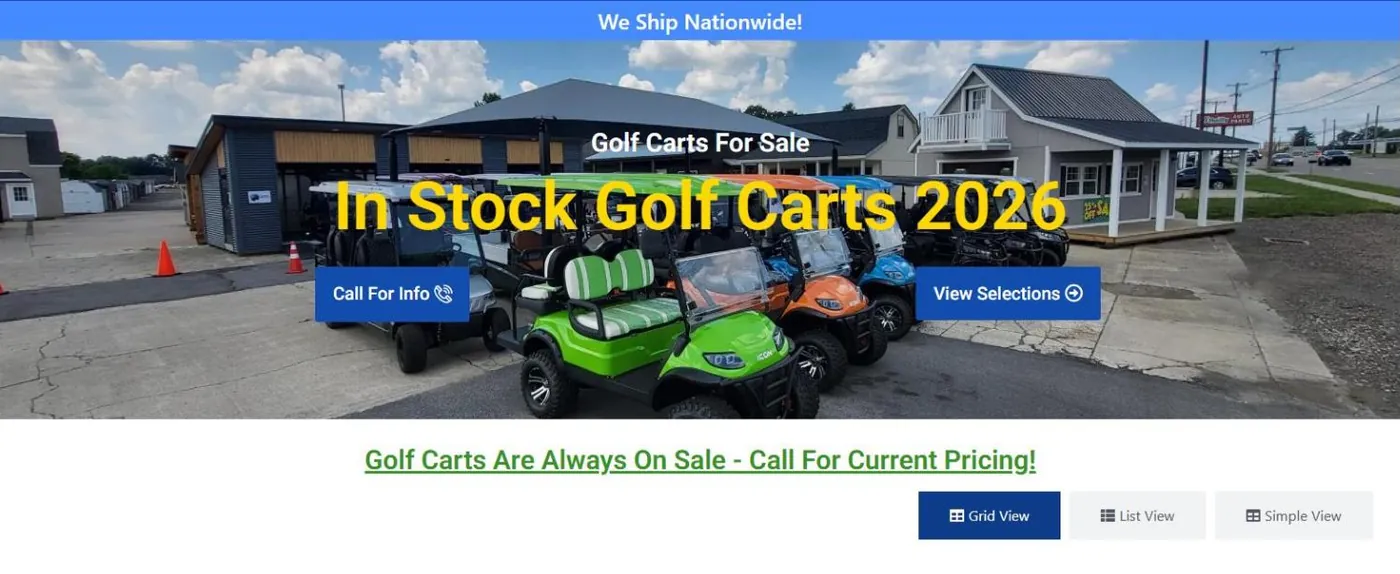
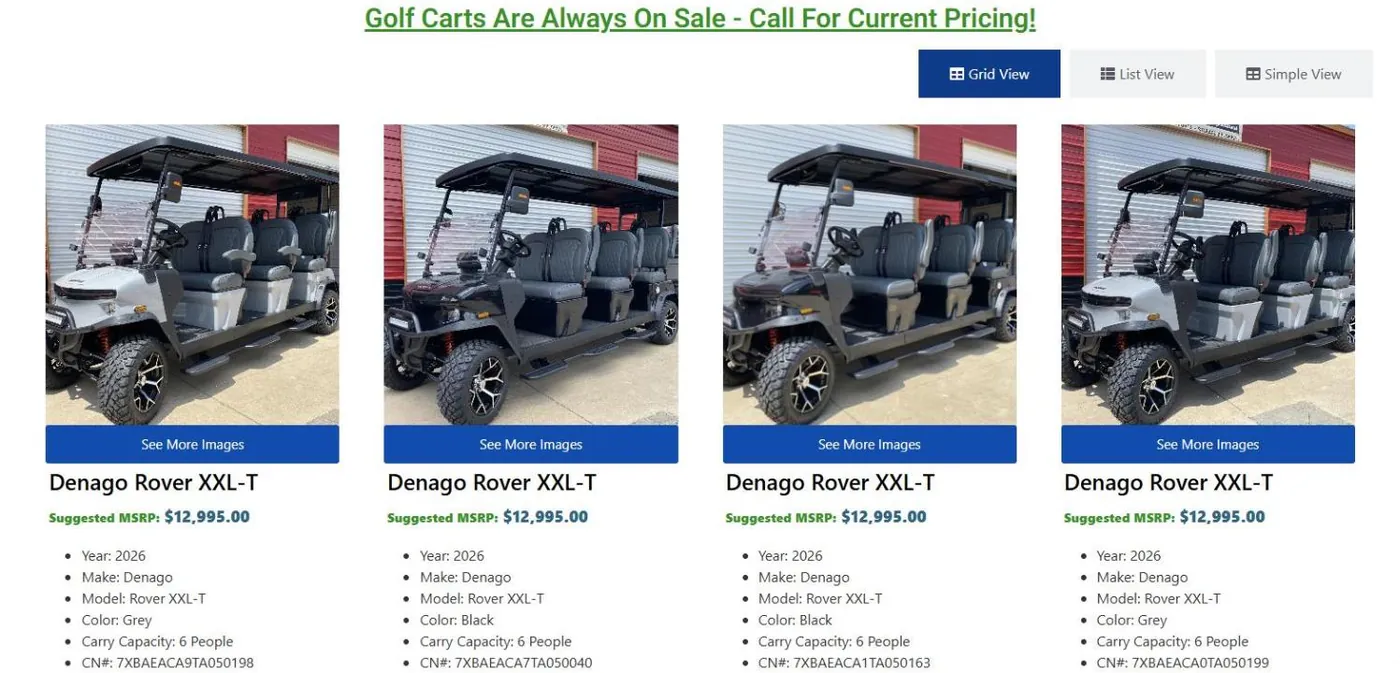
The in-stock collection gives shoppers three views: a grid that shows off the photos, a list view and a simple view for fast comparison. We launched with the photo-first view on purpose, because the carts are the advertisement.
Every card carries the suggested MSRP, year, make, model, color, seating and the cart’s CN number, then four actions: get pre-qualified, request a quote, view details and get financing, with the showroom phone right underneath.
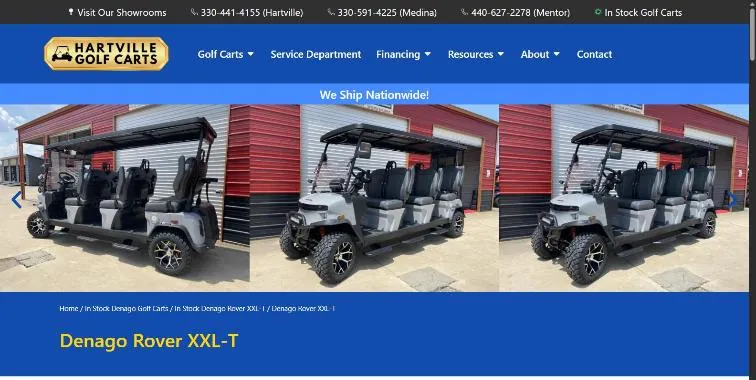
Product pages open with a full-width carousel, three photos per slide, sitting right under the menu. It was a risky call across so many phones and tablets, and it paid off: shoppers interact with the carts more, and more of them move on to a quote.
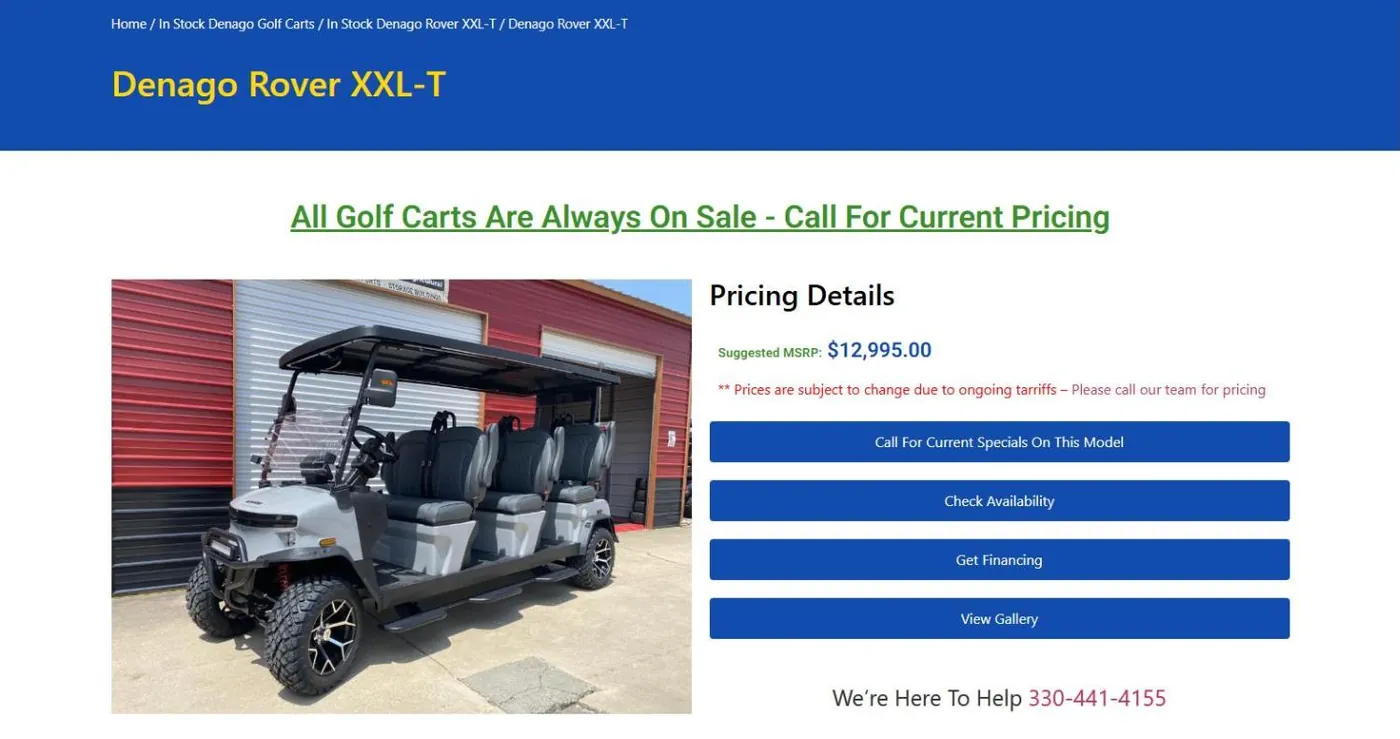
Below the carousel, a pricing block with four clear actions, a no-impact prequalify band, the full cart details, and long-form copy written for the searches that matter locally, such as new golf carts for sale in Medina, Ohio.
Three photos per slide across the full width of the screen.
Specials, availability, financing and gallery one tap away from the price.
Every brand on the lot gets a make page, and every model gets its own landing page. These pages are built to educate a buyer, help them navigate to the right cart, and eventually buy it. They rank fast. More than once, new model pages hit page one of Google within hours of going up, and the team started saving pages as drafts until they were finished, because unfinished pages were already ranking.
Make pages that honor the brand
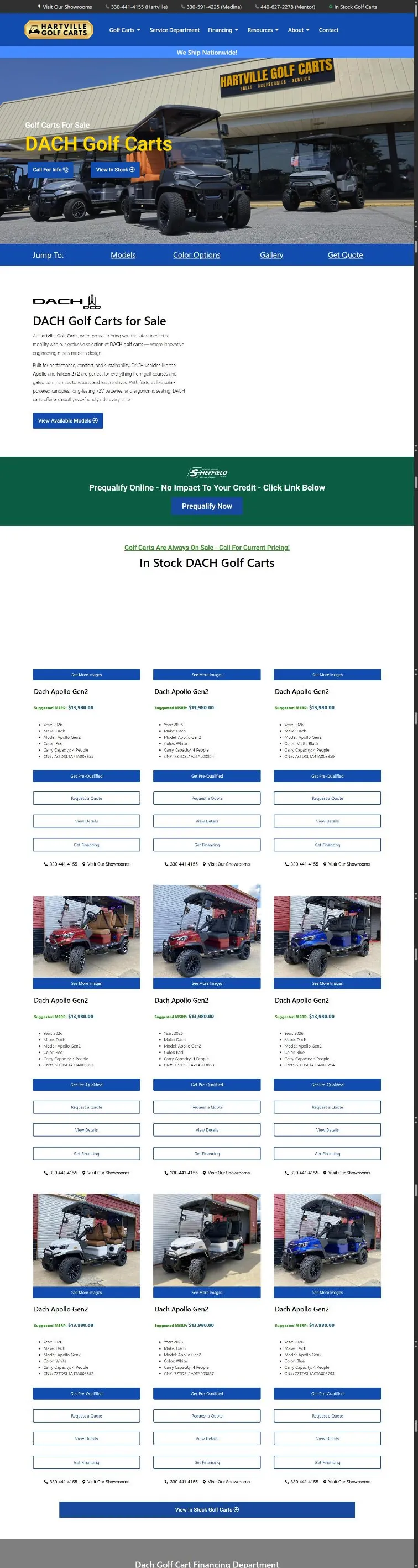
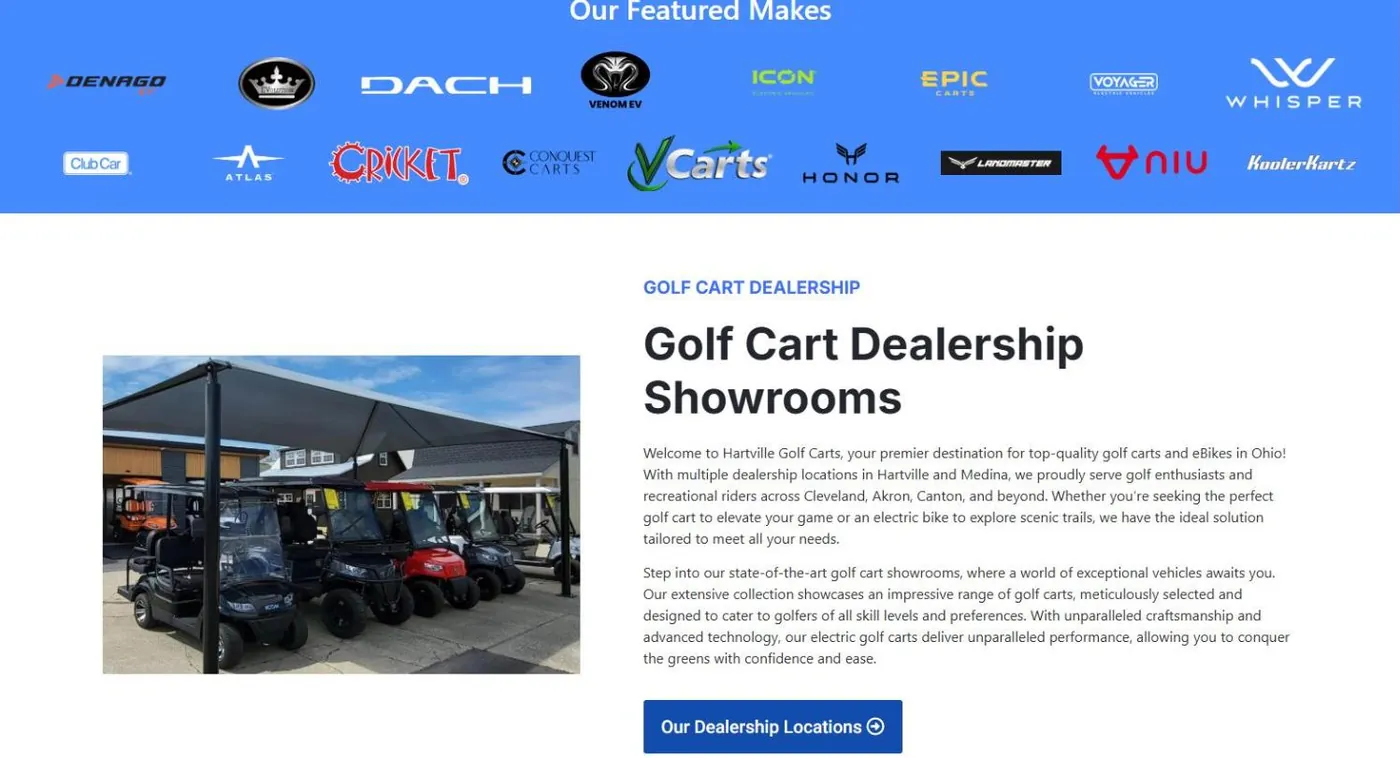
Each make page pays homage to a partner brand: a hero photo of that brand’s carts at the dealership, a jump bar to models, colors, gallery and quotes, the brand’s own logo and story, a prequalify band, and every in-stock cart from that maker, each with its own price and actions.
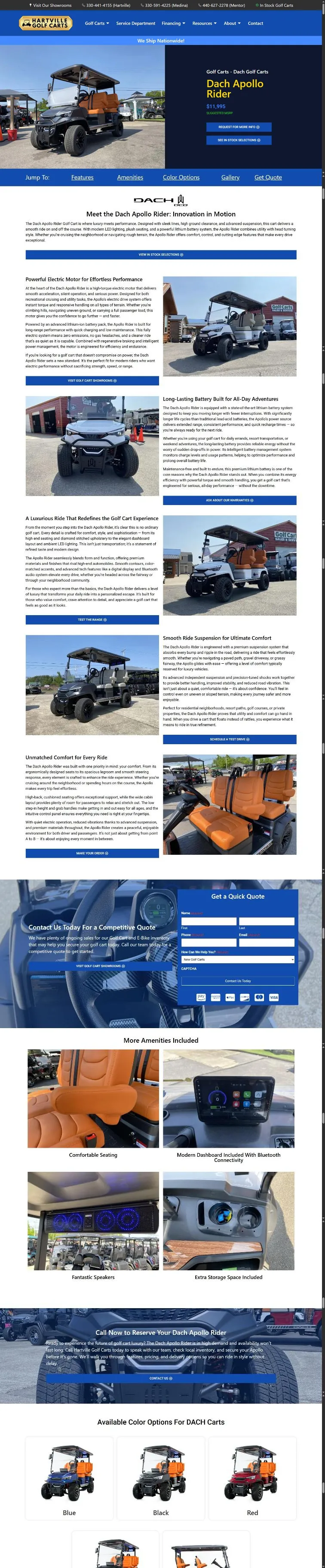
Model pages open with a split hero: the cart on one side, the name, suggested MSRP and two calls to action on the other. A jump bar leads to features, amenities, colors, gallery and quotes. Then alternating feature rows for the motor, battery, ride, suspension and comfort, each written from the manufacturer’s real specifications and each ending in its own call to action.
A quote form, an amenities grid and every available color close the page. The template is cloned from one master page, which is how 29 new model pages shipped in a single batch this summer. Even niche models pull their own traffic: the Dach Apollo Rider page drew about 70 visits last month, with strong engagement time.
Most dealer websites run on the same vendor templates as every other dealer in town, and most dealer advertising stops working the day the budget stops. This system builds dealer websites with pages that keep working for years, then points every one of them at a person.
A page for every model
Make and model landing pages for 18 brands, each one able to rank on its own for the exact cart a buyer types.
Real manufacturer specs
Every spec comes from the maker's own pages, never invented, so buyers and search engines get facts they can trust.
Jump bars everywhere
Make and model pages open with a jump bar, so a shopper can skip straight to colors, gallery or a quote.
A call to action per section
Every feature row ends in a button: test drive, warranties, showrooms, order. Nobody scrolls into a dead end.
Financing on every card
A no-impact prequalify band and a Get Financing button on every cart turn browsers into qualified buyers.
Local and national
Copy written for Medina, Cleveland, Akron and Canton shoppers, with nationwide delivery for everyone else.
Hartville Golf Carts launched with 8 ranking keywords. It passed 1,000 within a year and peaked at 14,292 in February 2026, with 218 in Google’s top three. In 2025 the site served 98,000 users, up 91.8%, who viewed 266,000 pages.
Ranking organic keywords, US
Source: Semrush, Dec 2022 to Sept 2026
+91.8%
Users in 2025, 98K for the year (GA4)
266K
Page views in 2025, up 72.1%
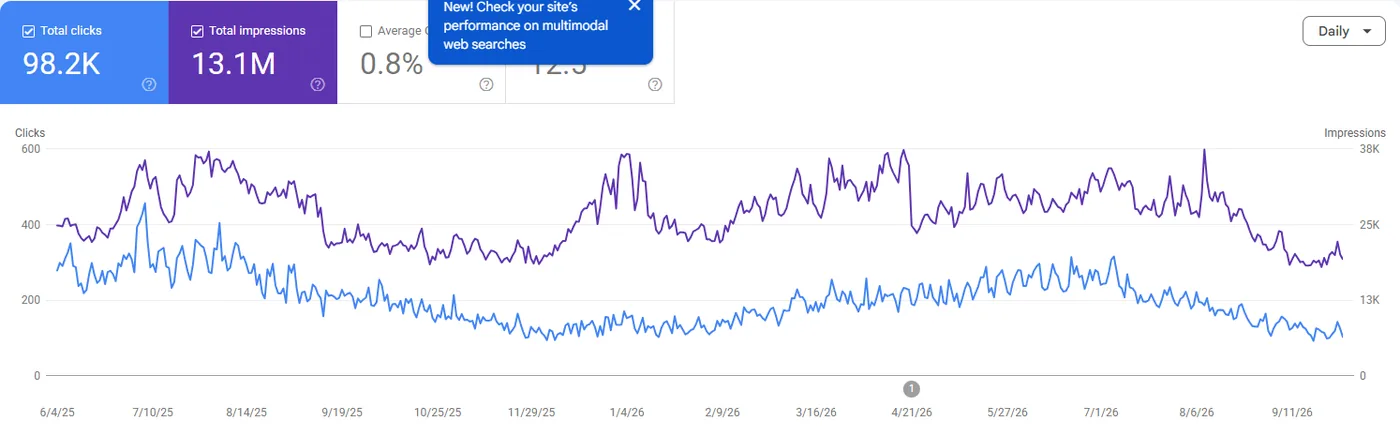
98.2K
Google clicks in 16 months, from 13.1M impressions
82,436
Unique visitors since launch, bots excluded (Clarity)
Google Search Console
Search Console, web search, June 2025 to October 2026.
Google Analytics 4, 2025
GA4, last calendar year.
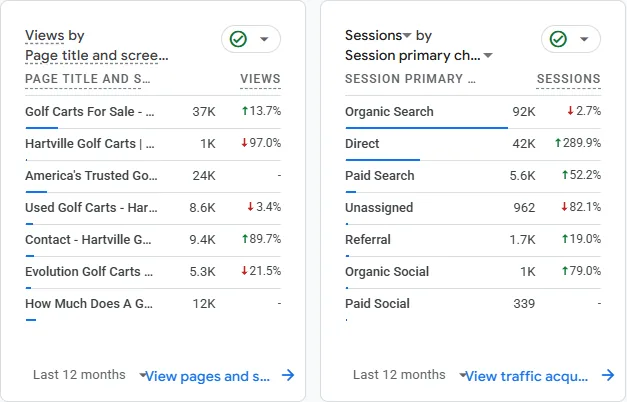
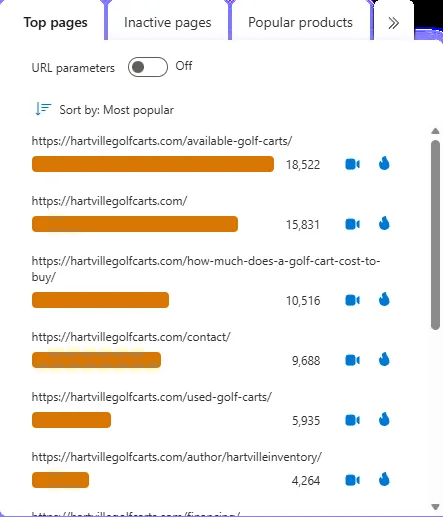
Top pages and channels
GA4, last 12 months. Organic search brought 92K sessions.
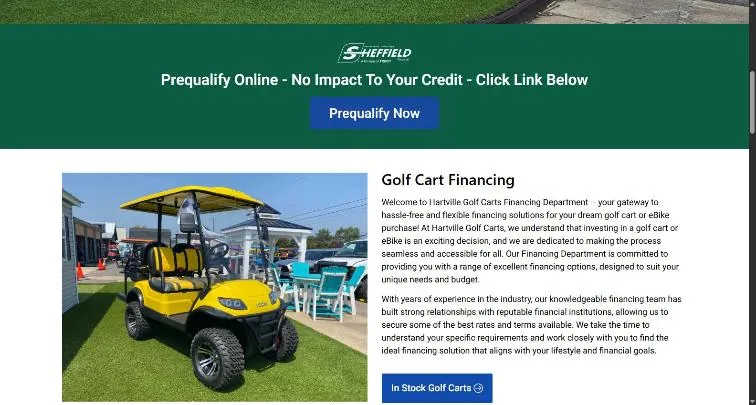
The financing page covers golf carts, e-bikes and scooters, and opens with a prequalify band that has no impact on the buyer’s credit. That same band and a Get Financing button appear on every make, model and product page, so the payment question gets answered where the buyer is already looking.
The showrooms page puts all three locations up front, Hartville, Medina and Mentor, then the 18 makes on the floor and copy written for shoppers across Cleveland, Akron and Canton. Each location gets its own section and call to action, and the contact page views grew 89.7% in the last year.
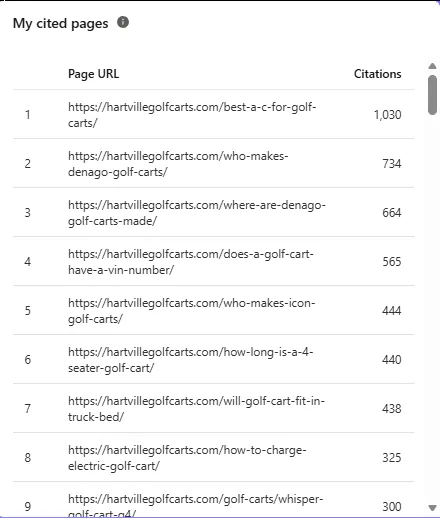
AI assistants have cited Hartville Golf Carts 18,266 times, a 22.30% share of every citation across the questions it appears in. Buyers ask who makes Denago carts, whether a golf cart has a VIN, or which air conditioner fits a cart, and the answers point back here.
But nobody hands over $12,000 on an AI’s word. On a high-ticket purchase, buyers still go to the dealer’s website to check the inventory, the showrooms and the people. Credibility is the part that does not change, and it is where this site wins.
Most cited pages
Best AC for golf carts
1,030
Who makes Denago golf carts
734
Where are Denago golf carts made
664
Does a golf cart have a VIN number
565
Who makes Icon golf carts
444
How long is a 4 seater golf cart
440
AI citations per page, Microsoft Clarity (Copilot and partners), Nov 2022 to Oct 2026.
Questions that turn into visits
The How Much Does A Golf Cart Cost article alone has drawn 10,516 sessions since launch, the third most visited page on the site. Answers like that bring in buyers who are still deciding, and the inventory is one click away when they are ready.
Hartville Outdoor Products grew big enough to start Hartville Golf Carts. Hartville Golf Carts grew big enough to start Mentor Golf Carts & Trailers. The same design, development and search system runs all three, and together the golf cart side has sold 1,800 carts and opened four locations in three years.
Off-page SEO and strategy run through Studio 23 Group, part of the Best Website Builder Group network, so the whole group answers to one team.