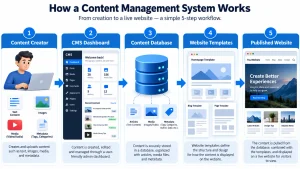
Understanding how to show up in AI Overviews starts with checking whether Google can access and use your page. There is no separate magic tactic, and completing an optimization checklist does not guarantee inclusion.
This guide focuses on Google AI Overviews and AI Mode. It explains what to check, how to identify missing customer information, and how to record results. Keep these Google features separate from other AI assistants when evaluating visibility.

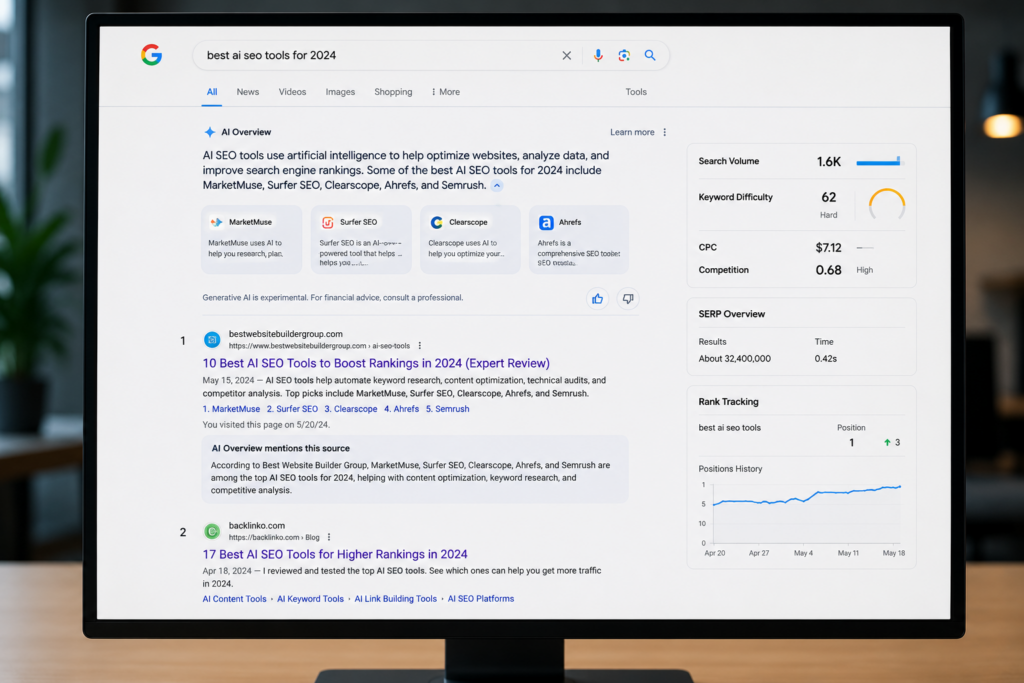
How AI Overviews Select Information
AI Overviews do not simply pull information from the highest-ranking page. Instead, they analyze multiple sources and attempt to generate a concise answer based on information they consider reliable and relevant. This means websites with strong expertise can sometimes contribute to AI-generated responses even if they are not ranked in the first position.
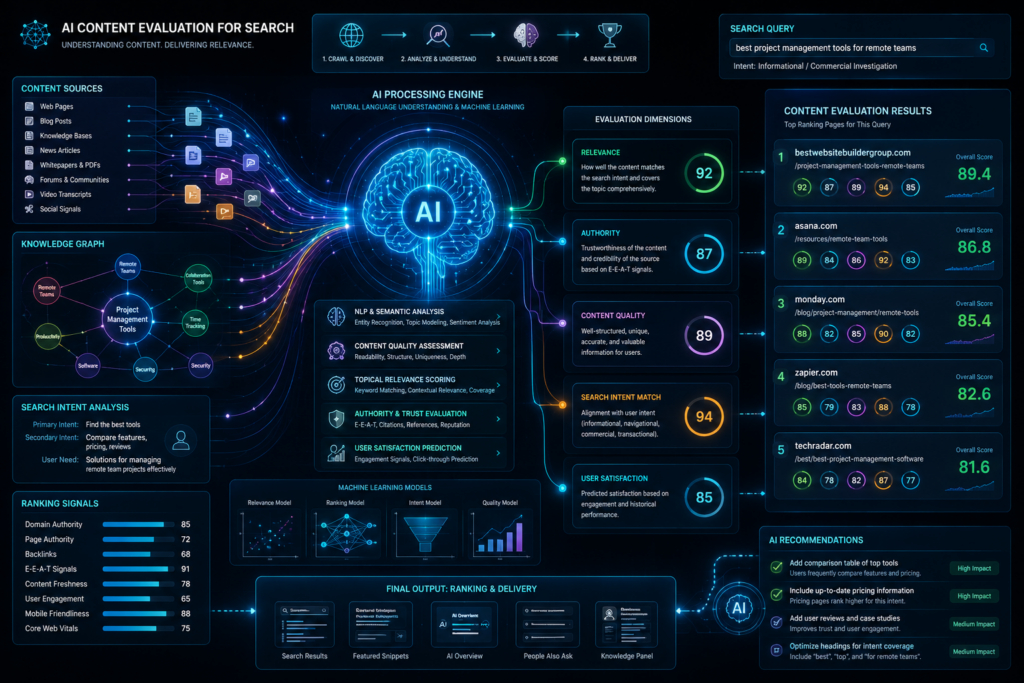
Search engines evaluate factors such as topical relevance, content quality, authority, clarity, and overall trustworthiness. Content that directly answers questions and covers a topic comprehensively often performs better than content designed solely around keyword placement. Businesses trying to improve visibility in AI-generated results should focus on providing valuable information rather than chasing individual ranking signals. The goal is to become a source that search engines trust when generating answers for users.
Create Content That Answers Questions Clearly
One of the most effective ways to improve your chances of appearing in AI-generated summaries is to answer questions directly and clearly. Many AI Overviews are triggered by informational searches where users want straightforward explanations. Content that immediately addresses the topic often performs better than content that delays the answer.
For example, if an article discusses a specific concept, the opening section should explain it clearly before expanding into supporting details. This structure helps both users and search engines understand the content quickly. Clear explanations also make it easier for AI systems to extract useful information when generating summaries. Businesses should focus on solving user problems and answering real questions rather than creating content solely to satisfy search algorithms.
Example: Diagnose A Missing Customer Answer
Demonstration only: A flooring installer wants to answer whether installation includes removing existing flooring. This is an illustrative review, not evidence that a real website appeared in an AI response.
| Check | What To Examine |
|---|---|
| Access and indexing | Can Google access the intended page, and is that URL indexed? |
| Snippet eligibility | Are preview restrictions affecting the information available? |
| Visible information | Does the page actually explain removal and disposal? |
| Supporting evidence | Does the wording match the business’s current service scope? |
| Missing question | Does the page explain when removal costs extra or requires inspection? |
| Appropriate improvement | Add the verified answer to the existing installation page. |
The improvement gives customers information they need. It does not prove that Google will select the page. Do not create a cluster of repetitive articles simply to surround the service with more keywords.
Use Structured Content That Is Easy To Interpret
Content structure plays an important role in helping search engines interpret information. Clear headings, logical organization, and well-defined sections make it easier for AI systems to understand the relationships between concepts. When information is presented in a clear format, search engines can process it more efficiently.
Articles should progress logically from basic explanations to more detailed discussions. Each section should focus on a specific aspect of the topic while supporting the overall theme. Strong structure benefits users as well because it improves readability and helps readers locate information quickly. Content that is easy to understand is often easier for AI systems to analyze and incorporate into generated responses.
Strengthen E-E-A-T Signals Across Your Website
Experience, expertise, authoritativeness, and trustworthiness continue to play a significant role in search visibility. Search engines want to provide users with information that is accurate and reliable. Websites that demonstrate real expertise are more likely to become trusted sources.
Author profiles, detailed content, transparent business information, and accurate citations all contribute to stronger trust signals. Businesses should also ensure that content reflects genuine knowledge rather than surface-level summaries. AI-generated answers depend on reliable source material, making trustworthiness especially important. Companies investing in long-term visibility often improve site quality through initiatives such as Website Maintenance to ensure content remains accurate, secure, and up to date.
Optimize For Search Intent Instead Of Keywords Alone
Keyword targeting remains important, but search intent has become equally critical. Users perform searches with specific goals, whether they are seeking information, comparing options, solving problems, or preparing to make decisions. AI-generated results aim to satisfy these goals directly.
Content that aligns closely with user intent often performs better than content focused exclusively on keyword repetition. Understanding what users actually want allows businesses to create pages that provide more useful answers. This relevance helps search engines determine whether content should be included when generating AI summaries. The best content often anticipates follow-up questions and provides supporting information that helps users fully understand the topic.
Separate Mentions, Citations And Recommendations
For reporting, record these as different observations. A mention names the business. A citation links to a source page. A recommendation suggests the business as an option. An answer can contain one without the others.
Record the actual wording and destination URL rather than calling every appearance a recommendation. A link supporting a factual explanation does not necessarily endorse the business. One observed answer also does not establish consistent visibility across other questions, locations, or systems.
Establish A Baseline And Measure Carefully
Before editing, choose a fixed set of customer questions. Keep the wording unchanged during comparisons. Record the date, platform, search mode, language, location setting, and session context. Save the full answer and linked sources, including checks where no AI answer or business appearance occurs.
Use the following record for each check:
| Record | What To Save |
|---|---|
| Exact question | The unchanged query or prompt. |
| System | AI Overview, AI Mode, or a separately identified assistant. |
| Test context | Date, location, language, device, and relevant session settings. |
| Observed result | No appearance, mention, citation, or recommendation. |
| Evidence | Full answer capture and exact linked URL. |
| Website changes | What changed and when it was published. |
Repeat the checks under comparable conditions. A before-and-after difference is an observation, not proof that a particular edit caused it.
Google’s Generative AI performance report provides impression data for AI Overviews and AI Mode. Its absence can reflect insufficient impressions. Review that data alongside overall Search performance and website outcomes. An impression is not a visit, and a visit is not a qualified inquiry.
The Growing Role Of AI In Search Results
AI-generated search features are likely to become more common as search engines continue investing in artificial intelligence. These systems aim to provide users with faster and more useful answers while still directing them toward reliable sources for deeper information.
According to the National Institute of Standards and Technology (NIST), artificial intelligence continues influencing how information is processed and delivered across digital environments. As AI capabilities improve, content quality and credibility will likely become even more important ranking considerations. Businesses that focus on expertise, trust, and user value are often best positioned to benefit from these ongoing changes.

Conclusion
Learning how to show up in AI Overviews begins with eligibility, accurate information, and a page that answers a genuine customer question. Useful content and technical access matter, but neither guarantees selection.
Establish a baseline before editing, preserve reviewable evidence, and distinguish citations from recommendations. Best Website Builder Group can help you discuss an audit focused on your website’s technical access, content gaps, and measurement needs.