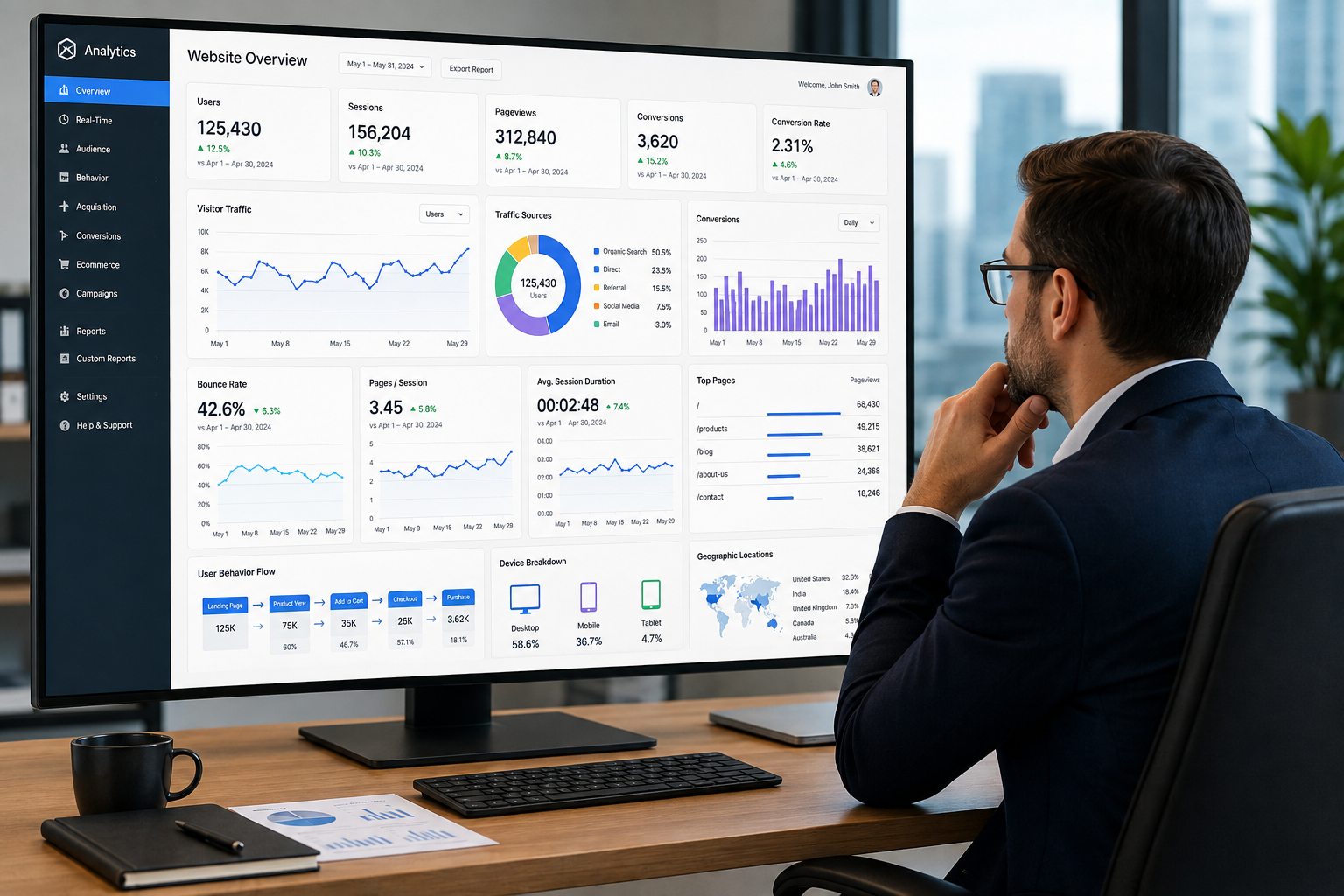
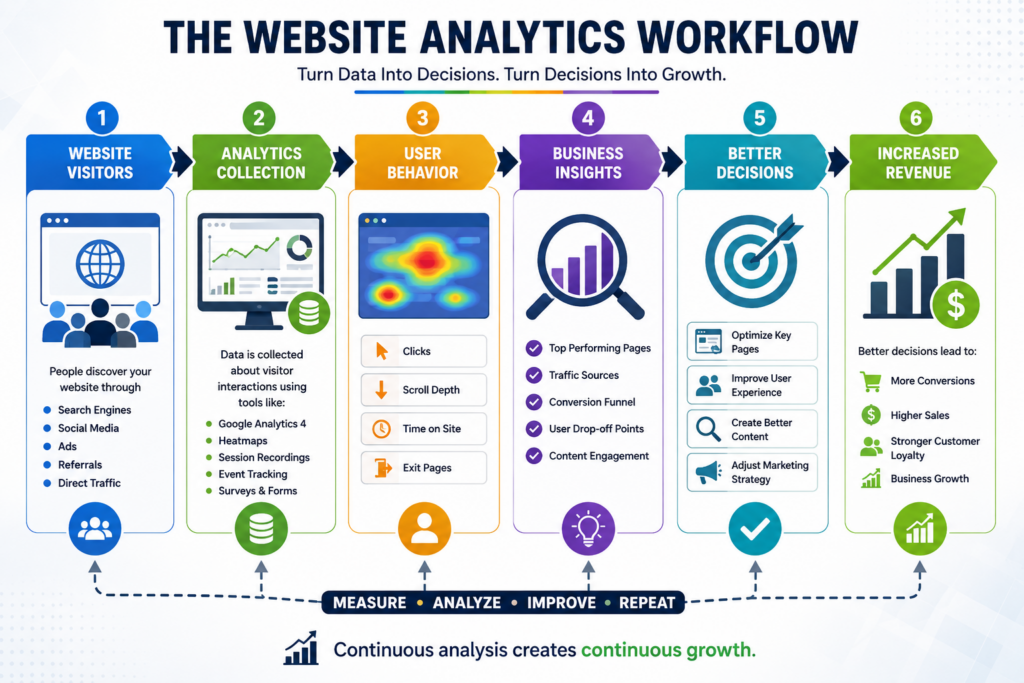
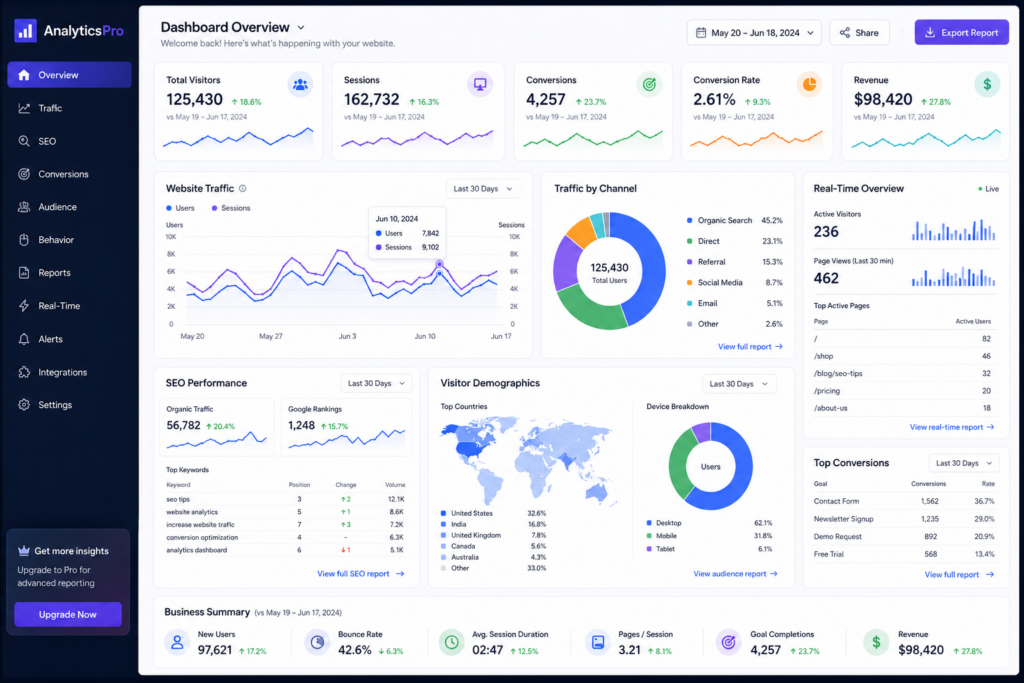
A business website can attract hundreds or thousands of visitors, but traffic alone does not explain whether the site supports growth. How can businesses benefit from using analytics on their website? Website analytics show where visitors come from, which pages they view, how long they stay, what actions they take, and where they leave. These insights help businesses improve marketing, strengthen user experience, increase conversions, and make better decisions based on real customer behavior.
Instead of guessing which pages work, companies can see which content attracts interest and which sections create friction. Analytics also reveal whether advertising, social media, email campaigns, and search engine optimization generate valuable traffic. When businesses review this information regularly, the website becomes more than an online presence. It becomes a measurable business tool that supports smarter planning and long-term growth. The real value comes from connecting data to action. A high traffic number may look encouraging, but it means little if visitors do not contact the business, request a quote, or complete a purchase. Analytics help teams move beyond surface-level metrics and focus on behavior that supports actual goals.
Analytics Reveal Where Website Visitors Come From
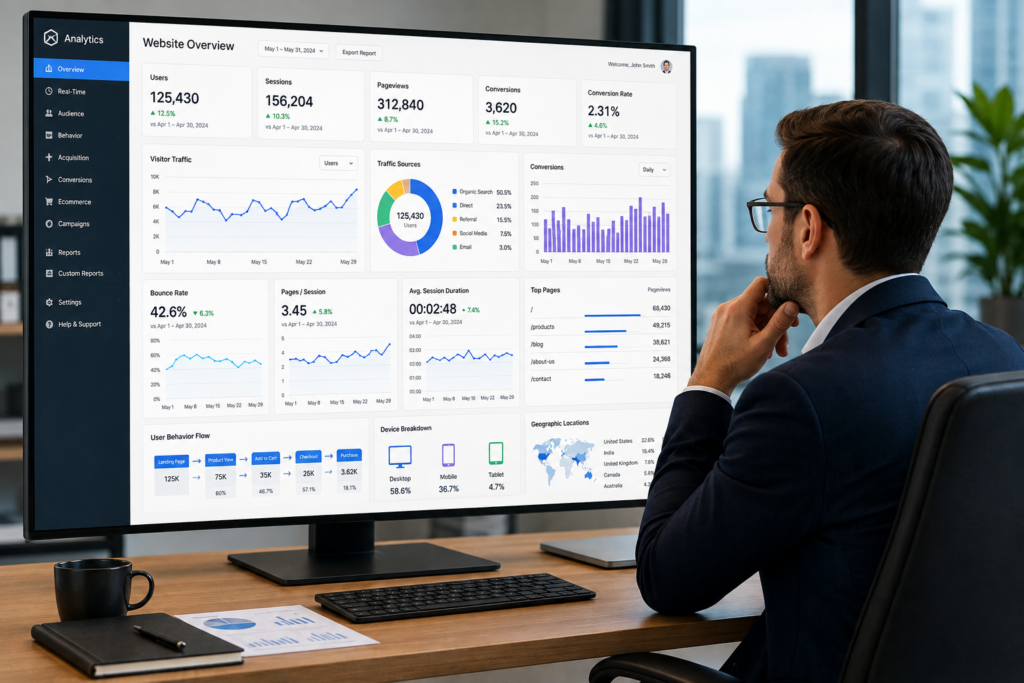
Businesses often invest in several marketing channels at the same time. Search engines, paid ads, social media, email campaigns, referral websites, and direct visits may all contribute traffic. Without analytics, it becomes difficult to know which channels produce useful visitors and which ones consume budget without creating results. Website analytics separate traffic by source, allowing businesses to compare performance across campaigns. A company may discover that organic search generates fewer visits than paid ads but produces more qualified leads. Another business may learn that social media creates strong engagement but very few sales.
This information improves budget decisions. Marketing teams can increase investment in channels that attract valuable customers and reduce spending on weak campaigns. They can also review landing pages connected to each source. If an ad receives clicks but no conversions, the problem may come from the page rather than the advertising platform. Traffic-source data helps businesses diagnose these issues and make changes with greater confidence. Over time, this creates a more efficient marketing strategy because decisions come from actual behavior instead of assumptions.
Visitor Behavior Shows Which Pages Create Interest
Website analytics reveal what visitors do after they arrive. Businesses can see which pages receive the most views, where users spend the most time, and which links they select. This information highlights the topics, services, and products that attract the strongest interest. A service page with high engagement may deserve more promotion, while an important page with little traffic may need stronger internal links or clearer navigation. Content teams can also identify articles that bring users into the website and guide them toward other useful pages.
Behavior data can expose weak sections as well. Visitors may leave quickly because the page loads slowly, the introduction does not answer their question, or the next step is unclear. A page may attract traffic but fail to generate action because its call to action appears too late. Businesses can use these patterns to improve headings, page structure, content depth, and navigation. Companies that discover widespread usability problems may benefit from a professional Website Redesign that uses analytics to shape a clearer and more effective customer journey.

Conversion Tracking Connects Website Activity To Revenue
A conversion happens when a visitor completes an action that supports a business goal. This may include submitting a contact form, calling the company, booking an appointment, creating an account, downloading a resource, or completing a purchase. Conversion tracking shows which pages and campaigns contribute to those actions. This helps businesses evaluate the website based on outcomes rather than traffic alone. A page with fewer visitors may still provide more value if a larger percentage of those visitors become qualified leads.
Businesses should define their main conversions before reviewing performance. A local service company may focus on quote requests and phone calls. An ecommerce store may track purchases, cart activity, and product views. A consulting company may measure scheduled meetings and resource downloads. Once these actions are tracked, analytics can show the path visitors follow before converting. That path often reveals which pages build trust and which ones create delays. Better conversion data helps teams improve offers, forms, calls to action, and landing pages with a clear business purpose.
Analytics Help Businesses Improve The Customer Journey
The customer journey rarely begins and ends on one page. A visitor may read an article, review a service page, visit the about section, and return several days later before contacting the business. Analytics help companies see these patterns and understand how different pages contribute to the final decision. This matters because a page does not need to generate an immediate sale to provide value. Educational content may answer early questions, while testimonials and service details help visitors become more confident later.
Reviewing the full journey helps businesses remove unnecessary steps and strengthen important touchpoints. If visitors repeatedly move from a service page to a pricing page, that connection should remain easy to find. If users leave during a long form, the business may need to reduce the number of fields. Mobile behavior may reveal different problems than desktop activity. By examining how people move through the website, companies can create a smoother experience that supports customer needs at every stage. This is one of the clearest answers to how can businesses benefit from using analytics on their website because better journeys often lead directly to more inquiries, purchases, and repeat visits.
Analytics Support Better Search Engine Optimization
Search engine optimization becomes far more effective when supported by accurate website data. Analytics help businesses identify which pages attract organic traffic, which keywords generate visits, and how search users behave after arriving on the website. A page that receives many visitors but few conversions may require stronger calls to action or more relevant content. On the other hand, a page with excellent conversion rates but little traffic may deserve additional promotion through internal linking, content expansion, or technical improvements.
Analytics also help businesses monitor bounce rates, engagement time, returning visitors, and user flow. These insights reveal whether website content matches visitor expectations. Businesses can compare landing pages, identify gaps in existing content, and prioritize improvements that support both search visibility and customer experience. Companies seeking stronger long-term organic performance often combine website data with professional Technical SEO Services to improve crawlability, indexing, page speed, and overall search performance.
Identify Technical Problems Before They Affect Customers
Website analytics often reveal technical issues that visitors experience before businesses notice them manually. Sudden increases in bounce rates, declining page views, unusually short sessions, or reduced conversion rates may indicate problems such as broken forms, slow-loading pages, mobile usability issues, or navigation errors. Monitoring these changes allows businesses to investigate problems quickly before they begin affecting revenue or customer satisfaction.
Analytics also help identify differences between desktop and mobile users. If mobile visitors leave the website much sooner than desktop users, the site may require better responsive design or improved page performance. Regular analysis allows businesses to maintain a smoother experience while preventing small technical issues from becoming larger business problems.
Measure Marketing Campaign Performance More Accurately
Businesses often run several marketing campaigns simultaneously across search engines, social media, email newsletters, paid advertising, and referral websites. Analytics provide a consistent way to compare campaign performance using real customer behavior instead of assumptions. Marketing teams can evaluate which campaigns produce qualified leads, completed purchases, booked appointments, or other important business outcomes. This information allows companies to allocate marketing budgets more effectively.
Campaign reporting also reveals opportunities for improvement. Businesses can compare landing pages, test different calls to action, measure seasonal trends, and evaluate customer engagement across multiple channels. Instead of increasing marketing spending blindly, analytics help organizations invest in strategies that consistently produce measurable results while reducing investment in lower-performing campaigns.
Use Analytics To Support Continuous Improvement
Successful websites continue evolving rather than remaining unchanged after launch. Analytics provide ongoing feedback that helps businesses improve design, navigation, content, marketing, and customer experience over time. Regular reporting allows teams to identify gradual changes in customer behavior, emerging content opportunities, and areas where competitors may be attracting more attention. Small improvements made consistently often produce greater long-term results than occasional major redesigns.
Businesses should establish regular review schedules instead of examining reports only when problems appear. Monthly performance reviews often reveal useful trends that daily monitoring cannot detect. According to the National Institute of Standards and Technology (NIST), organizations benefit from data-driven decision-making supported by reliable information and continuous evaluation. Website analytics provide exactly this type of ongoing insight, helping businesses make informed improvements based on real customer behavior rather than assumptions.
Conclusion
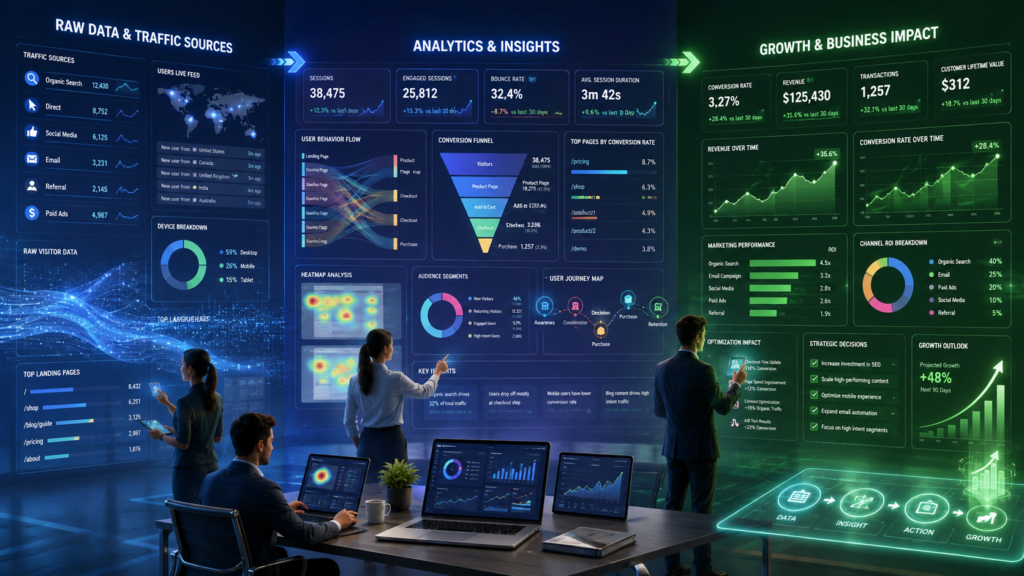
How can businesses benefit from using analytics on their website? Analytics help organizations understand visitor behavior, measure marketing performance, improve search engine optimization, identify technical problems, optimize the customer journey, and increase conversions through informed decision-making. Instead of relying on guesswork, businesses can use measurable data to improve every aspect of their online presence.
The greatest value comes from acting on the information analytics provide. Businesses that review website performance regularly, test improvements, and adapt to changing customer behavior build stronger websites that generate more leads, better customer experiences, and higher long-term returns. Companies looking to combine professional website development, ongoing optimization, and data-driven digital strategy often partner with Best Website Builder Group to build websites that support measurable business growth.