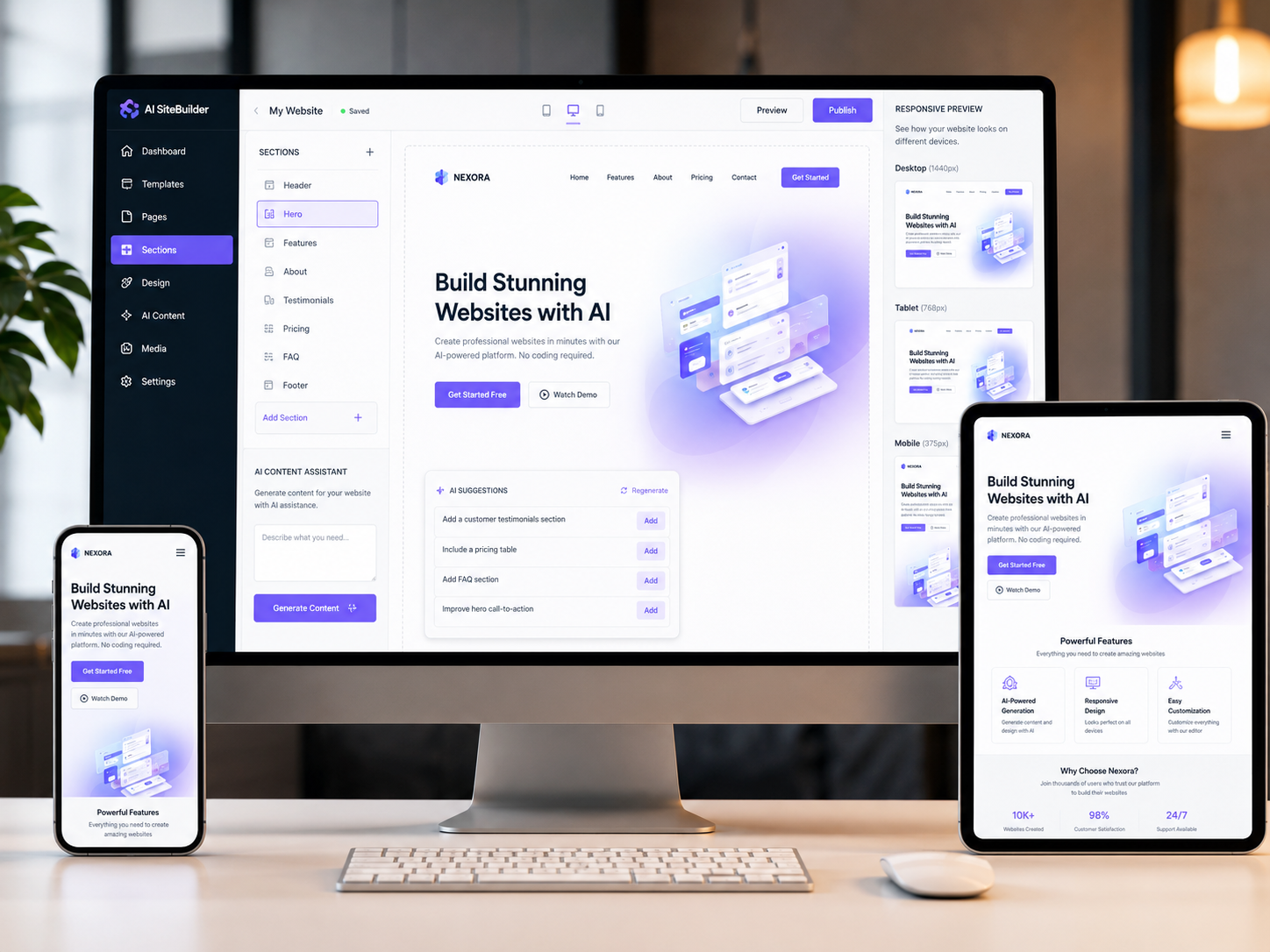
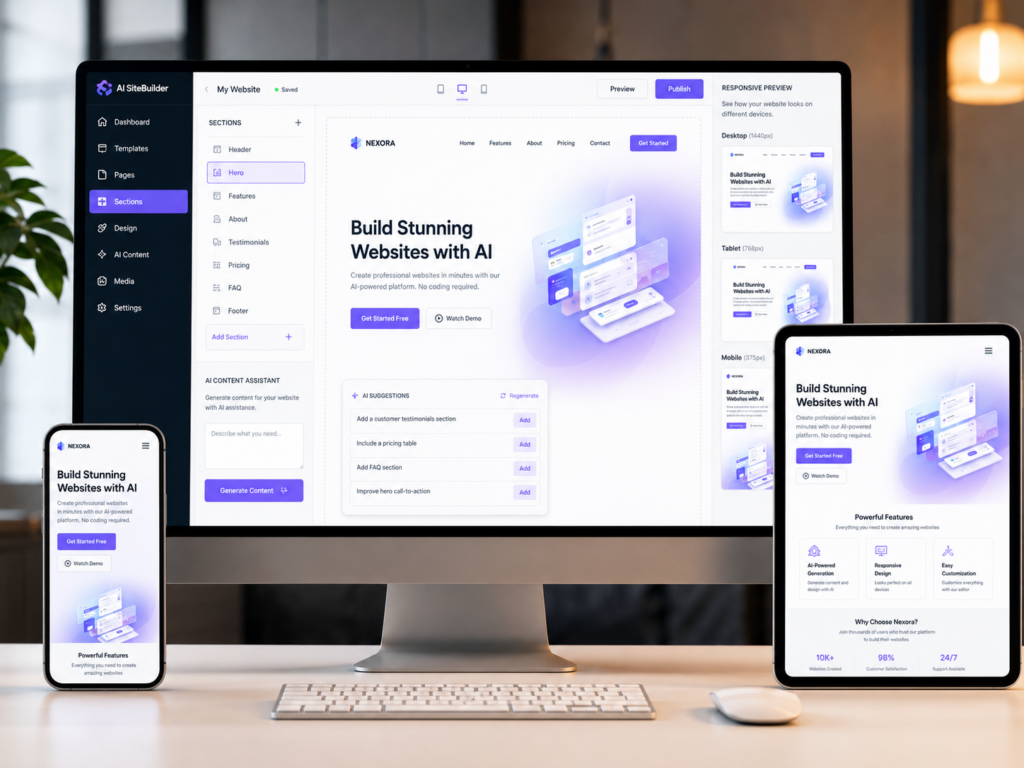
Building a website no longer requires writing every line of code manually. How does an AI website generator work? It uses artificial intelligence to analyze user instructions, understand the purpose of the website, and automatically generate layouts, content, design suggestions, navigation, and basic functionality. Instead of starting with a blank page, users answer a series of questions or enter a prompt describing their business, audience, and goals. The AI then combines design patterns, content generation, and automation to produce a complete website draft within minutes.
Most AI website generators focus on accelerating the early stages of development rather than replacing designers or developers entirely. They reduce repetitive work such as creating page layouts, organizing navigation, generating placeholder copy, and selecting visual styles. Businesses save time because they begin with a working draft instead of building every element from scratch. The final website becomes much stronger when experienced professionals refine the design, improve usability, and ensure that the finished product supports long-term business goals.
Everything Starts With The User Prompt
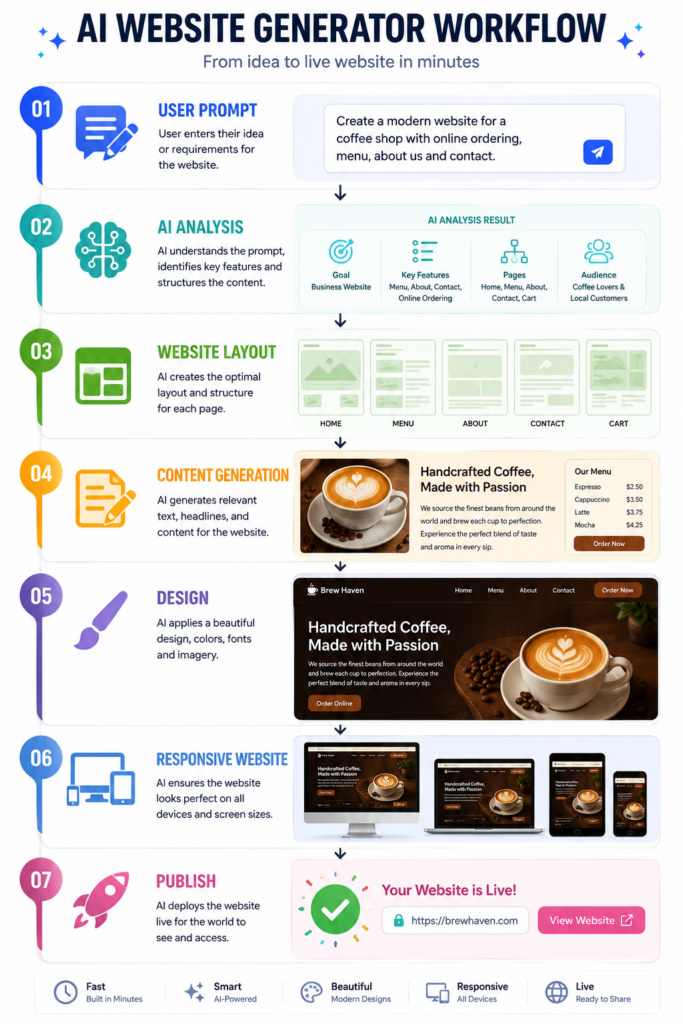
The first step in any AI website generator is collecting information from the user. Most platforms ask questions about the business type, products or services, target audience, preferred design style, company name, and desired website features. Some systems allow users to describe the website in a single prompt, while others guide them through several short questions before generating the first draft. These responses help the AI understand the overall purpose of the website rather than making random design decisions.
The quality of the prompt directly affects the quality of the generated website. A simple instruction such as “build a business website” usually produces generic results. A detailed prompt describing services, customer needs, branding preferences, colors, tone, and required pages gives the AI much more useful direction. Better prompts help the system create layouts and content that require fewer revisions after generation. Businesses should spend time preparing accurate information before starting because thoughtful planning often saves hours of editing later.
AI Chooses A Layout Based On Proven Design Patterns
After processing the prompt, the AI selects a website structure using patterns learned from thousands of existing websites. Instead of randomly placing text and images, it identifies layouts that commonly perform well for similar industries. A restaurant website receives a different structure from a law firm, medical practice, or ecommerce store because visitors expect different information in each case. The homepage, service pages, contact information, testimonials, and calls to action appear in positions that users already recognize and understand.
These design patterns improve usability because visitors can navigate the website naturally without searching for important information. AI also adjusts layouts for desktop, tablet, and mobile devices, creating responsive designs that adapt to different screen sizes. Businesses seeking long-term flexibility often combine AI-generated drafts with professional WordPress Website Design to gain greater customization, scalability, and control than fully automated builders typically provide.
Artificial Intelligence Generates Initial Website Content
Modern AI website generators do more than create layouts. They also generate written content for headings, service descriptions, calls to action, frequently asked questions, and introductory sections. By analyzing the information provided during setup, the AI creates copy that matches the selected industry and website purpose. This allows businesses to launch a complete draft quickly without writing every paragraph themselves.
The generated content should always be reviewed before publication. AI cannot fully understand the unique strengths, experience, customer relationships, or brand voice that distinguish one business from another. Generic wording should be replaced with accurate descriptions, real examples, local expertise, and company-specific information. Businesses that invest time improving AI-generated copy create more trustworthy websites while reducing the risk of publishing repetitive or inaccurate content.
AI Optimizes Navigation And User Experience
Navigation plays a major role in helping visitors find information quickly. AI website generators organize menus, page hierarchy, and internal navigation according to the type of website being created. Service businesses often receive clear navigation leading visitors toward consultations or quote requests, while ecommerce websites prioritize product categories and shopping experiences. The AI attempts to reduce unnecessary complexity by presenting information in a logical order that supports the customer journey.
Many platforms also recommend calls to action, contact forms, image placement, and page sections based on common user behavior. These suggestions help businesses create websites that encourage engagement rather than simply displaying information. Although artificial intelligence can recommend effective structures, testing with real users remains important because customer behavior varies across industries, locations, and audiences. A website becomes more effective when businesses continue improving navigation after launch based on actual visitor interactions.
How AI Connects Design, Content, And Functionality
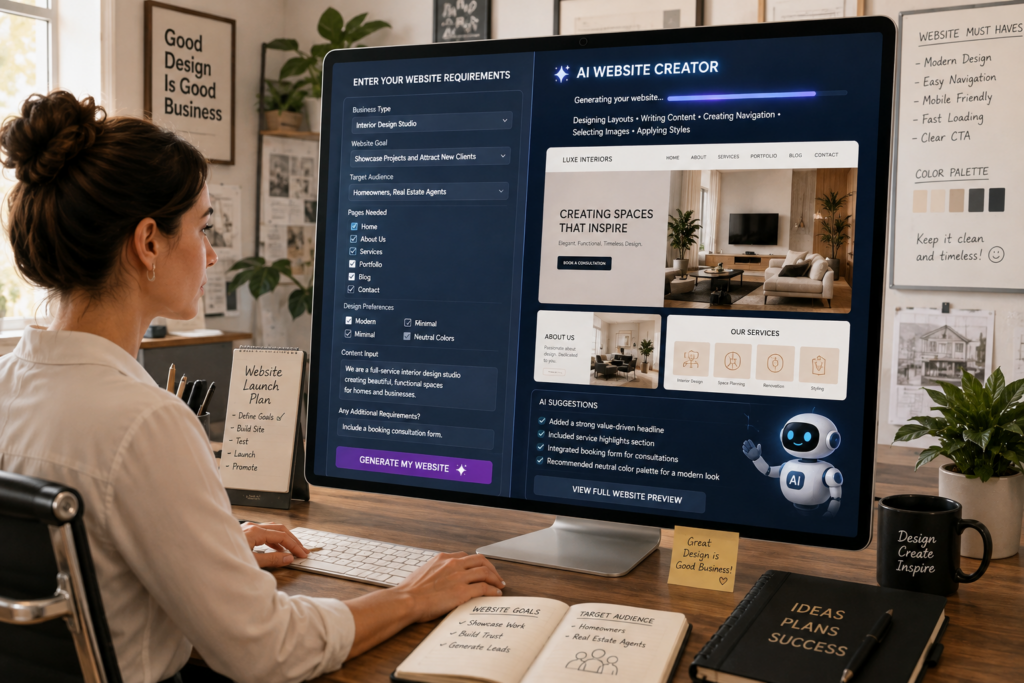
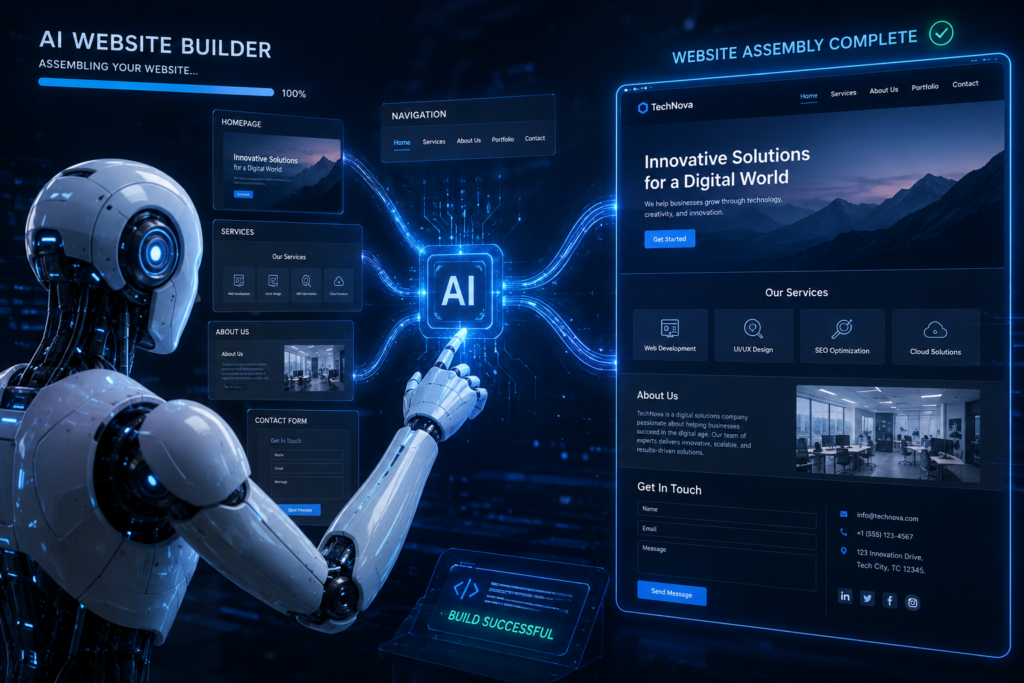
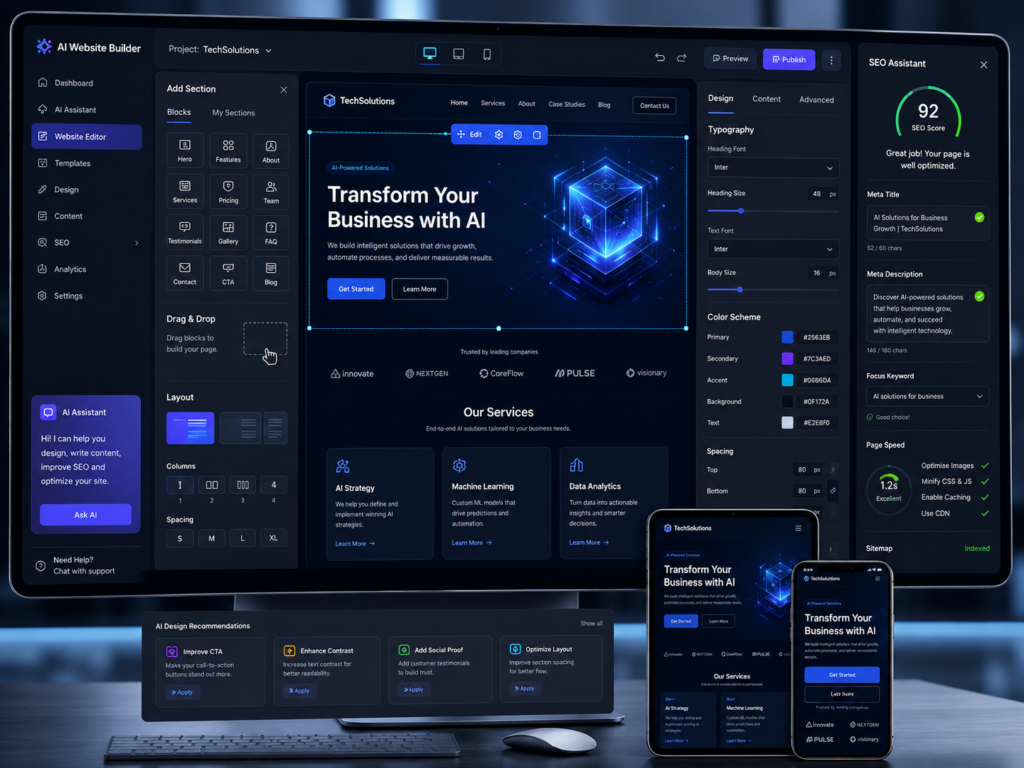
An AI website generator does more than place text on a page. It combines several artificial intelligence systems that work together throughout the website creation process. One component analyzes the prompt and determines the website structure. Another generates written content, while other systems recommend images, icons, typography, color palettes, and layout adjustments. Some platforms also create forms, contact sections, scheduling tools, and e-commerce features based on the type of business being built. This coordination allows users to receive a complete website draft instead of separate pieces that must be assembled manually.
The goal is to reduce repetitive design work while maintaining consistency across every page. Colors, fonts, spacing, buttons, and navigation remain uniform throughout the website because the AI follows a common design system. Even with these capabilities, businesses should review every generated feature before publishing. Some sections may require customization to better match customer expectations, legal requirements, or company branding. AI provides the framework, but human review ensures the final website reflects the business accurately.
Search Engine Optimization Still Requires Human Attention
Many AI website generators automatically create page titles, headings, image descriptions, and basic metadata. Some also recommend keywords or generate search-friendly content based on the business category. These features provide a useful starting point, but they do not replace a complete SEO strategy. Ranking well in search engines depends on much more than automatically generated text. High-quality content, technical optimization, internal linking, page speed, user experience, and ongoing updates all contribute to long-term visibility.
Businesses should review AI-generated pages carefully to ensure the content answers customer questions accurately and naturally. Generic wording often needs additional examples, local information, and company-specific expertise. Organizations that want stronger organic visibility frequently combine AI-assisted website creation with professional Technical SEO Services to improve crawlability, site performance, and long-term search rankings.
Testing And Customization Improve The Final Website
The first AI-generated version should always be treated as a draft rather than a finished product. Businesses should test navigation, forms, buttons, mobile responsiveness, loading speed, accessibility, and overall usability before launching the site. Every page should guide visitors toward a clear action while presenting information in a logical order. Customer feedback during testing often reveals opportunities to simplify navigation, clarify messaging, or improve conversions.
Customization also allows businesses to distinguish themselves from competitors using similar AI tools. Adding original photography, customer testimonials, case studies, team information, and industry expertise creates a more authentic website. AI accelerates the building process, but unique business knowledge remains one of the strongest competitive advantages. The combination of automation and human creativity usually produces the highest-quality results.
Benefits And Limitations Of AI Website Generators
AI website generators provide several advantages. They reduce development time, simplify planning, generate initial content, and help businesses launch websites more quickly. Small businesses and startups often benefit because they can establish an online presence without waiting through lengthy development cycles. AI also lowers the learning curve for users who have little experience with web design by providing organized layouts and editable content from the beginning.
However, every business should recognize the limitations. AI cannot fully understand a company’s brand identity, competitive position, customer relationships, or long-term marketing strategy. It may generate repetitive copy, recommend generic layouts, or overlook industry-specific requirements. According to the World Wide Web Consortium (W3C), accessible, well-structured websites remain essential regardless of how they are created. Human review ensures that AI-generated websites meet accessibility standards, maintain accuracy, and provide a better experience for every visitor.
Conclusion
How does an AI website generator work? It analyzes user instructions, selects appropriate layouts, generates content, organizes navigation, and builds a functional website draft using artificial intelligence. This process dramatically reduces the time required to move from an idea to a working website while giving businesses a strong starting point for future development. AI handles many repetitive tasks, allowing users to focus on refining strategy, branding, and customer experience.
The strongest websites combine AI efficiency with human expertise. Careful editing, search engine optimization, accessibility improvements, and thoughtful customization transform an automated draft into a professional online presence that supports long-term business growth. Businesses looking to combine AI-powered development with expert design and digital strategy often choose Best Website Builder Group to create scalable websites that continue delivering value long after launch.