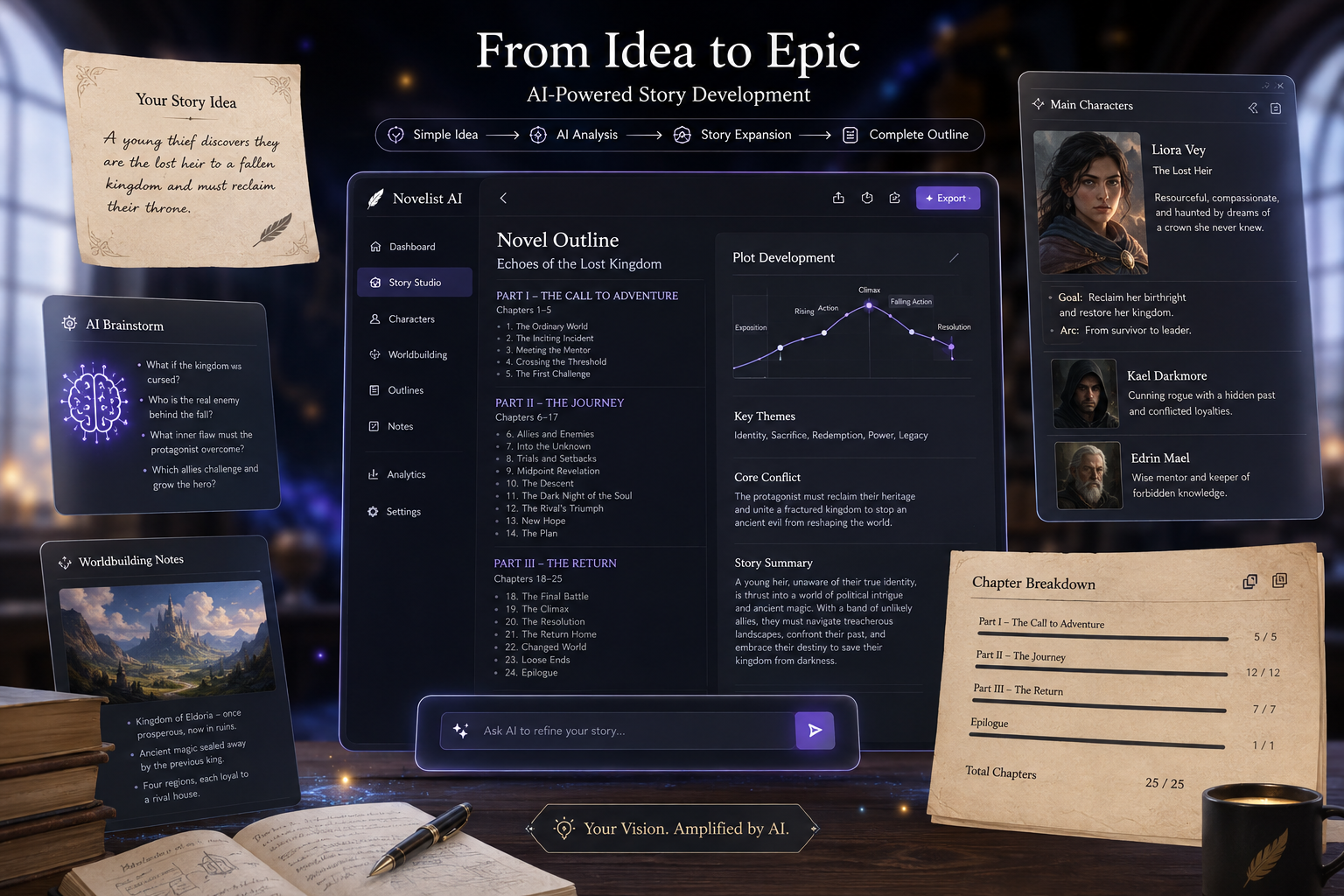
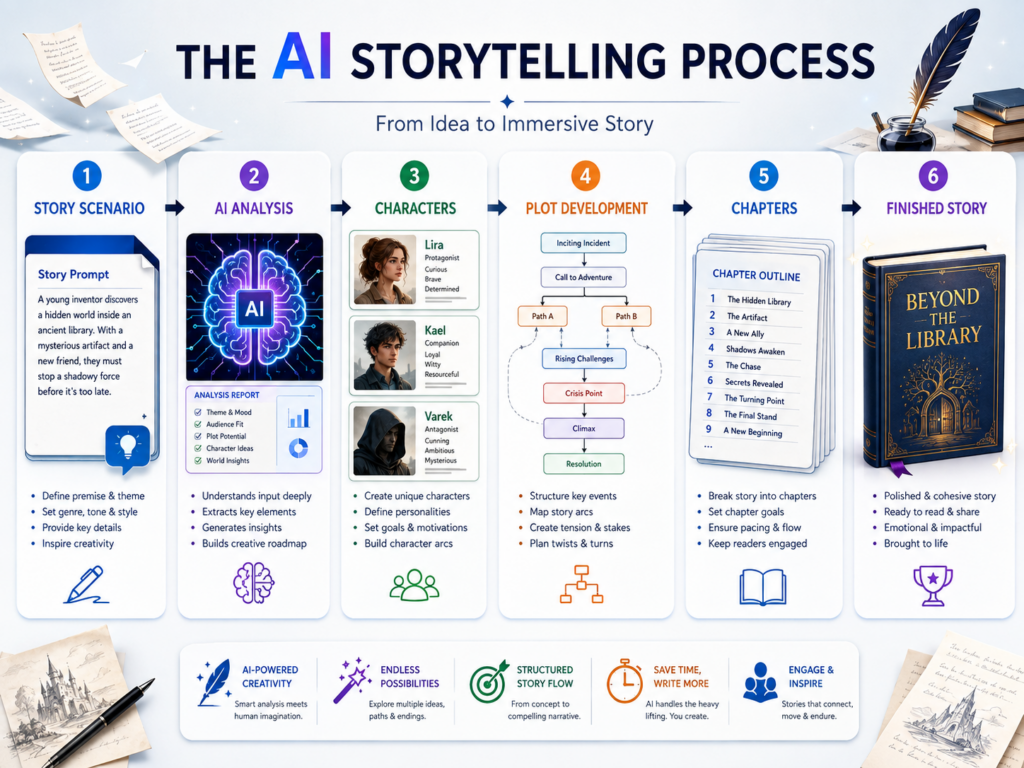
A short scenario can become a complete story when the right AI platform receives enough detail about the characters, setting, conflict, tone, and desired ending. What AI websites can generate stories from scenarios? Sudowrite, NovelAI, Squibler, and Canva Magic Write are among the options that can expand a basic situation into a plot, scene, short story, or longer narrative. Each platform serves a different kind of writer. Sudowrite focuses heavily on fiction development and long-form storytelling. NovelAI supports interactive and open-ended narrative creation. Squibler helps writers organize stories, books, and screenplays. Canva Magic Write offers a simpler option for quick drafts inside a familiar design platform.
The best choice depends on whether the user needs a fast short story, an interactive adventure, a structured novel, or a complete creative workspace. AI still needs direction to produce a useful narrative. A prompt such as “write a story about two friends” leaves too much open to chance. A stronger scenario explains who the characters are, what they want, what prevents them from getting it, where the story happens, and how the reader should feel. Writers should treat generated text as a draft. Human editing adds personality, emotional depth, consistency, and the original perspective that makes a story memorable.
Sudowrite For Fiction Planning And Long-Form Stories
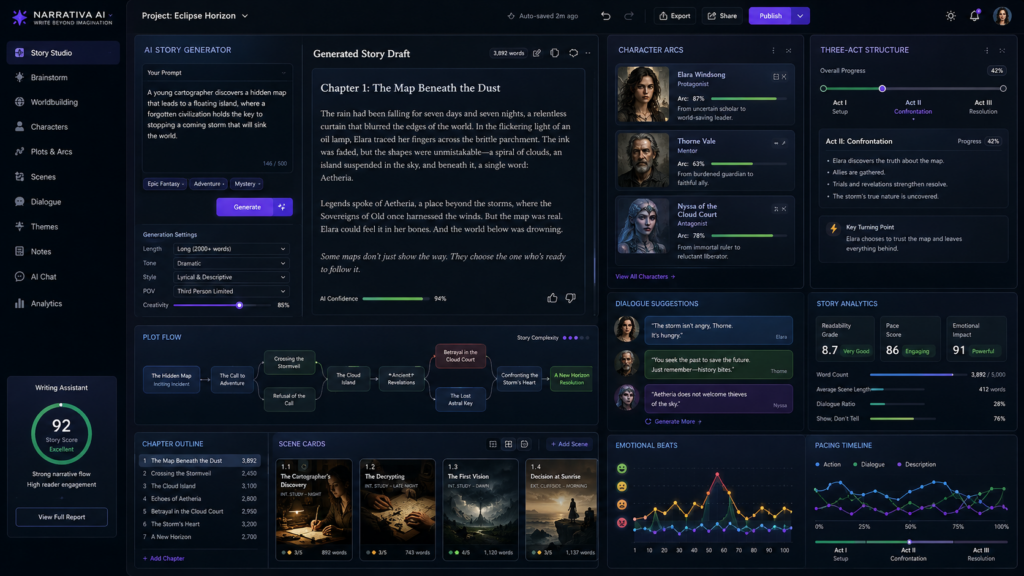
Sudowrite is built specifically for fiction writers rather than general business writing. It can help turn a loose scenario into several possible plots, a three-act structure, character ideas, scene descriptions, and a longer draft. This makes it useful for novelists and short-story writers who know the situation they want to explore but have not yet planned the complete narrative. A writer could describe a scientist trapped on an abandoned station, choose a science fiction genre, and ask the platform to create several story directions. The generated options can then support a more detailed outline.
The platform also helps writers continue scenes, revise descriptions, develop fictional worlds, and keep important story details organized. These features matter in longer projects because characters, locations, and plot rules can become difficult to track. Writers can use the AI for brainstorming without allowing it to control every decision. Sudowrite works best as a creative partner that suggests possibilities while the author selects, combines, and improves the strongest ideas. It may provide more functionality than a casual user needs, but its fiction-focused tools make it one of the stronger choices for anyone planning a novel or detailed narrative.
NovelAI For Interactive And Open-Ended Storytelling
NovelAI suits writers who enjoy discovering the story while they write. Instead of requiring a complete outline before drafting, it can continue a narrative from the scenario, style, and text already provided. The user writes an opening situation, chooses how much direction to give, and lets the system propose what might happen next. This makes the platform useful for interactive adventures, role-playing scenarios, fantasy stories, and experimental fiction where the writer wants to explore several possible outcomes.
The user still needs to guide the direction. Open-ended generation can create surprising ideas, but it may also introduce plot changes or details that conflict with earlier scenes. Writers should review each continuation and correct inconsistencies before moving forward. Notes about characters, locations, tone, and important facts can help the system maintain better continuity. When evaluating what AI websites can generate stories from scenarios, NovelAI stands out for users who prefer an evolving narrative rather than a fixed plan. It encourages a collaborative process where the author and AI take turns shaping the fictional world.
Squibler For Structured Books And Screenplays
Squibler combines AI generation with tools for organizing longer writing projects. A user can begin with a scenario and develop it into a short story, novel, screenplay, or chapter-based project. The platform supports character details, settings, outlines, scenes, and revisions inside one workspace. This structure helps writers who need more than a single block of generated text. Instead of copying the story between unrelated tools, they can keep the planning and drafting stages connected.
A clear objective improves the output. Writers should specify the genre, audience, point of view, length, central conflict, and intended tone before asking for a draft. The AI can then suggest scenes or revisions that align more closely with the project. Squibler may appeal to writers who prefer an organized process and want to move from a basic concept toward a full manuscript. Its value comes from combining generation with project management. The writer remains responsible for checking pacing, dialogue, character development, and originality before treating the work as complete.
Canva Magic Write For Fast And Simple Story Drafts
Canva Magic Write provides a more accessible option for people who want to create a quick story without learning a dedicated fiction platform. The tool works inside Canva Docs and can generate story ideas, plots, paragraphs, and longer drafts from a written prompt. It may suit teachers, marketers, students, parents, and casual writers who need a short narrative for a presentation, social post, video, lesson, or creative project. Canva also lets users place the text beside graphics, layouts, and other visual elements in the same workspace.
The simpler interface comes with a tradeoff. Magic Write does not offer the same depth of fiction planning as platforms designed for novelists. Writers may need to provide more detailed instructions and revise the output more heavily when the story requires complex character arcs or long-term continuity. It works best for short stories, plot ideas, children’s narratives, scripts, and fast first drafts. Users deciding what AI websites can generate stories from scenarios should consider Canva when speed and presentation matter more than advanced story management. A concise scenario can quickly become usable creative material that the writer can edit and design in one place.
Write Better Prompts To Produce Better Stories
The quality of an AI-generated story depends largely on the quality of the prompt. A vague request often produces a generic narrative with weak characters and predictable events. A detailed scenario gives the AI clear direction and creates a stronger starting point for the story. Instead of writing, “A detective solves a mystery,” explain who the detective is, what crime has occurred, where the investigation takes place, what obstacles stand in the way, and the emotional tone you want throughout the story. These details help the AI build a more engaging plot while reducing unnecessary revisions.
Adding information about genre, audience, writing style, pacing, point of view, and story length also improves the results. You might request a suspenseful mystery written in first person with a surprising ending, or a light-hearted fantasy adventure for younger readers. The more context the AI receives, the better it can match the intended direction. Even after generating the first draft, writers should continue refining prompts to improve dialogue, strengthen character development, or create alternative endings until the story matches their creative vision.
Edit AI-Generated Stories To Make Them Original
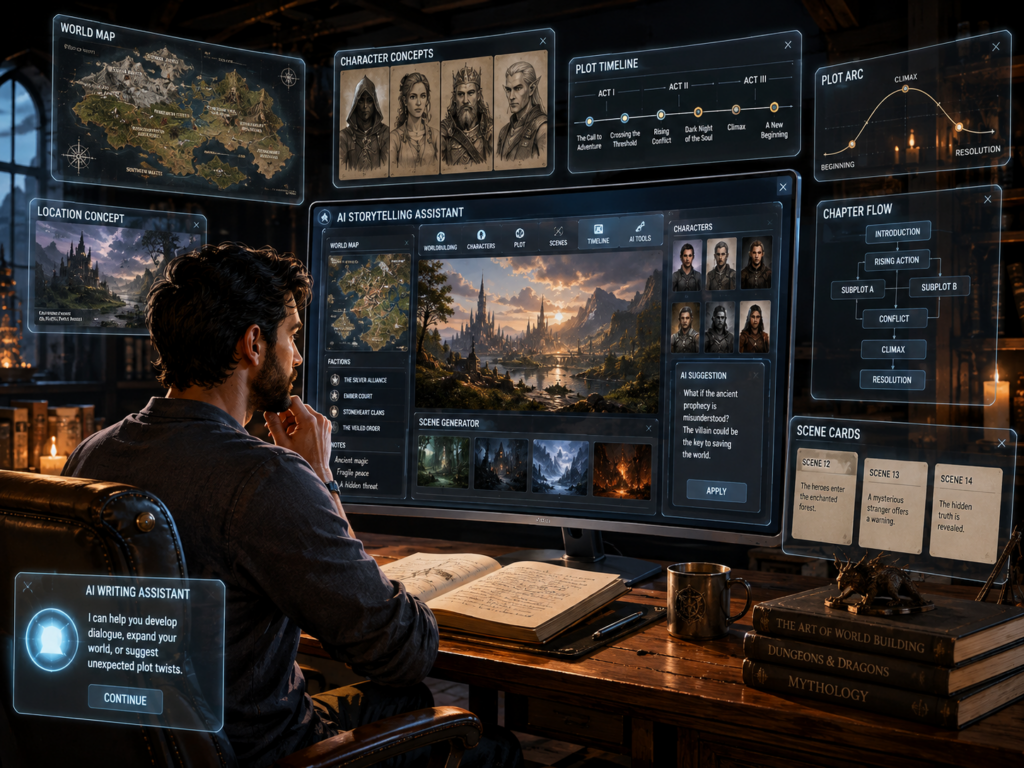
Artificial intelligence can generate a complete draft within seconds, but successful writers rarely publish that first version without editing. AI often produces repetitive descriptions, predictable dialogue, or scenes that move too quickly between important events. Reading the story carefully allows writers to improve pacing, strengthen emotional moments, remove inconsistencies, and give characters more distinct personalities. Human creativity transforms an acceptable draft into a memorable story.
Editing also helps maintain originality. Writers can replace common expressions with unique descriptions, introduce unexpected plot developments, and add personal experiences or creative ideas that AI could never invent independently. The strongest stories combine AI-assisted drafting with thoughtful human revision. Instead of replacing creativity, AI accelerates the writing process while leaving the author responsible for the final artistic direction.
Choose The Right Platform For Your Creative Goals
No single AI platform works best for every writer. Someone planning a full-length novel may benefit from Sudowrite or Squibler because they provide stronger organizational features and support longer projects. Writers who enjoy interactive storytelling may prefer NovelAI because it encourages collaborative story development. Users creating educational materials, social media content, or shorter narratives may find Canva Magic Write more convenient because it combines writing with visual design tools.
Before selecting a platform, consider how you intend to use the finished story. Some writers prioritize detailed world-building and character development, while others value speed and simplicity. Testing several platforms with the same scenario often reveals which one best matches your writing style. Choosing the right tool helps reduce editing time while making the creative process more enjoyable.
Understand The Limits Of AI Story Generation
Although AI has become remarkably capable, it still has limitations. It does not truly understand emotions, personal experiences, or creative intent in the same way people do. Long stories may contain inconsistencies if important details are not reinforced throughout the writing process. Character motivations may shift unexpectedly, timelines can become confusing, and factual information should always be verified when real-world subjects appear in the narrative.
Writers should also understand copyright, privacy, and ethical considerations before publishing AI-assisted work. Original ideas, editing, and creative direction remain essential parts of authorship. According to the National Institute of Standards and Technology (NIST), organizations should use AI responsibly while maintaining appropriate human oversight. Reviewing AI-generated stories carefully helps ensure the final work reflects both quality and responsible creative practices.
Conclusion
What AI websites can generate stories from scenarios? Several platforms can, including Sudowrite, NovelAI, Squibler, and Canva Magic Write. Each serves different creative goals, from quick story drafts to complete novels and interactive adventures. The best choice depends on how much planning, editing, and project management the writer needs throughout the creative process.
Regardless of the platform, the strongest stories begin with detailed prompts and finish with thoughtful human editing. AI can accelerate brainstorming, outlining, and drafting, but creativity, emotional depth, and originality still come from the writer. Businesses and creators exploring AI-powered digital tools alongside modern web solutions often work with Best Website Builder Group to build engaging online experiences that combine innovation with practical business value.