Businesses are constantly looking for ways to improve efficiency, reduce repetitive work, and serve customers more effectively. What is AI automation? It is the use of artificial intelligence technologies to perform tasks, make decisions, analyze data, and execute workflows with minimal human intervention. Unlike traditional automation, which follows fixed rules, AI automation can learn from data, recognize patterns, and adapt to changing situations. This makes it valuable across industries ranging from marketing and sales to customer service and operations. While many organizations initially adopt AI automation to save time, they often discover that its greatest value lies in improving decision-making, increasing productivity, and creating better customer experiences. As AI capabilities continue to expand, automation is becoming an essential component of modern business growth.
The Difference Between Traditional Automation And AI Automation
Traditional automation relies on predefined rules and predictable workflows. A system follows specific instructions and completes tasks exactly as programmed. While this approach works well for repetitive activities, it struggles when situations become more complex or require interpretation. AI automation introduces intelligence into the process by enabling systems to analyze information and make decisions based on patterns and data.
For example, a traditional automation tool may send an email when a form is submitted. An AI-powered system can go further by evaluating the lead, determining its quality, assigning a priority score, and selecting the most appropriate follow-up sequence. This ability to adapt and respond dynamically is what separates AI automation from standard workflow automation. As businesses become more data-driven, the demand for intelligent automation continues to grow because it offers greater flexibility and more sophisticated outcomes.
How AI Automation Works Behind The Scenes
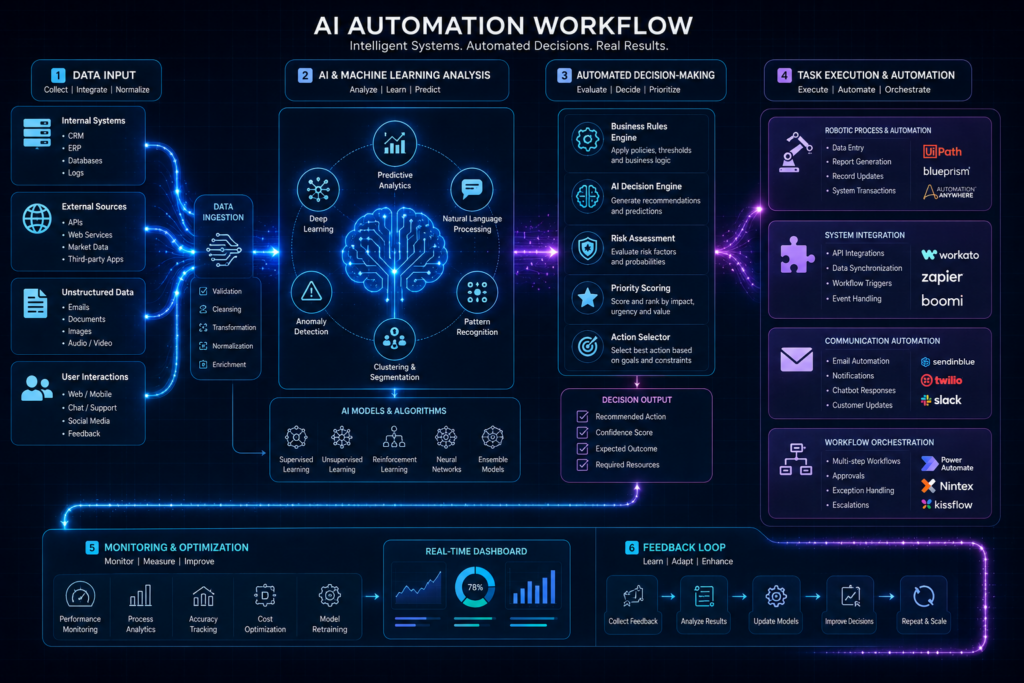
AI automation combines several technologies, including machine learning, natural language processing, predictive analytics, and workflow automation tools. These technologies work together to collect data, analyze information, identify patterns, and execute actions automatically.
When a customer interacts with a website, for instance, AI can analyze browsing behavior, predict interests, and trigger personalized recommendations. In customer support environments, AI systems can interpret questions, provide answers, and escalate complex issues when necessary. The automation component handles execution, while artificial intelligence provides the decision-making capabilities. This combination allows businesses to automate not only repetitive tasks but also processes that previously required human judgment. The result is a system that becomes more valuable as it gains access to additional data and interactions.
Applications Of AI Automation In Sales
Sales teams use AI automation to improve lead management, customer engagement, and pipeline efficiency. Modern sales processes generate large amounts of data that can be difficult to manage manually. AI systems help organize this information and identify opportunities that deserve immediate attention.
Lead scoring is one of the most common applications. AI can analyze customer behavior, demographics, engagement patterns, and previous interactions to determine which prospects are most likely to convert. Sales representatives can then focus their efforts on high-value opportunities rather than spending time on leads with low purchase intent. Automated follow-ups, meeting scheduling, and customer segmentation also contribute to greater efficiency. Businesses that integrate AI into their sales operations often improve response times and create more personalized customer journeys.
Marketing Benefits Of AI-Powered Workflows
Marketing departments increasingly rely on AI automation to manage campaigns, personalize content, and analyze customer behavior. Traditional marketing often involves repetitive tasks such as audience segmentation, email scheduling, performance reporting, and campaign optimization. AI helps streamline these activities while delivering more relevant experiences.
Instead of sending the same message to every contact, AI can customize content based on customer preferences and engagement history. Automated systems can also determine the best times to send communications and identify which marketing channels produce the strongest results. Businesses focused on improving digital performance frequently combine AI-driven marketing strategies with services such as Shopify Website Design to create more effective customer acquisition and conversion systems.
Customer Service And Support Automation
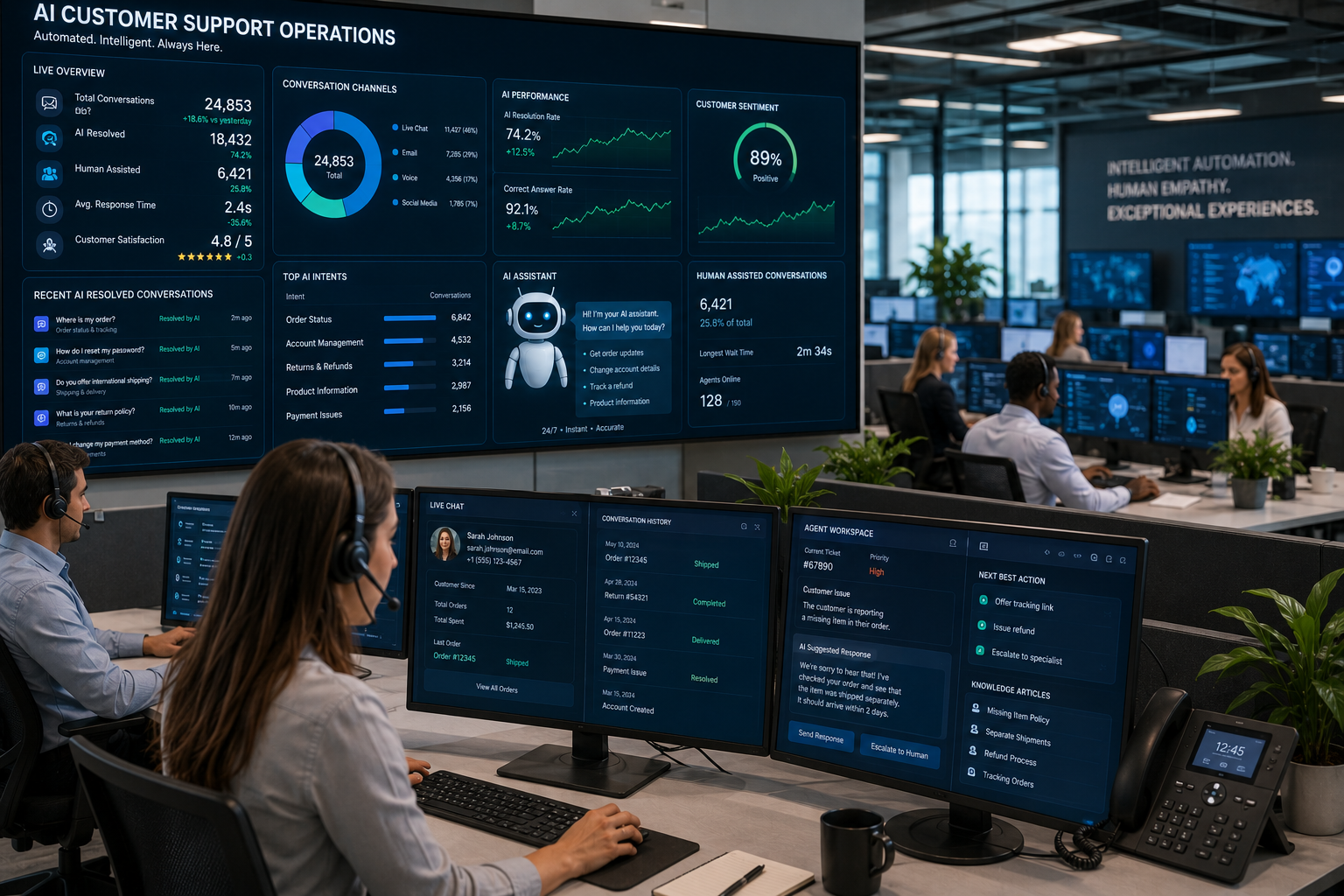
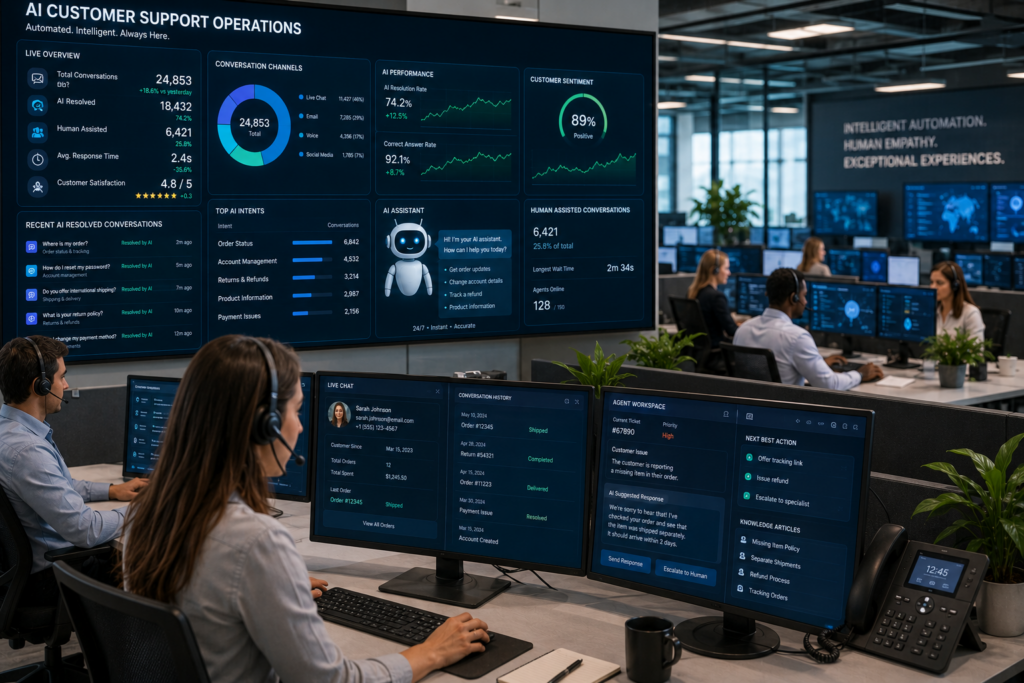
Customer expectations continue to rise, and businesses must respond quickly to maintain satisfaction. AI automation helps support teams manage increasing volumes of inquiries without sacrificing quality. Chatbots, virtual assistants, and intelligent ticketing systems can handle routine questions and direct complex issues to appropriate team members.
These systems operate around the clock, providing immediate assistance even outside standard business hours. Customers receive faster responses, while support teams gain more time to focus on cases that require human expertise. AI can also analyze customer sentiment and identify issues that may require special attention. As support operations become more complex, automation helps maintain consistency while improving efficiency and customer satisfaction.
Operational Efficiency Across Departments
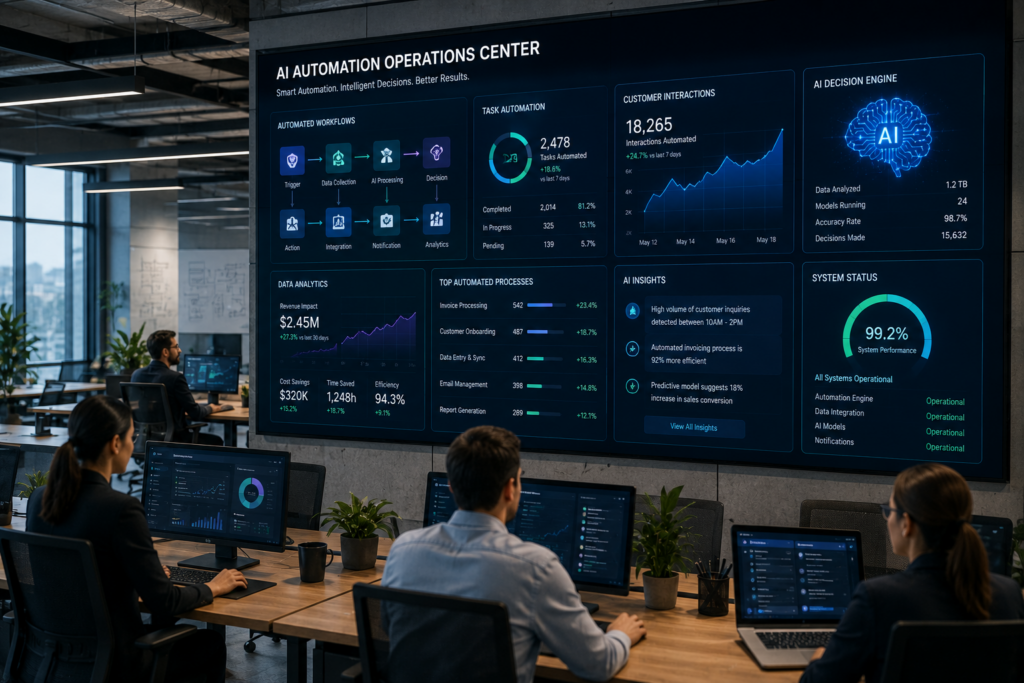
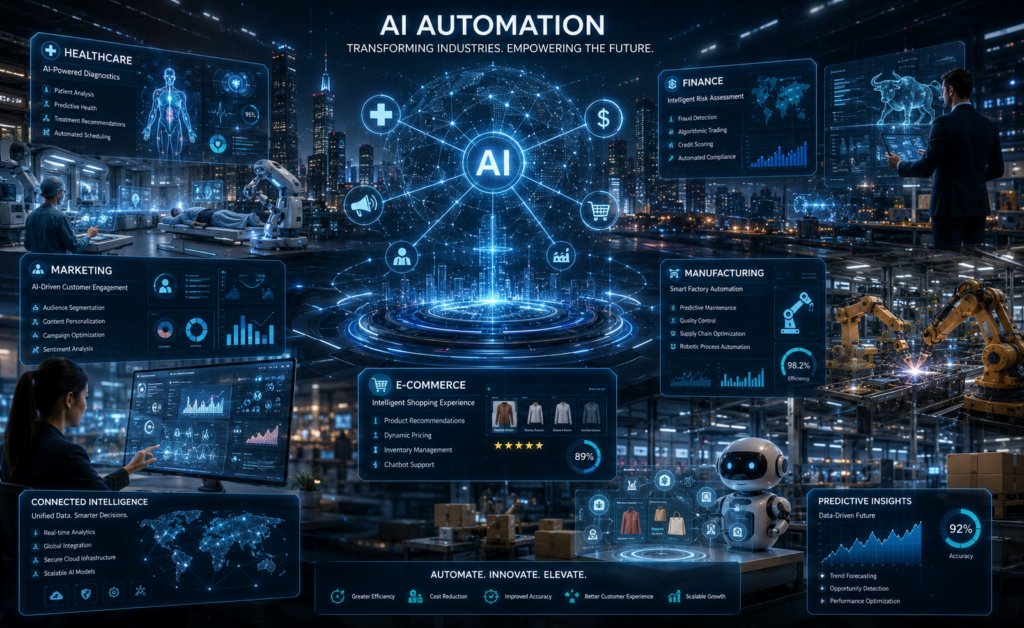
AI automation extends far beyond sales and marketing. Finance teams use automated systems to process invoices, identify anomalies, and generate reports. Human resources departments rely on AI to screen applications, schedule interviews, and manage onboarding workflows. Operations teams use predictive analytics to optimize inventory levels and improve resource allocation.
One of the biggest advantages of AI automation is its ability to reduce repetitive administrative work. Employees can dedicate more time to strategic activities that require creativity, problem-solving, and relationship building. This shift often leads to higher productivity and improved job satisfaction. Organizations that successfully implement automation typically discover opportunities to improve efficiency across multiple departments rather than limiting automation to a single function.
Challenges Businesses Should Consider
Although AI automation offers significant advantages, implementation requires careful planning. Poor data quality can limit effectiveness because AI systems depend on accurate information to make decisions. Businesses must also ensure that workflows align with operational goals and customer expectations.
Employee training is another important consideration. Teams need to understand how automated systems work and how to collaborate with them effectively. Transparency is equally important because customers and employees often want to know when AI is involved in a process. Successful implementation usually involves starting with specific use cases and gradually expanding automation as confidence and experience grow. This approach helps organizations realize value while minimizing disruption.
The Future Of AI Automation
Artificial intelligence continues to evolve rapidly, and automation capabilities are expanding alongside it. Future systems will likely become more predictive, proactive, and personalized. Rather than simply responding to events, AI may anticipate needs and recommend actions before problems occur.
Industries across the economy are exploring how intelligent automation can improve efficiency and competitiveness. According to IBM, AI technologies are increasingly being integrated into business operations to support decision-making and productivity. As adoption grows, organizations that embrace automation may gain significant advantages over competitors that rely entirely on manual processes. The combination of artificial intelligence and automation is expected to play a central role in shaping the future of business operations.
Conclusion
What is AI automation? At its core, it is the use of artificial intelligence to automate tasks, workflows, and decision-making processes that traditionally required human effort. The technology goes beyond basic automation by learning from data, identifying patterns, and adapting to changing circumstances. This allows businesses to improve efficiency, enhance customer experiences, and scale operations more effectively.
The real value of AI automation is not simply reducing workload. It is creating smarter systems that help organizations operate more strategically and respond faster to opportunities. Companies looking to modernize their digital operations and implement intelligent business processes often work with specialists such as Best Website Builder Group to build scalable solutions that support long-term growth.