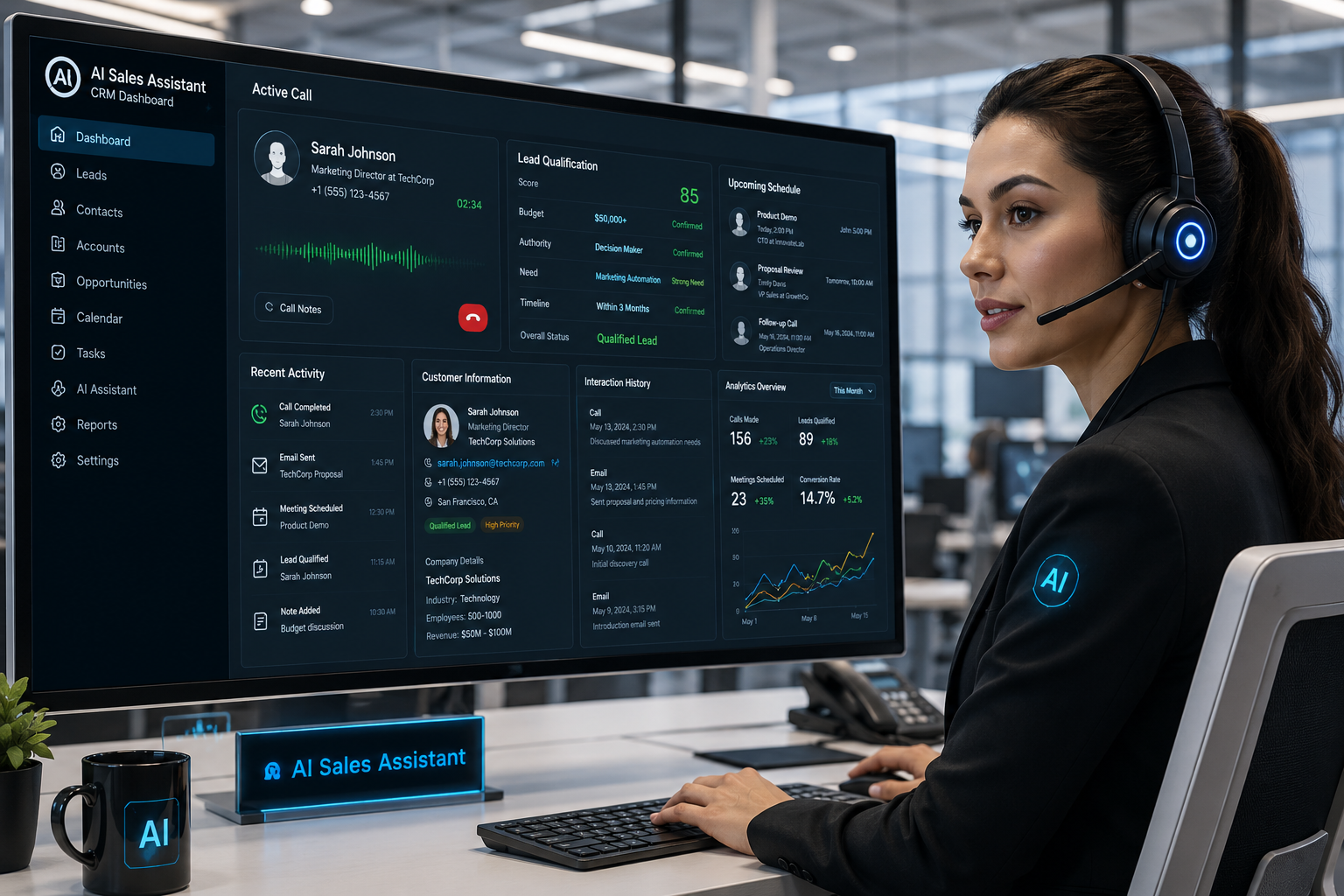
The best voice AI for outbound sales calls depends on the size of the campaign, the sales process, the technical resources available, and the level of control the business needs. What voice AI works best for outbound sales calls? Retell AI often suits teams that need flexible call flows and custom integrations. Bland AI can fit businesses focused on high-volume outbound campaigns. Synthflow may work better for teams that want a visual, no-code setup. No platform wins every category, so businesses should compare conversation quality, response speed, CRM connections, reporting, human handoff, pricing, and compliance controls before choosing one. A polished synthetic voice matters, but it does not guarantee successful calls.
The platform must also handle interruptions, recognize customer intent, follow approved sales scripts, record accurate outcomes, and transfer valuable prospects to a human salesperson at the right moment. The safest approach starts with a narrow use case. A company might use a voice agent to contact existing leads who requested information, confirm appointments, follow up after a quote, or reconnect with customers who already permitted to receive calls. These situations provide clearer context than calling large lists of unfamiliar consumers. They also make it easier to test the agent’s accuracy and measure its effect on sales.
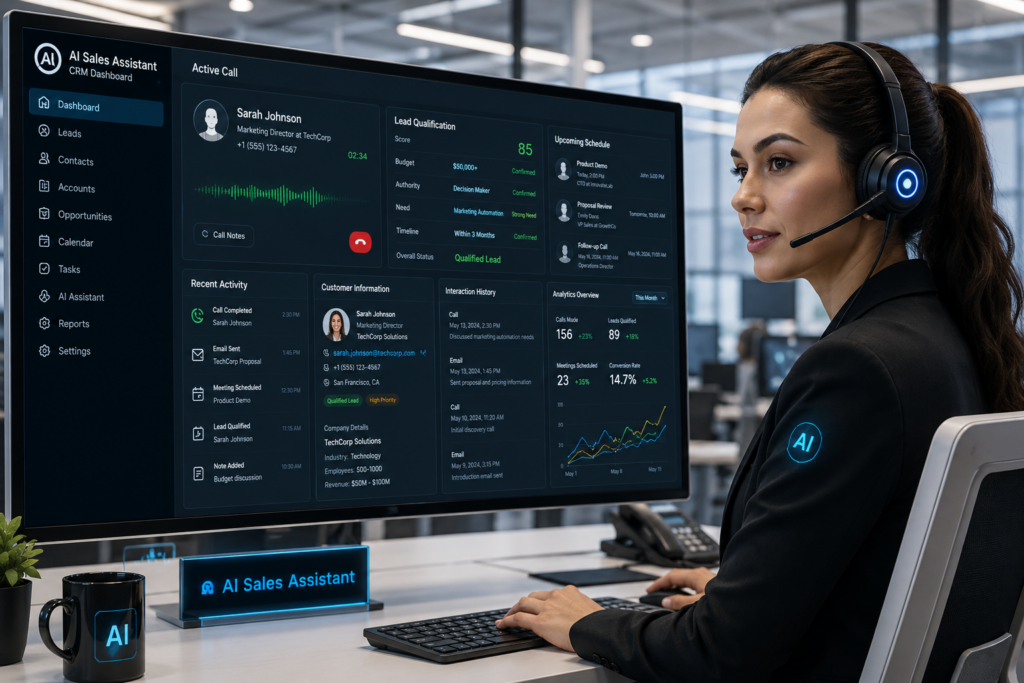
Choose The Platform Based On The Sales Workflow
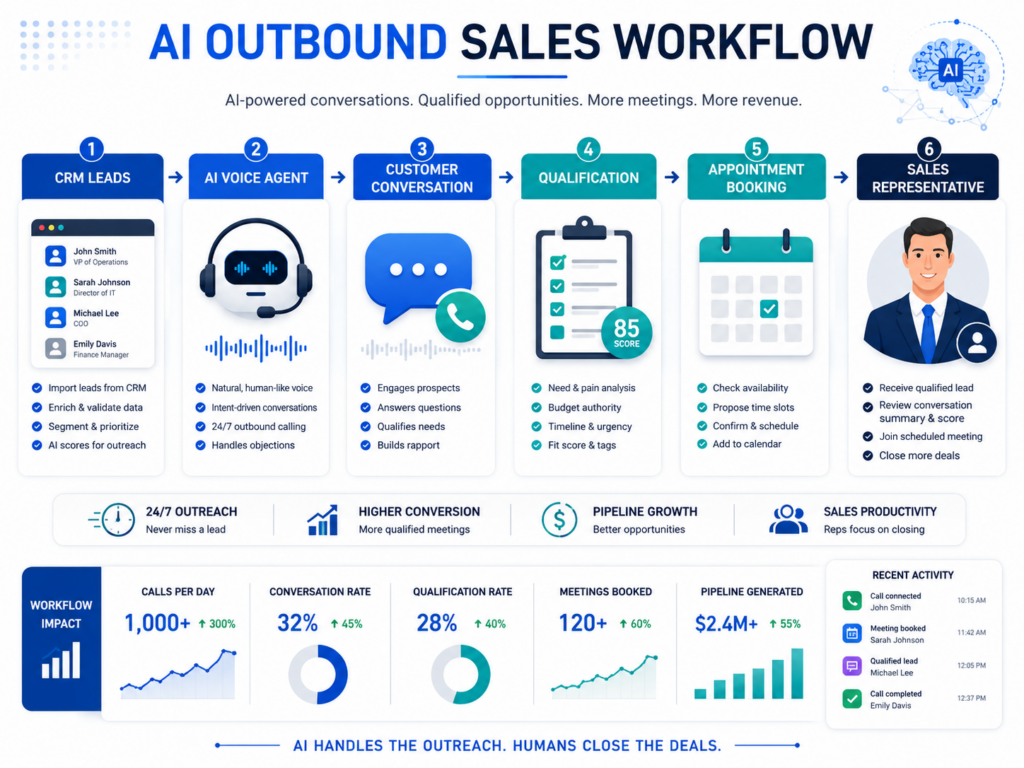
Every outbound sales process has a different goal. One team may need the AI to ask a few qualifying questions and schedule a meeting. Another may need it to explain services, answer basic objections, update customer records, and transfer the call to a sales representative. The chosen platform should support the actual workflow without forcing the business to redesign its process around software limitations. A no-code builder may suit a small service company that wants to launch quickly. A developer-focused platform may offer better control for a company with custom databases, strict routing rules, or advanced CRM requirements.
Map the call before comparing vendors. Decide how the agent should introduce itself, what questions it should ask, which answers qualify a prospect, and when it should stop the automated conversation. Define what happens after each outcome. Interested prospects may move into a sales pipeline, while unavailable contacts may receive a scheduled follow-up. Clear workflow requirements make platform comparisons more useful because the business can test each product against the same scenario. This prevents teams from choosing a system because of an impressive demo that does not reflect their real sales calls.
Retell AI For Flexible And Integrated Call Experiences
Retell AI may appeal to businesses that want to build tailored voice agents around an existing sales process. Its platform supports inbound and outbound calling, integrations, transcripts, analytics, and custom conversational logic. This flexibility can help teams connect calls with CRMs, scheduling systems, and internal data sources. A sales agent could verify a prospect’s interest, collect project details, book an appointment, and save the call outcome without requiring an employee to enter the information manually. The platform may fit organizations that have technical resources or partners who can manage more advanced configurations.
Flexibility also creates responsibility. A custom call agent needs strong prompts, reliable data, clear boundaries, and regular testing. Teams should not assume that a model will handle every objection correctly without guidance. It needs approved information about products, prices, locations, policies, and qualifying criteria. Businesses should review recordings and transcripts to identify weak answers or awkward transitions. Retell AI can support sophisticated workflows, but the final quality still depends on the design of the conversation and the accuracy of the connected information.
Bland AI For Outbound Volume And Call Operations
Bland AI positions its platform around phone automation at scale. It can support outbound lead qualification, follow-up calls, appointment confirmation, transcripts, and searchable call data. This may suit teams that need to manage a large number of approved contacts while maintaining consistent call handling. Sales managers can use call records to review outcomes, identify common objections, and measure how often the agent reaches the intended goal. High-volume capability becomes valuable when a business already has a strong contact list and a proven call process.
Volume should never replace targeting. Increasing the number of calls will not fix a weak offer, inaccurate data, or an unclear script. It can instead spread those problems across a larger audience. Businesses should begin with a limited test group and compare the results with calls handled by trained salespeople. They should examine connection rates, qualified conversations, appointment attendance, customer complaints, and conversion quality. Bland AI may provide the infrastructure for scale, but the company must still decide who should receive calls and what value the conversation should provide.
Synthflow For Teams That Prefer A No-Code Builder
Synthflow may fit small and midsized teams that want to create voice agents without building a custom system from the ground up. Its visual approach can make it easier to define conversation steps, connect business tools, route calls, and create human handoff rules. A service company could use the platform to contact warm leads, confirm interest, ask a few project questions, and schedule a consultation. This setup may reduce the time between initial configuration and live testing because the team can adjust the flow without extensive programming.
Ease of setup does not remove the need for careful planning. No-code tools can still produce poor conversations when instructions remain vague, or customer data lacks accuracy. Teams should test interruptions, unusual answers, background noise, voicemail, and requests to speak with a person. They should also check how the agent records each outcome inside the CRM. When deciding what voice AI works best for outbound sales calls, a simpler platform may provide more value than a highly customizable one if employees can maintain it confidently and improve it without waiting for a developer.

Compliance Must Shape Every Outbound Campaign
Voice quality and automation features mean little if the calling process violates consumer protection rules. Businesses must review consent requirements, calling hours, disclosure obligations, opt-out requests, and recordkeeping before launching an AI sales agent. The Federal Communications Commission has confirmed that AI-generated voices count as artificial voices under the Telephone Consumer Protection Act. This means businesses may need prior consent before using them for certain calls. The Federal Communications Commission provides official guidance on how these protections apply to AI-generated voice calls. State laws and industry-specific rules may add further requirements, so businesses should seek qualified legal advice before launching a campaign.
The sales agent should identify the business clearly and avoid pretending to be a human representative. It should also respect requests to stop calling and update suppression records immediately. Compliance controls should remain part of the workflow rather than an afterthought. A platform that supports consent records, call logs, disclosure scripts, and opt-out handling can help the business maintain a more accountable process. Responsible outreach protects customers and reduces the risk of complaints that could damage the company’s reputation.
CRM Integration Determines Whether Calls Produce Results
A voice agent should do more than complete conversations. It should record useful outcomes inside the systems that sales teams already use. Strong CRM integration allows the AI to update contact records, assign lead stages, schedule follow-up tasks, book meetings, and save call summaries automatically. Without this connection, employees may still need to review recordings and enter information manually. That extra work reduces the value of automation and can create incomplete customer records.
Before selecting a platform, test how it connects with the current CRM, calendar, phone system, and lead sources. Confirm which information moves between platforms and how quickly updates appear. The agent should distinguish between interested prospects, unavailable contacts, wrong numbers, and people who request no further calls. Accurate outcome tracking helps managers evaluate performance and prevents customers from receiving irrelevant follow-ups. The best system creates a clear path from the initial call to the next human action.

Human Handoff Protects Valuable Sales Opportunities
An AI agent should not attempt to handle every possible conversation. Some prospects will ask complex questions, raise unusual objections, or want to negotiate terms. Others may prefer speaking with a person. A strong platform should recognize these moments and transfer the call without forcing the prospect to repeat the entire discussion. The salesperson should receive the contact record, call summary, qualifying details, and reason for the transfer before joining the conversation.
Clear handoff rules also protect the customer experience. The agent may transfer a prospect after confirming buying intent, identifying a high-value opportunity, or receiving a question outside its approved knowledge. If a salesperson is unavailable, the system can schedule a meeting or request a preferred callback time. Businesses should test transfers under real conditions, including delayed answers and dropped connections. A smooth handoff allows automation to support the sales team without becoming a barrier between the business and the customer.
Connect Voice Outreach With A Strong Digital Sales Journey
Outbound calls often lead prospects back to a website where they review services, compare options, and decide whether the business appears credible. A dated or confusing website can weaken the trust created during a good phone conversation. The landing page should match the offer presented by the voice agent and provide clear details about the service. It should also include proof, contact information, and a direct next step. Businesses with weak conversion paths may benefit from a professional Website Redesign that connects call outreach with a more focused sales experience.
The AI can send a follow-up email or text containing the relevant page after receiving proper permission. That page should continue the conversation rather than forcing the prospect to restart their research. Consistent messaging across calls, emails, and website pages builds confidence. It also makes campaign performance easier to measure because the business can track which calls lead to page visits, scheduled meetings, and completed sales. Voice AI works best as one part of a connected customer journey.
Test Conversation Quality Before Increasing Call Volume
Every platform should complete a controlled pilot before receiving access to a large contact list. The test should include clear answers, objections, interruptions, background noise, voicemail, silence, and requests for a human representative. Teams should listen for unnatural pauses, incorrect pronunciation, repeated questions, and statements that exceed the approved script. They should also confirm that the system records outcomes correctly and stops the conversation when the prospect withdraws permission.
Measure results beyond total calls. Useful indicators include qualified conversations, meetings booked, meeting attendance, human transfer success, opt-out rate, customer complaints, and sales conversion. A platform that completes thousands of calls but produces weak conversations does not provide real value. The strongest campaigns improve through regular review of transcripts and recordings. Teams can refine prompts, update business information, and adjust qualifying questions based on real customer responses. Controlled testing protects the brand while revealing whether the system can support long-term sales goals.

Conclusion
What voice AI works best for outbound sales calls depends on the business workflow and the resources available to manage it. Retell AI may suit teams that need flexible integrations and custom call logic. Bland AI may appeal to organizations focused on larger call volumes. Synthflow may fit businesses that prefer a visual, no-code setup. The best choice is the one that produces natural conversations, connects reliably with the CRM, supports human handoff, and gives the business strong control over compliance.
No voice platform can repair a weak offer, poor contact data, or an unclear sales process. Businesses should start with consented contacts, test a narrow use case, and measure qualified outcomes before expanding. A connected website, CRM, and follow-up system will usually matter as much as the voice itself. Companies that want to build a more complete lead generation and sales experience can work with Best Website Builder Group to connect digital strategy, automation, and customer communication.