How many SEO keywords should I use? Start with one clear page topic, then include supporting questions that help readers complete the same task. Treat this as a planning method, not a search-engine rule. There is no useful universal quota for how many phrases every page must target.
Also separate keyword targeting from repetition. Choosing related searches for a page does not mean inserting every phrase or repeating the main keyword a fixed number of times. First decide what the page should help someone understand or do. Then write the content needed to achieve that purpose.

Why Keywords Still Matter
Before answering how many SEO keywords should I use, it’s essential to understand why keywords still play a central role. Keywords connect search intent with website content. When users type a query into Google, the search engine scans indexed pages to find the most relevant matches. While algorithms now focus on semantic understanding and context, keywords remain signals that guide results. A website offering WordPress Website Design services, for example, might target terms like “custom WordPress site” or “WordPress business websites” to capture relevant traffic. Proper keyword use increases the likelihood that the right audience discovers the right content.
Google’s Approach to Keywords
To better answer how many SEO keywords should I use, it helps to look at Google’s evolving approach. Early SEO often relied on stuffing as many keywords as possible into a page. Today, Google uses natural language processing and semantic indexing, which means it values context, synonyms, and topical relevance over raw repetition. Keyword density — the percentage of times a keyword appears relative to total words — still matters, but it is no longer the dominant factor. Instead, Google rewards pages that satisfy user intent with comprehensive, helpful, and readable content. This shift requires businesses to think less about exact counts and more about strategic usage.
Yoast SEO Standards
Many businesses using WordPress rely on Yoast SEO, which provides specific recommendations about keyword use. According to Yoast, the focus keyphrase should ideally appear in the following areas:
• The SEO title
• The first paragraph of the content
• At least one subheading
• The meta description
• Naturally throughout the body text
Yoast suggests that the focus keyphrase density should generally be between 0.5% and 3%. This means for a 1,000-word article, the keyphrase should appear roughly 5 to 30 times. However, Yoast emphasizes readability over strict counts. The tool also allows for related keyphrases and synonyms, encouraging more natural writing. For example, if targeting “how many SEO keywords should I use,” related phrases might include “keyword density” or “SEO keyword best practices.” Businesses working with professional SEO Services can ensure they follow these recommendations without sacrificing content quality.

Rank Math Standards
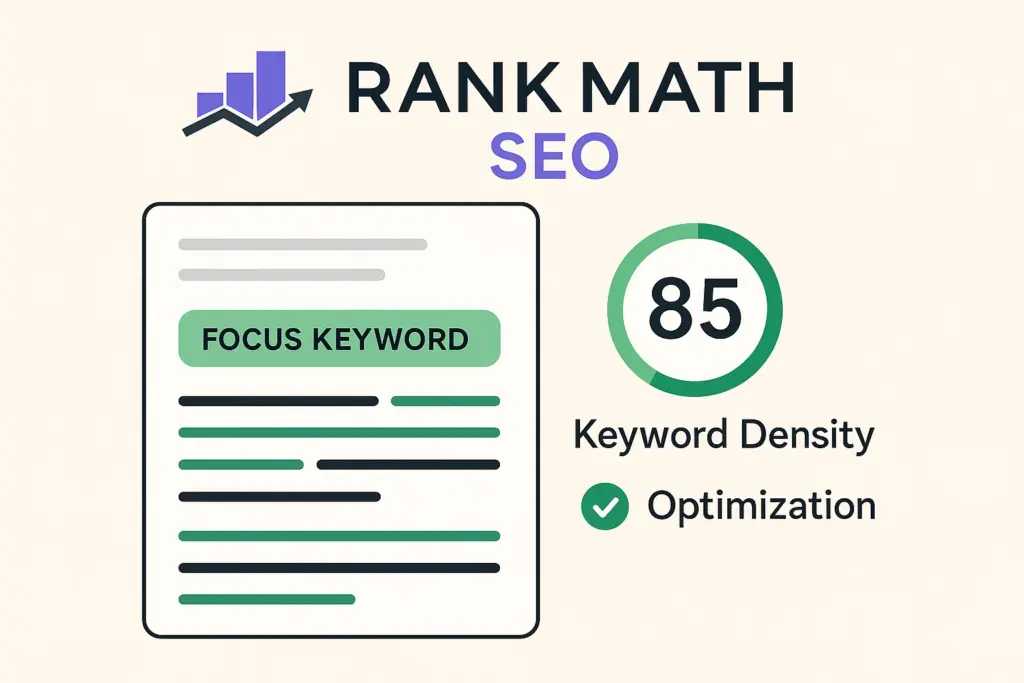
Rank Math, another popular SEO plugin, offers its own guidance on how many SEO keywords should I use. Like Yoast, Rank Math encourages the use of focus keywords in titles, meta descriptions, URLs, and throughout the content. It also evaluates LSI (Latent Semantic Indexing) keywords, which are contextually related terms that support the main focus. Rank Math assigns a keyword density score, typically recommending a density between 1% and 2.5%. For a 1,500-word article, this translates to using the main keyword about 15 to 37 times. The plugin also checks for keyword placement in alt text, links, and content length. These standards align with modern SEO’s emphasis on both optimization and user experience.
Avoid Keyword Stuffing Without Setting A Density Target
Read the draft aloud. Look for repeated questions, awkward phrasing, and sentences that add no information. Remove keyword mentions that exist only to increase a count. Use a clear noun or pronoun when the reader already knows the subject.
Do not replace repetition with a string of near-identical variations. Explain the subject naturally and keep the details that help readers. Descriptive headings should identify what each section answers rather than repeat the main query throughout the page.
A Hypothetical Keyword Map For A Service Page
Consider a page offering WordPress website design. Its main purpose is helping someone evaluate that service. Related questions can belong together when they support that decision. The following example uses real service categories, but it does not describe a verified client project or ranking result.
| Search Or Buyer Question | Suggested Placement | Reason |
|---|---|---|
| WordPress website design | Main service page topic | Describes the service someone wants to hire. |
| Can you build a custom WordPress website? | Same page | Clarifies the scope of the offer. |
| What affects the project price? | Same page | Helps the buyer evaluate the service. |
| What happens during the design process? | Same page | Answers a related purchasing question. |
| WooCommerce website design | Existing WooCommerce service page | Concerns a more specific online-store service. |
| What are keywords? | Existing keyword explainer | Serves a different informational need. |
The distinction comes from the reader’s task, not the number of phrases collected. Review the existing page before creating another URL. A small wording change does not automatically justify a separate page.
If you need help matching search topics to suitable pages, explore our SEO services.
When Should Keywords Have Separate Pages?
Google’s SEO Starter Guide explains that its language-matching systems can understand relevant searches without every exact phrase appearing on your page. Answer the reader’s questions naturally instead of inserting every keyword variation. Google also warns against excessive repetition, so avoid adding phrases simply to reach a target count.
Keep related searches together when one clear page can satisfy the same underlying need. Different wording alone does not require another URL. Separate pages make more sense when the visitor needs a different service, a different content format, or a substantially different explanation. Check your existing pages first. Improve or link to a suitable page rather than creating another version unnecessarily. Use descriptive internal links where they help readers continue to that different task.
Examples of Good Keyword Usage
Consider a business offering Shopify Website Design. Instead of repeating the phrase “Shopify website design” dozens of times, the content could use variations such as “custom Shopify store,” “build a Shopify ecommerce website,” or “optimize Shopify design for SEO.” These variations reflect how users actually search and allow content to cover the topic comprehensively. Both Yoast and Rank Math encourage this type of natural variation rather than rigid repetition. By diversifying phrasing, businesses answer multiple search intents with a single page.
Research Keywords, Page Content And Meta Keywords
Research keywords are planning inputs. They help you understand the questions and language your audience uses. Page content is the explanation visitors read. A useful research phrase may shape a section without appearing word for word in the final copy.
The keywords meta tag is a separate HTML field. Google does not use it for indexing or ranking. Adding a list there does not replace useful page content. It is also different from the meta description, which summarizes a page and may appear in a search snippet.
Why Keyword Strategy Is a Long-Term Effort
Finally, when considering how many SEO keywords should I use, it’s crucial to think long-term. Keyword trends change, competition evolves, and algorithms update regularly. What works today may require adjustments tomorrow. That’s why ongoing Website Maintenance and continuous monitoring are essential. Tracking keyword rankings, measuring traffic, and analyzing performance ensures strategies remain effective. SEO is not about finding a one-time formula but about evolving with digital landscapes to maintain visibility and growth.
Conclusion
Plan each page around one clear topic and the supporting questions readers need answered. Keep related searches together when they serve the same goal. Use a separate page when the reader’s needs meaningfully change.
You do not need a fixed keyword count or density target. Focus on useful information, natural wording, and clear organization. Best Website Builder Group helps businesses plan website content around relevant topics and customer needs.