
Dealer SEO case study
Dealer SEO case study: Hartville Outdoor Products
$2.5M to $50M in sales without selling a single building online.
This dealer SEO case study follows a family-owned shed, cabin and outdoor furniture dealer in Hartville, Ohio, that never sells a building through a checkout, from a small display lot to a sales lot that now fills the land across the street. It took a website shaped around a massive catalog, a product page system that ranks without showing a single price, 448 blog posts, and a partnership that has lasted more than six years.
CLIENT
LOCATIONS
SELLS
PLATFORM
PARTNERS SINCE
WHAT WE DO
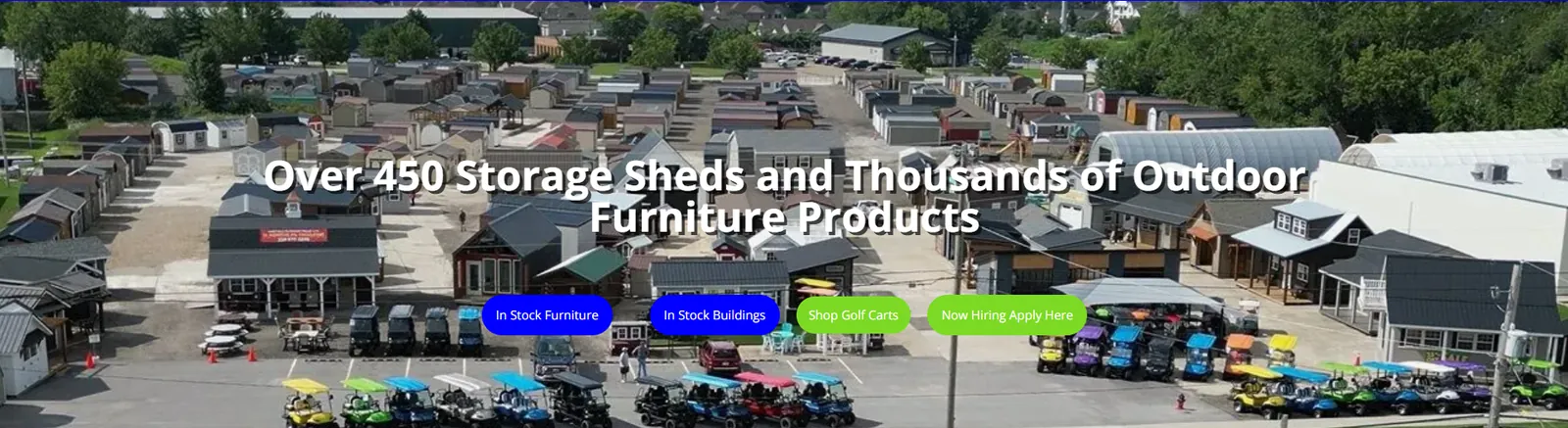
hartvilleoutdoorproducts.com, homepage banner, 2026
$2.5M to $50M
21x
22,047
448
Don't take our word for it
Look at the lot.
When we took over the account, Hartville Outdoor Products showed its buildings on a small display lot across West Maple Street. A ring of sheds on mostly empty ground, just enough to get people curious.
Today that same land is filled edge to edge with storage sheds, barns, cabins, garages and tiny homes, a few football fields of inventory, with a full outdoor furniture showroom across the road.
It grew so big the owner started buying golf carts so summer shoppers wouldn’t have to walk the lot in the July heat. The website is where most of those shoppers started.
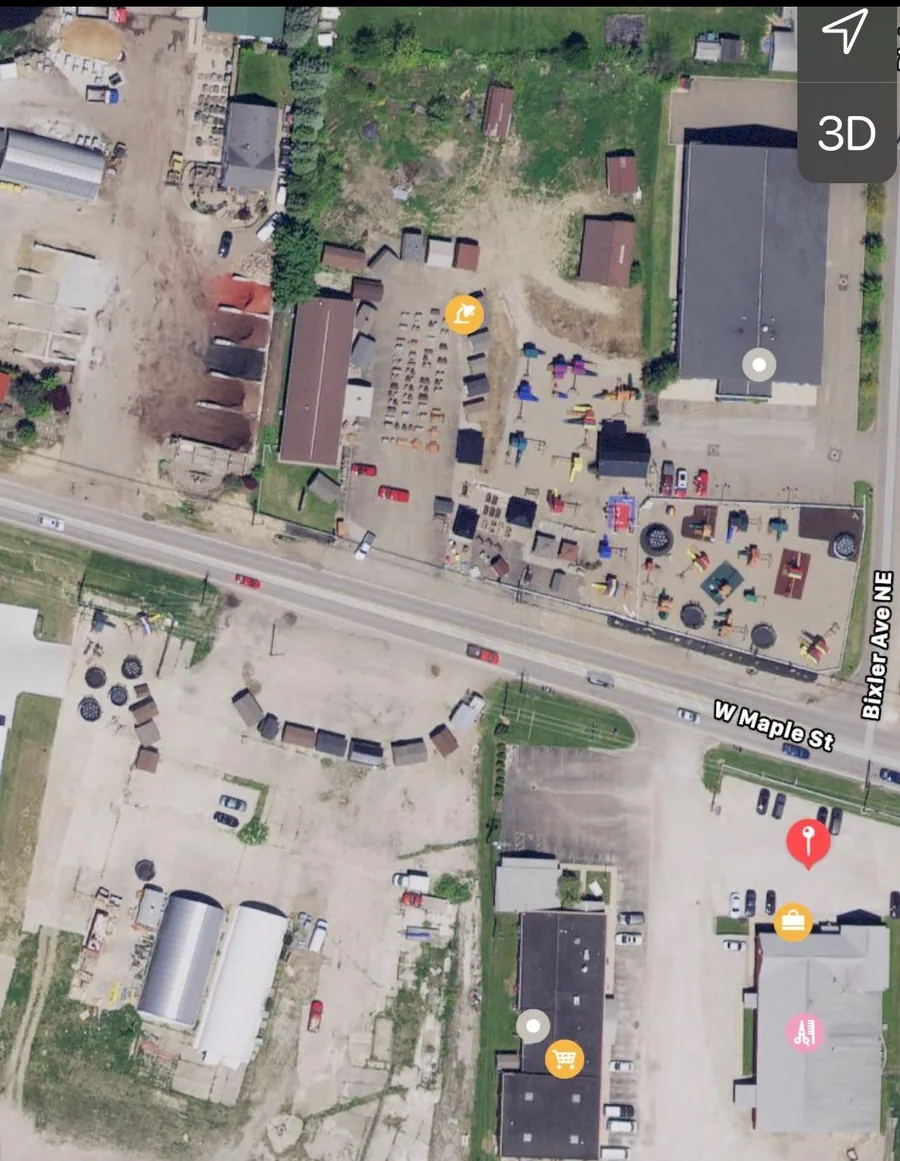
BEFORE
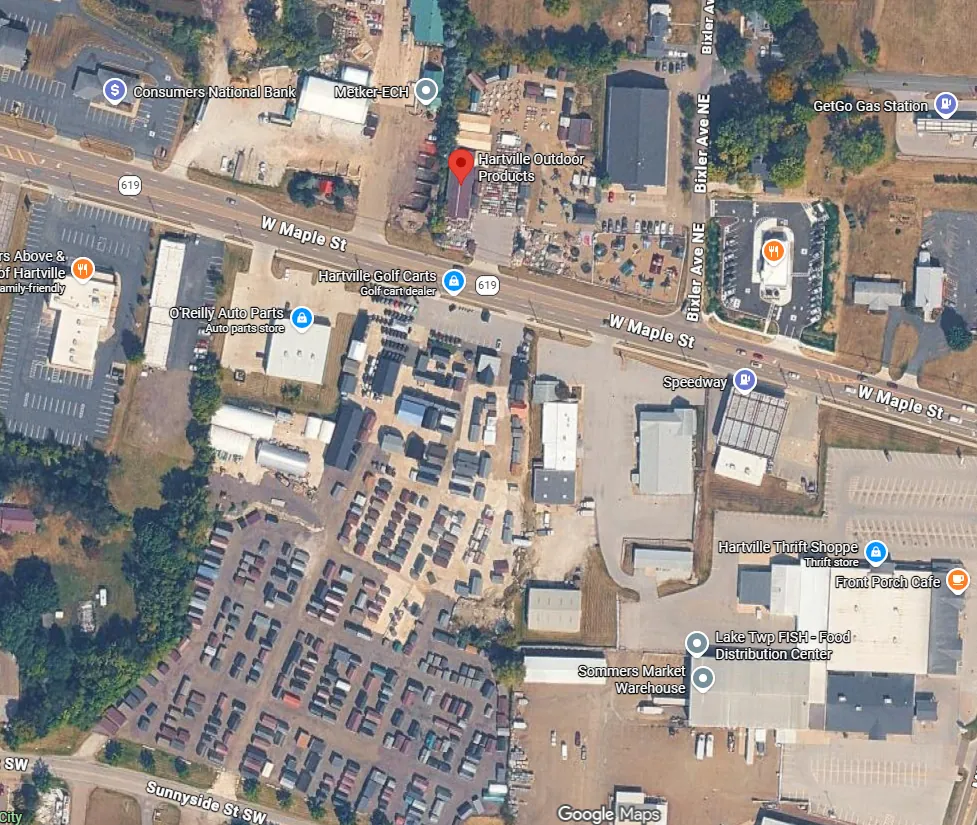
2026
Aerial imagery: Apple Maps (before) and Google Maps (2026), West Maple St, Hartville, Ohio.
Check it yourself
Open Google Earth, search 1147 W Maple St, Hartville, Ohio, and turn on historical imagery. Scroll back six years, then scroll forward. That is what a website that sells looks like from the sky.
Where it started
We came in for support. We stayed six years.
In September 2019 we took over the Hartville Outdoor Products account alongside support for its sister company, Kids World Play Systems. The catalog was enormous: sheds and barns in dozens of styles and sizes, garages, cabins, tiny homes, specialized buildings, and thousands of outdoor furniture pieces. The website had to sell all of it, and it had to do it without showing prices.
We launched the new site in February 2020, weeks before COVID. When backyards became the most important room in the house, the site was ready for the shoppers, and the leads came in fast.
Sept 2019
Feb 2020
2020
Aug 2021
Aug 2023
Nov 2024
2025
2026
The build
A website shaped like the lot.
A dealer with hundreds of buildings on the ground needs a website that lets buyers walk the lot from their couch. Every template was designed around that idea.
Navigation for a massive catalog
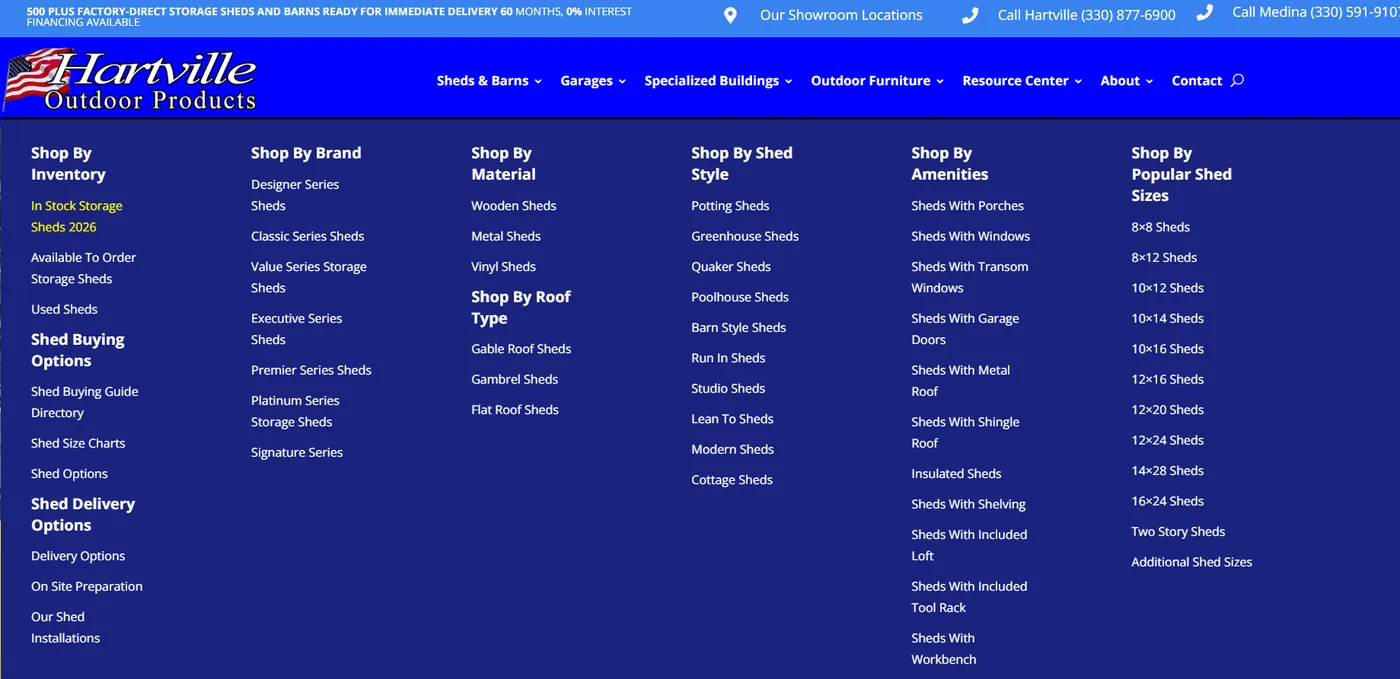
Most shed dealers bury their inventory behind one “Buildings” link. We built a mega menu that lets buyers shop the way they actually think: by what is in stock, by series, by material, by style, by roof type, by amenities and by size.
A buyer who already knows they want a 12×16 barn with a porch gets there in two clicks. A buyer who doesn’t know yet can browse by what the building needs to do.
- Seven ways to shop from one menu, from In Stock Storage Sheds to popular sizes.
- Buying resources up front: shed buying guide, size charts, delivery options and site preparation.
Category pages that work like landing pages
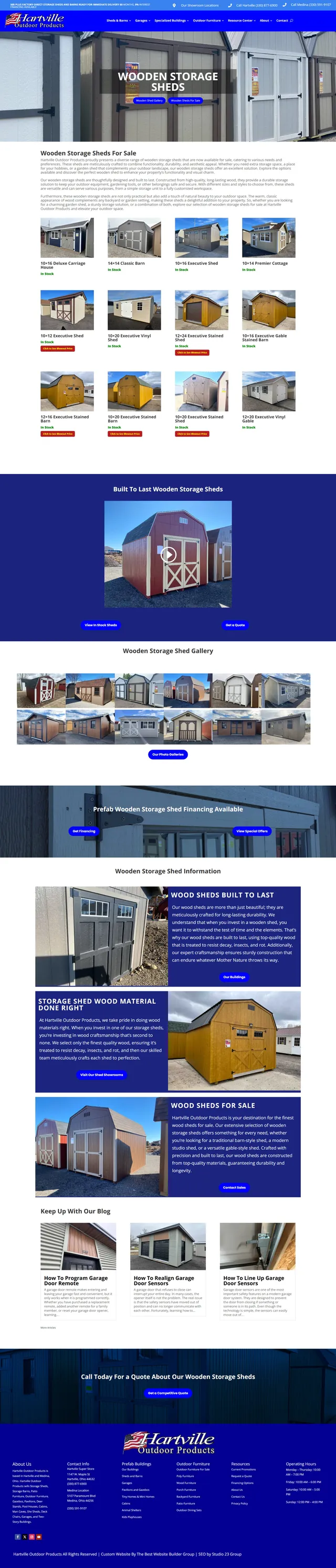
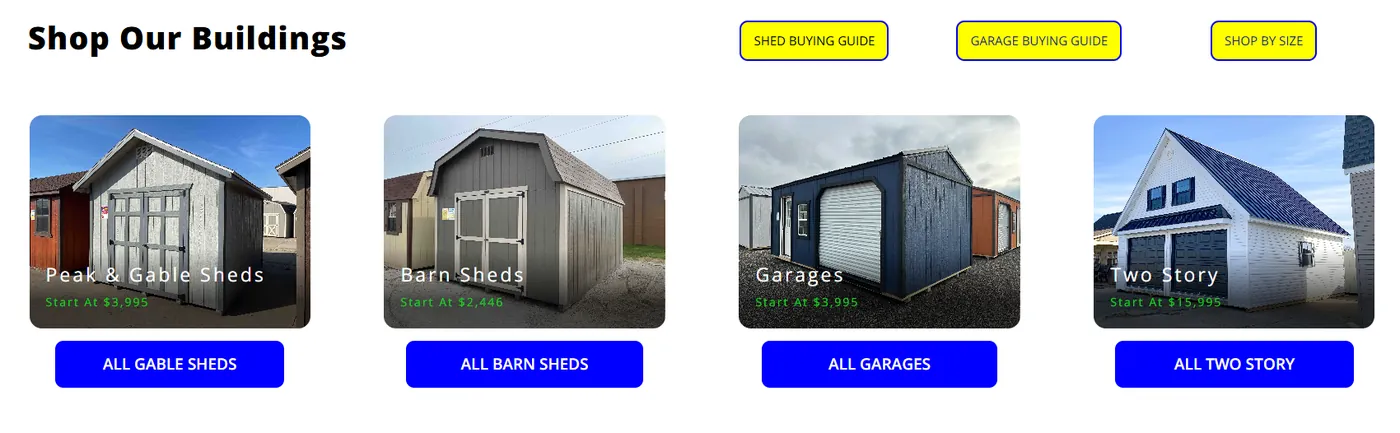
The category pages are not category pages in the usual sense. Each one is a full landing page with the whole category on it. Wooden Storage Sheds opens with every wooden building in a grid, with stock status on each one, then a walkthrough video, a photo gallery, a financing band, split content sections on how the sheds are built, and the latest blog posts.
That gives a broad search like “wooden storage sheds for sale” a page that can rank and sell at the same time, instead of a thin grid of thumbnails.
Product templates built for the phone
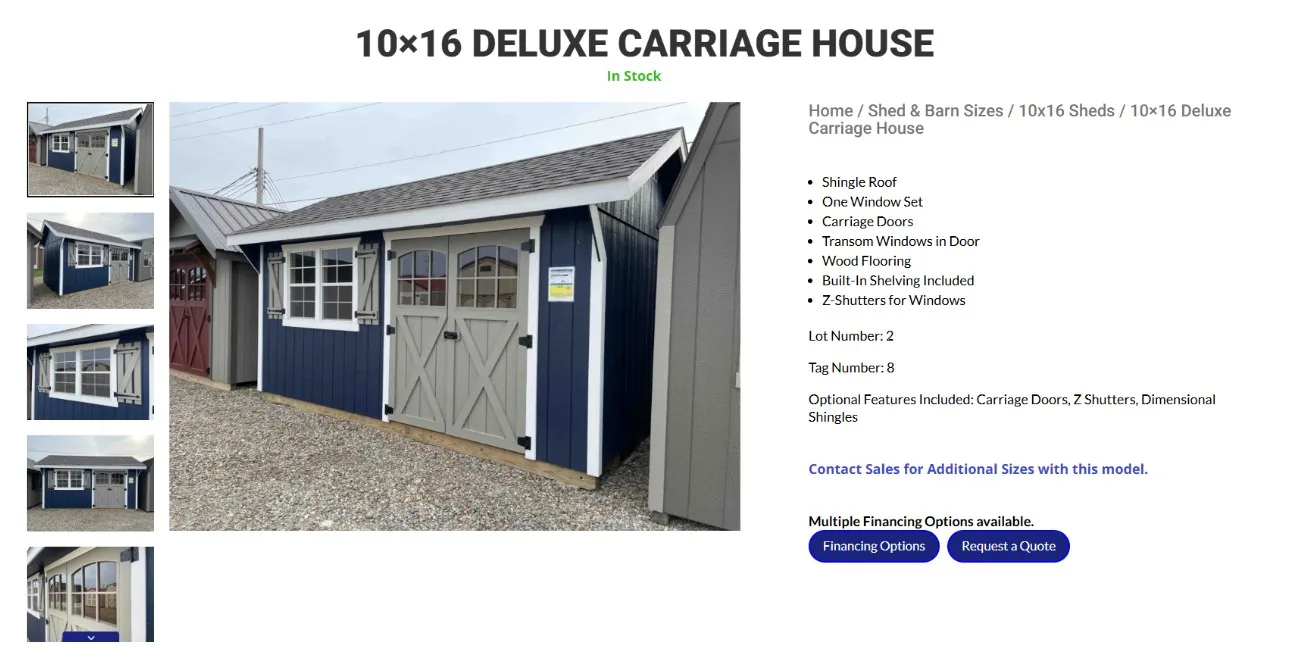
Every product page opens with the facts a lot buyer needs: stock status, the lot number and the tag number, so a buyer can walk straight to the building in person. Features sit beside the photos, and financing and quote buttons sit right under them.
Below the fold, strategic split content sells the product line, tabs show standard options, colors and sizes, and an FAQ, reviews and showroom section answer the last questions before the call.
- Lot number and tag number in the first screen of every in-stock building.
- Financing and quote calls to action placed where buyers decide, not just at the bottom.

The hard part
How do you rank products with no prices?
Most ecommerce SEO playbooks assume a price, a cart and a checkout. Dealer SEO is a different game. Hartville sells big-ticket buildings that are quoted, financed, configured and delivered, so the product pages don’t show prices. That is a real disadvantage in search, and it meant we had to win on everything else.
Image SEO
Real photos of real buildings on the lot, with descriptive filenames and alt text, so the inventory shows up in Google Images where buyers compare styles.
Video SEO
Walkthrough videos on category and product pages that answer questions before the buyer picks up the phone, and give the pages a second way into search.
The lot-number hook
Every product opens with stock status, lot number, tag number and where the building sits. It is the detail that turns a search into a visit.
A copy system
Each product and category page carries supporting copy built around one focus key phrase, written to the same structure across hundreds of pages.
Category landing pages
Every building type gets a full landing page, so broad, high-volume searches land on a page with the inventory, the video and the answers.
Internal linking
Category, product, blog and showroom pages link to each other on purpose, so authority flows to the pages that sell.
The results
Twenty-one times the organic traffic.
When the full SEO campaign started in August 2021, Semrush estimated about 975 organic visits a month. By April 2025 it estimated 20,894, worth about $13,800 a month in equivalent ad spend. Ranking keywords grew from 983 to a peak of 22,047, and top-three positions grew from 25 to 467.
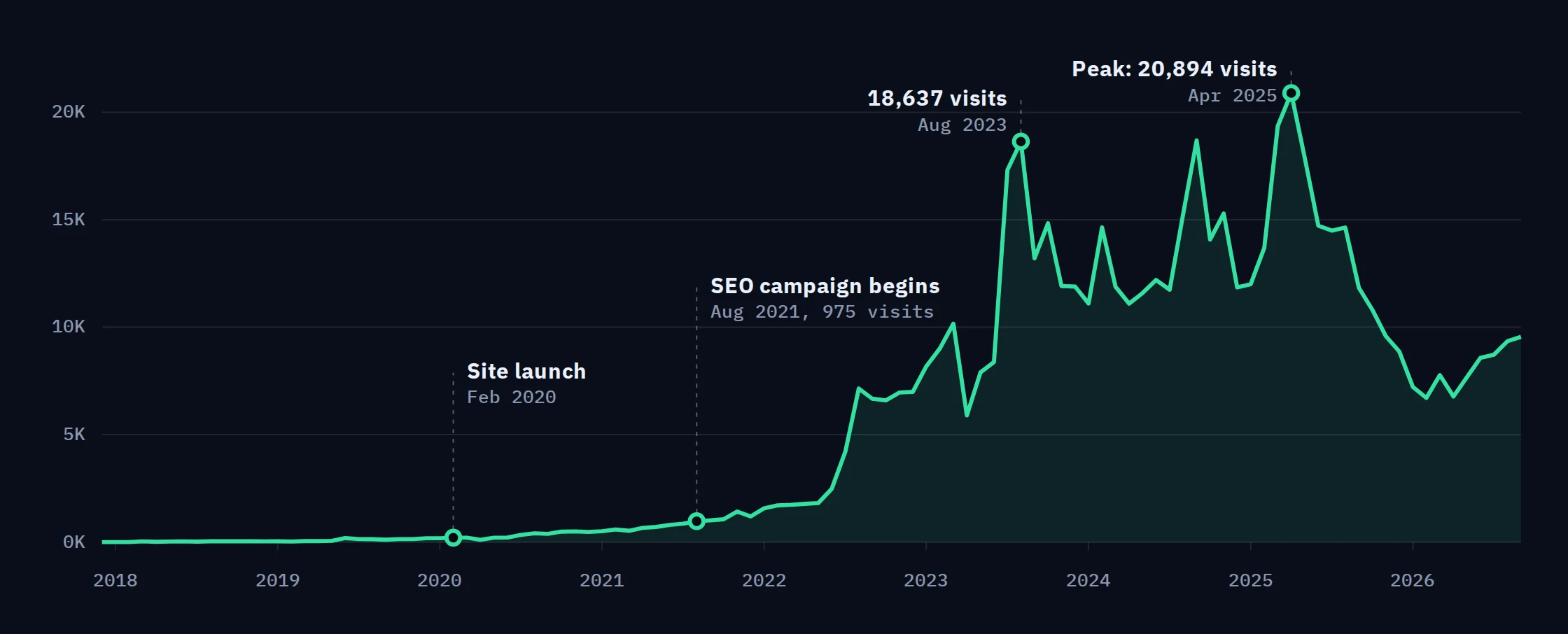
Estimated monthly organic visits, US
Source: Semrush, Dec 2017 to Sep 2026
22,047
467
93.1K
+32.2%
Google Search Console
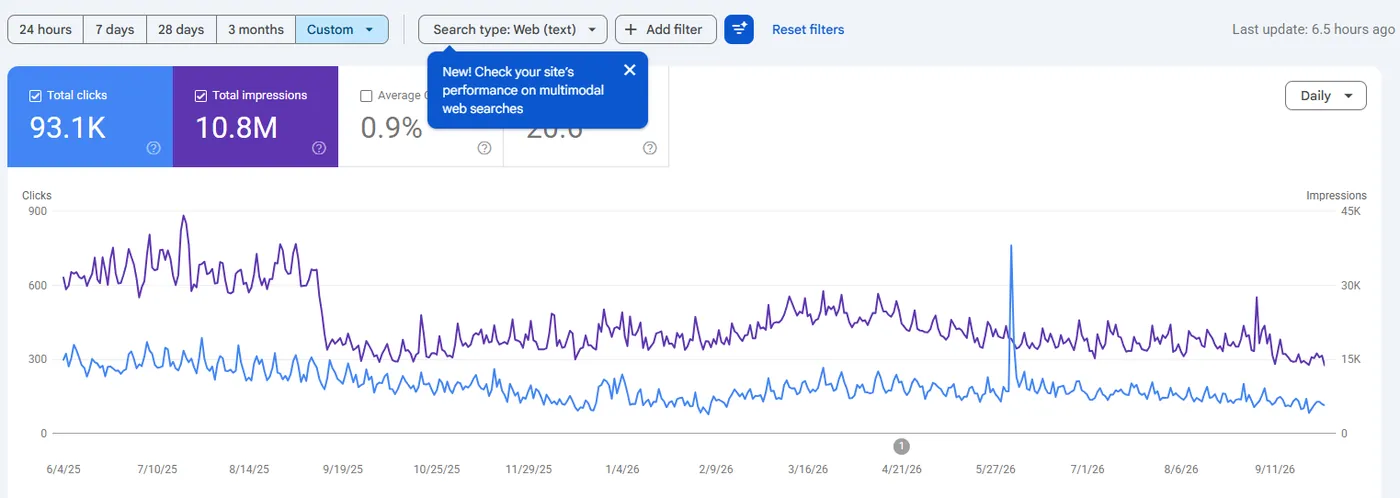
Search Console, web search, June 2025 to October 2026.
Google Analytics 4
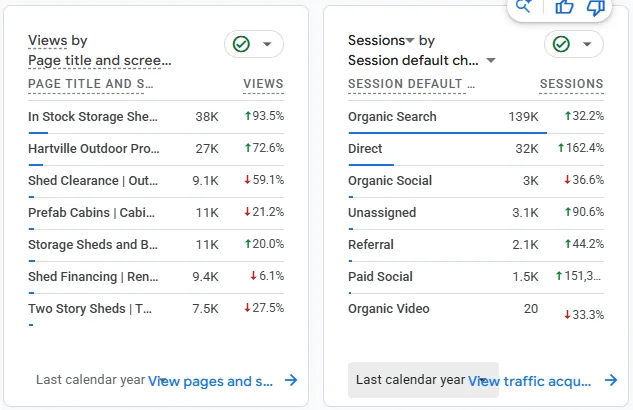
GA4, last calendar year. The In Stock Storage Sheds page alone drew 38K views, up 93.5%.
The content engine
448 blog posts and counting.
This is the biggest blog we run. It is so large it crashed our development server when we tried to bring it across for the rebuild.
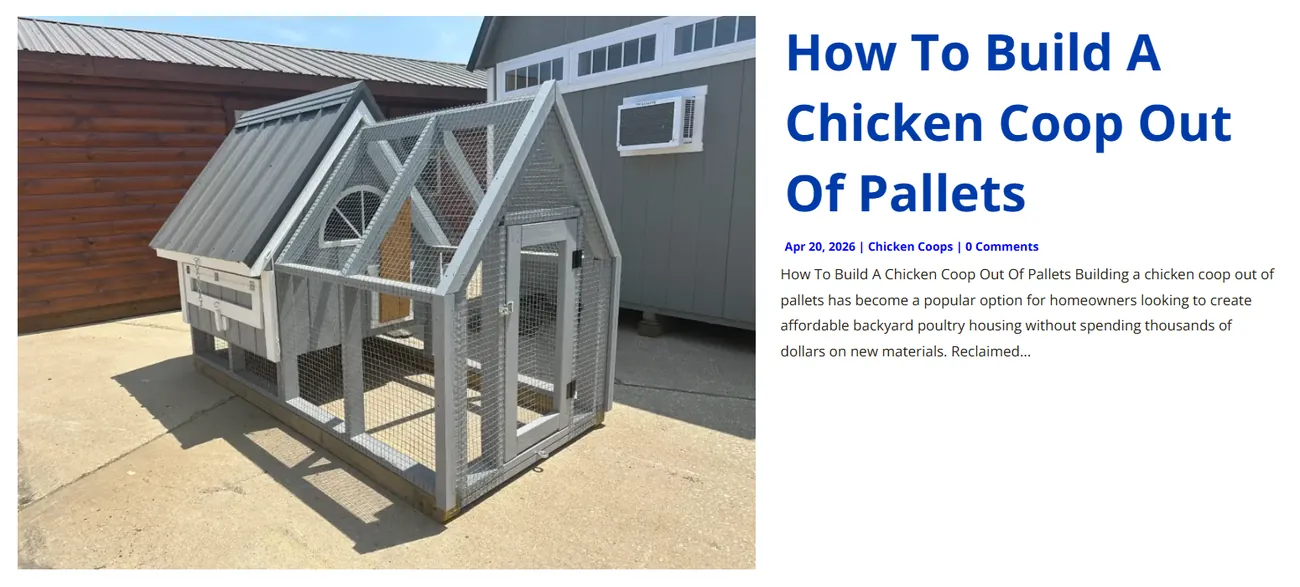
The posts answer the questions people ask long before they are ready to buy a building: how to build a shed roof, how to vent a storage shed, how deep a bench seat should be, how to build a chicken coop out of pallets. Each answer brings in a future buyer and teaches them to trust the dealer that answered.
Those posts now do double duty. AI assistants cite them constantly, which puts Hartville’s name in front of buyers who never typed it.
Most cited pages in AI answers
1,456
1,230
1,091
947
850
716
689
539
AI citations per page, Microsoft Clarity, January 2025 to October 2026.
AI search
Cited by AI 21,330 times.
Microsoft Clarity tracks how often AI assistants cite a site when they answer questions. Since January 2025, Hartville Outdoor Products has earned 21,330 citations and a 20.15% share of every citation across the questions tracked.
The most cited page on the whole site is a product page, the insulated shed with electricity, at 1,456 citations. It has no price on it.

Share of AI answers by question
56.63%
46.97%
38.89%
38.13%
37.15%
25.24%
17.02%
Share of authority, Microsoft Clarity (Copilot and partners), Jan 2025 to Oct 2026.
AI crawlers read the whole catalog
AI crawlers made 2.05 million requests to the site, 30.66% of all traffic. OpenAI alone made 361,000 of them, Anthropic 140,000 and Meta 128,000. Those bots are reading the product, category and blog pages that feed the answers buyers now get from ChatGPT, Claude and Copilot.

What the growth built
$2.5M
$50M
And then a second company.
Across our partnership, Hartville Outdoor Products grew from $2.5M to $50M in sales. The lot filled. The furniture side grew into its own showroom. And Hartville Outdoor Products now has a second location in Medina, Ohio, alongside the original Hartville superstore.
And in the middle of an Ohio summer, the owner bought golf carts to drive shoppers around the lot. Then he looked at the carts and decided he could sell those too.
That became Hartville Golf Carts, one of the fastest growing golf cart dealerships in the country, and the start of a group that now includes Mentor Golf Carts & Trailers. The same dealer SEO system runs those sites too, and that story gets its own case study.
The honest part
Not every year goes up.
Search Console shows a clear step down in the fall of 2025, and Semrush shows organic traffic off its spring 2025 peak. We know why. Hartville Golf Carts took off and the group’s focus moved with it. The website was five years old, running on aging infrastructure, and new inventory was not being added the way it had been.
Even so, the site drew 93,100 Google clicks over the last 16 months, and organic search sessions finished 2025 up 32.2% on the year before.
The fix is already in motion. We are rebuilding the site as a true digital showroom, carrying six years of SEO copy into a faster, simpler layout built to drive quote requests, calls and showroom visits.
The partnership
Six years. That's the real result.
Dealers switch marketing partners all the time, often within months. Our average client relationship runs about three years. Hartville Outdoor Products has doubled it.
The reason is simple. They trust the process and they let us do the job. Off-page SEO and strategy run through Studio 23 Group, part of the Best Website Builder Group network, so design, development and search all answer to one team.
"We grew with this company so much that it opened up other companies. They trust the process, and they let us do the job."
Dylan Hamilton, Founder, Best Website Builder Group
6+
~3
5
448
15 minutes. A plan, not a pitch.
Want results like these?
Tell us about your business and where you want it to go. We will show you what it takes, whether or not you hire us.