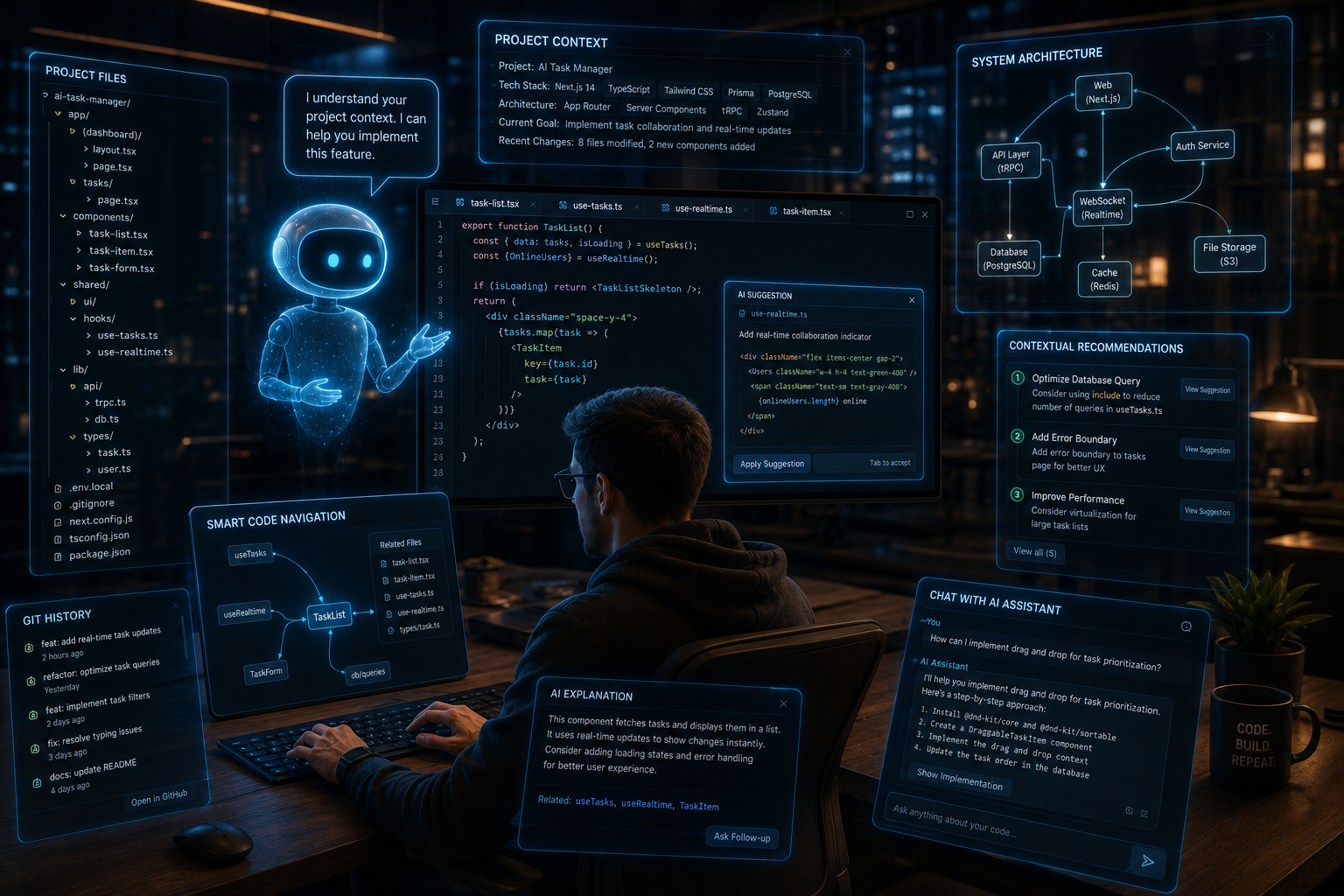
Developers often work on projects that span weeks or even months, which makes continuity an important part of any AI coding assistant. Does Cursor AI track memory across conversations? The short answer is that it can retain context in specific ways, but it does not operate like a human with unlimited long-term memory. Cursor is designed primarily around projects, codebases, and development workflows. It remembers information through indexed files, project instructions, workspace context, and active chat history rather than maintaining a universal memory of every conversation. This distinction is important because many developers assume an AI assistant remembers every previous interaction automatically. In reality, Cursor focuses on understanding the code and project environment it is connected to. This approach allows it to provide relevant coding assistance while keeping its knowledge tied to the workspace rather than storing broad personal histories across unrelated projects.
What Memory Means In An AI Development Tool
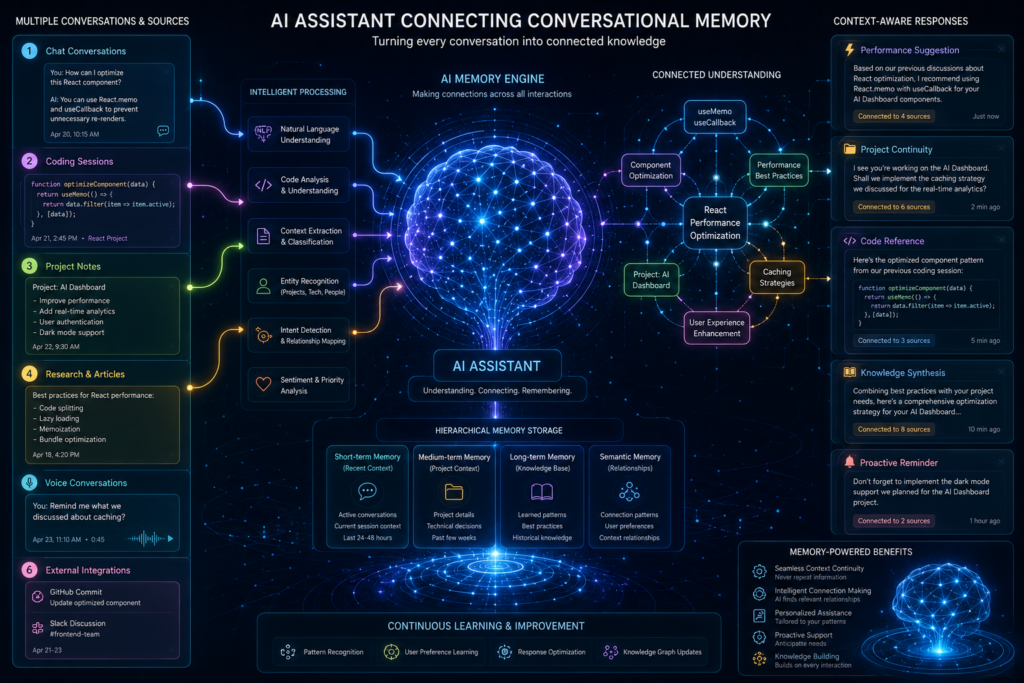
The word memory can mean different things depending on the software being discussed. In human terms, memory often refers to recalling past experiences and information over long periods. In AI tools, memory usually refers to context retention, stored instructions, indexed data, or access to previous interactions. When developers ask whether Cursor remembers previous conversations, they are often asking whether the tool can recall instructions, project decisions, coding standards, or discussions that occurred earlier.
Cursor achieves some of this through project-based context rather than personal memory. It can reference files it has indexed, instructions stored within the project, and conversation history available within a workspace. This creates an experience that feels like a memory because the tool can continue working with information it has already processed. However, the mechanism behind this behavior differs from the way people typically think about long-term memory.
How Project Context Creates The Appearance Of Memory
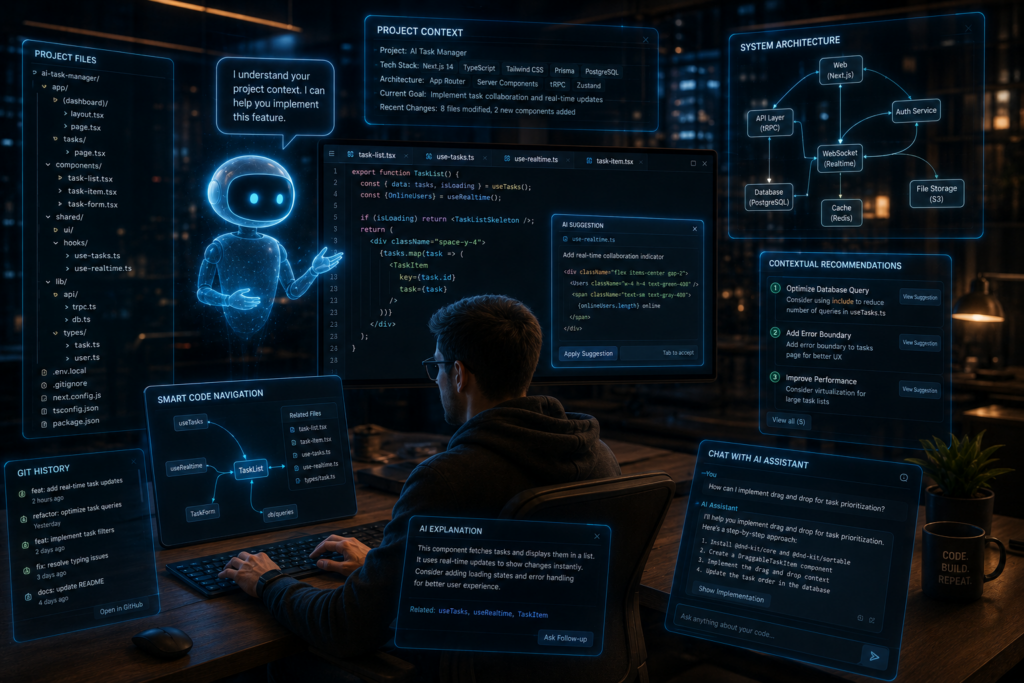
One reason developers believe Cursor remembers everything is that it becomes highly familiar with the codebase. Cursor indexes project files and uses them as a source of context when answering questions or generating code. When a developer returns to a project after several days, the AI can still reference important files, functions, dependencies, and structures because they remain available within the workspace.
This project awareness allows Cursor to provide consistent recommendations without needing every detail explained again. If a codebase contains established patterns or architectural decisions, the AI can recognize them and generate suggestions that align with the existing structure. The result often feels similar to memory because the tool appears to understand previous work. In reality, it is accessing project information that remains available rather than recalling a personal history of every interaction.
Chat History And Conversation Continuity
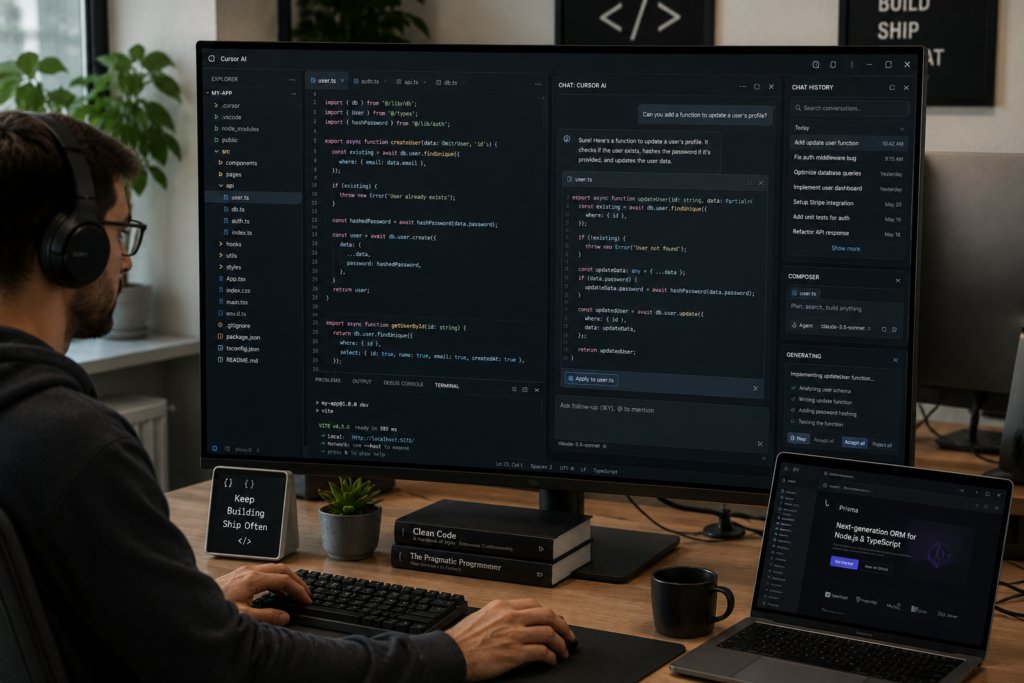
Active conversations contribute significantly to context retention. Within a chat session, Cursor can reference earlier messages and maintain continuity across multiple interactions. This makes it possible to discuss a feature, modify the implementation, review changes, and continue refining the solution without repeatedly explaining the same information. Conversation continuity improves productivity because developers can focus on solving problems rather than re-establishing context.
However, the extent of this continuity depends on how chats are managed and stored within the platform. Starting a completely separate conversation may reduce the amount of immediately available context compared to continuing an existing discussion. This distinction is important when evaluating whether Cursor AI tracks memory across conversations because some continuity comes from accessible chat history rather than permanent memory.
The Role Of Project Rules And Instructions
Many development teams use project-specific instructions to guide AI behavior. Cursor supports configurations and project rules that persist within a workspace. These instructions can define coding standards, preferred frameworks, naming conventions, architectural guidelines, and workflow expectations. Because these rules remain available across sessions, the AI can consistently follow established practices even when conversations change.
Developers often experience this as memory because the assistant continues applying the same standards over time. Project rules are particularly useful for larger teams because they help ensure consistency regardless of who interacts with the AI. Rather than relying on memory, the system relies on persistent instructions that remain attached to the project environment.
What Cursor Does Not Typically Remember
Although Cursor provides strong project awareness, there are important limitations. It generally does not maintain a universal personal memory across unrelated projects. Information discussed in one codebase does not automatically become available when working in a completely different workspace. A developer might spend weeks building an e-commerce application and later begin a machine learning project.
The AI does not automatically transfer detailed context between those environments. This separation helps keep project-specific information relevant while reducing confusion caused by unrelated context. Personal preferences may also be limited unless they are explicitly documented within project instructions. The focus remains on helping developers within the current workspace rather than maintaining broad personal profiles across all activities.
Benefits Of A Project-Centric Approach
A project-focused design offers several advantages. Development work often requires deep awareness of specific files, libraries, frameworks, and architectural decisions. By concentrating on project context, Cursor can provide more relevant assistance than a system attempting to maintain large amounts of unrelated information.
Developers benefit from suggestions that align closely with the codebase rather than generic recommendations. This improves efficiency and reduces the amount of manual correction required. Teams working on complex applications often appreciate that the AI remains grounded in project realities rather than drawing heavily from distant conversations.
Organizations investing in custom software, ecommerce platforms, and digital systems frequently recognize the value of structured project environments. Businesses building scalable online solutions often explore services such as WordPress Website Design to ensure their digital infrastructure supports long-term growth and maintainability.
How Cursor Compares To User-Centric AI Memory
Different AI platforms approach memory in different ways. Some systems focus on remembering user preferences across many conversations. Others prioritize project-specific knowledge and workspace awareness. Cursor falls primarily into the second category because its main purpose is to help developers work more effectively within codebases.
User-centric memory can be useful for maintaining personal preferences and recurring instructions. Project-centric memory is useful for maintaining technical consistency and code awareness. Neither approach is inherently better because they solve different problems. Developers evaluating AI tools should consider whether their priority is personal continuity across many topics or deep awareness of a specific technical environment. The answer often depends on the nature of their work.
The Future Of Memory In Development Tools
AI development tools continue evolving rapidly, and memory capabilities will likely become more sophisticated over time. Future systems may combine project awareness, personal preferences, workflow history, and contextual reasoning more effectively than current tools. Developers may eventually benefit from assistants that understand both the technical environment and long-term working habits. Research into artificial intelligence continues exploring better ways to manage context and improve system performance.
According to the National Institute of Standards and Technology (NIST), AI systems are advancing in their ability to process information and support decision-making across many domains. As these technologies mature, developers can expect more seamless transitions between conversations, projects, and workflows while maintaining strong relevance and accuracy.
Conclusion
Does Cursor AI track memory across conversations? The answer is yes in certain ways and no in others. Cursor retains context through indexed codebases, workspace knowledge, chat history, and project instructions. These features create continuity that often feels like memory because the AI can continue working with information already available within the project.
At the same time, Cursor generally does not maintain a universal long-term memory across unrelated projects and conversations. Its strength comes from project-centric awareness rather than broad personal recall. For developers, this approach often delivers more relevant coding assistance because the AI remains focused on the environment where work is actually happening. Businesses looking to build efficient digital systems and development workflows often work with experienced partners such as Best Website Builder Group to create scalable solutions that support productivity and long-term growth.