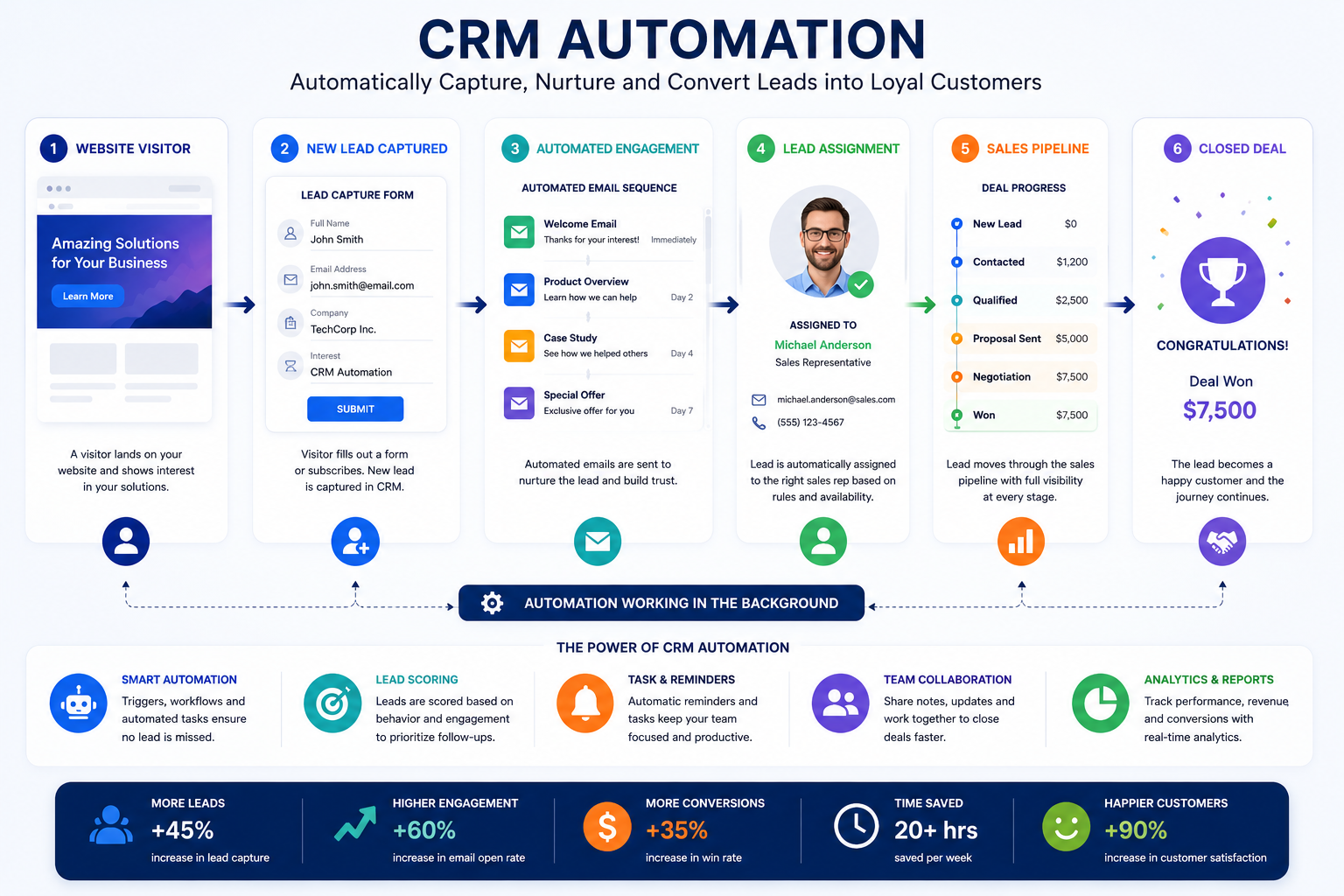
If you are asking what is CRM automation, it is the use of technology to automatically manage customer-related tasks such as lead tracking, follow-up communications, contact organization, and sales workflow management. While that definition sounds straightforward, the real impact goes much deeper. Modern businesses handle large amounts of customer information every day, and manually managing every interaction quickly becomes inefficient. CRM automation helps companies create more consistent customer experiences, reduce administrative work, and improve team productivity. Rather than spending valuable time on repetitive tasks, employees can focus on building relationships and generating revenue. As businesses grow, automation often becomes a key factor in maintaining service quality and operational efficiency.
How Automated Customer Management Systems Work
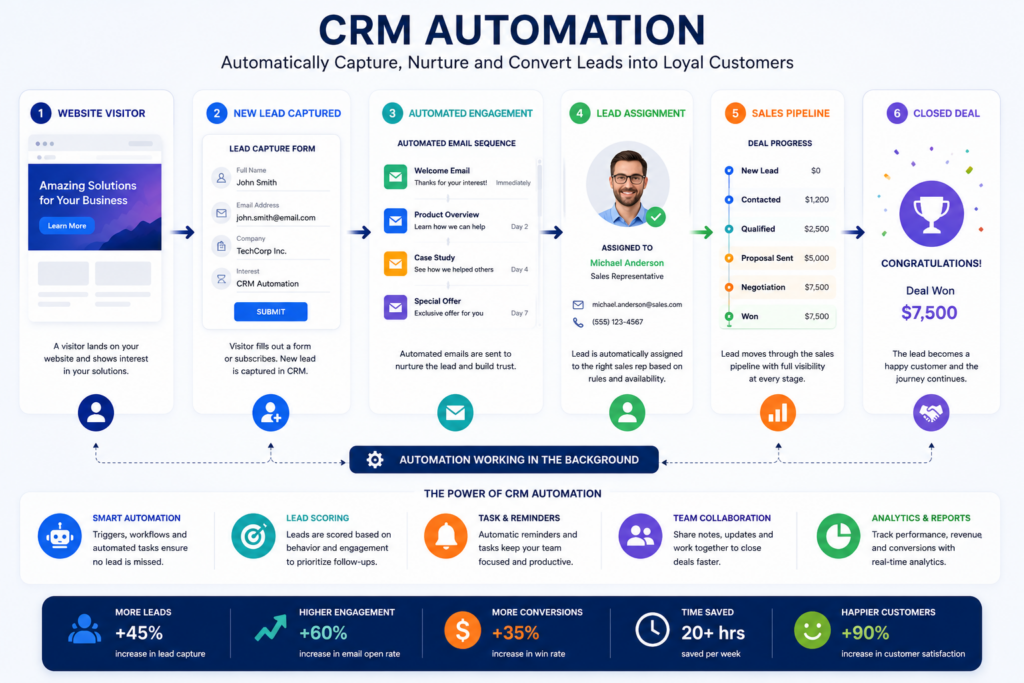
Customer relationship management platforms act as central hubs for customer data. Every interaction, inquiry, purchase, and communication can be stored in one location. Automation tools then use predefined workflows to trigger actions based on specific events. For example, when a website visitor submits a contact form, the system can automatically create a customer record, assign the lead to a sales representative, and send a confirmation email within seconds.
These automated workflows reduce the risk of human error and ensure that important actions happen consistently. Without automation, businesses often rely on manual processes that can lead to missed opportunities, delayed responses, and inconsistent customer experiences. Automation helps create a predictable and scalable system that supports business growth without requiring additional administrative effort.
Why Businesses Are Investing In CRM Technology
Companies invest in CRM systems because customer relationships directly influence revenue and long-term success. Managing those relationships manually becomes increasingly difficult as customer numbers grow. Automation provides a way to maintain organization while improving responsiveness. Businesses often discover that automation eliminates repetitive tasks such as scheduling follow-ups, updating records, assigning leads, and sending routine communications. Instead of spending hours on administrative work, employees can focus on activities that contribute directly to growth.
This shift improves productivity while helping organizations deliver a more consistent experience across every customer interaction. The growing demand for efficiency is one reason why CRM platforms have become a standard component of modern business operations.

How Sales Teams Benefit From Automated Workflows
Sales professionals spend a significant amount of time tracking prospects, updating records, and managing communications. Automation helps streamline these responsibilities and allows sales teams to focus more attention on closing deals. Lead assignment workflows can immediately direct new inquiries to the appropriate representative. Follow-up reminders ensure that opportunities receive timely attention.
Automated nurturing sequences can keep prospects engaged throughout the buying journey. Rather than relying on memory or spreadsheets, sales teams gain a structured system that supports every stage of the sales process. Better organization often leads to faster response times and improved conversion rates. Businesses seeking stronger lead generation systems frequently combine CRM technology with solutions such as Website Redesign to create more effective customer acquisition funnels.
The Role Of Automation In Marketing Campaigns
Marketing teams use automation to manage campaigns more efficiently and deliver more personalized experiences. Modern customers expect relevant communication rather than generic messages. Automated segmentation allows businesses to group contacts based on interests, behaviors, purchase history, or engagement levels.
Once contacts are organized into specific segments, automated campaigns can deliver targeted content at the right time. This helps improve engagement and strengthens customer relationships. Marketing teams can also track performance metrics more effectively, allowing them to identify which strategies generate the strongest results. Automation supports scalability by allowing organizations to manage larger audiences without dramatically increasing workload. This makes it easier to maintain personalized communication as the business grows.
Customer Service Improvements Through Automation
Customer service departments often handle large volumes of inquiries every day. Automation helps ensure that requests are routed correctly and addressed efficiently. Support tickets can be created automatically, assigned to appropriate team members, and tracked throughout the resolution process. Customers benefit from faster response times and more consistent communication.
Service representatives gain immediate access to customer histories, allowing them to provide more informed assistance. This improves both customer satisfaction and team productivity. Organizations that prioritize customer service frequently find that automation reduces delays and helps create a more reliable support experience. Consistency becomes easier to achieve because important steps are no longer dependent on manual processes.

Common Features Found In Modern CRM Platforms
Most CRM systems include tools designed to simplify customer management. Popular features include contact databases, lead scoring, sales pipeline tracking, email automation, reporting dashboards, workflow builders, appointment scheduling, and customer segmentation. These features work together to provide visibility into customer activity while reducing repetitive work. Reporting tools help managers monitor performance and identify opportunities for improvement.
Workflow automation ensures that important actions happen automatically according to predefined rules. The flexibility of modern CRM platforms allows businesses to customize processes based on their specific goals. Whether the focus is sales growth, customer retention, or operational efficiency, automation can be tailored to support different objectives.
Challenges To Consider Before Implementation
Although automation offers significant benefits, successful implementation requires planning. Businesses sometimes expect immediate results without investing time in setup, training, and process development. Poorly designed workflows can create confusion rather than efficiency. Companies should begin with clearly defined goals and gradually introduce automation into existing processes. Team training is equally important because employees need to understand how the system works and how it supports their responsibilities.
Starting with simple workflows often produces the best results. As teams become more comfortable with the platform, additional automation can be introduced to support more advanced business functions.
How CRM Automation Supports Long-Term Growth
Businesses that scale successfully often rely on systems that allow them to handle increased demand without significantly increasing administrative workload. Automation provides that foundation. By organizing customer information, streamlining communication, and improving visibility into business activity, CRM platforms support sustainable growth.
According to the Pew Research Center, technology adoption continues to influence how organizations operate and engage with customers. Businesses that embrace digital tools are often better positioned to adapt to changing customer expectations and market conditions. Automation allows organizations to maintain consistency as they grow, ensuring that customer relationships remain strong even as operations become more complex.
Conclusion
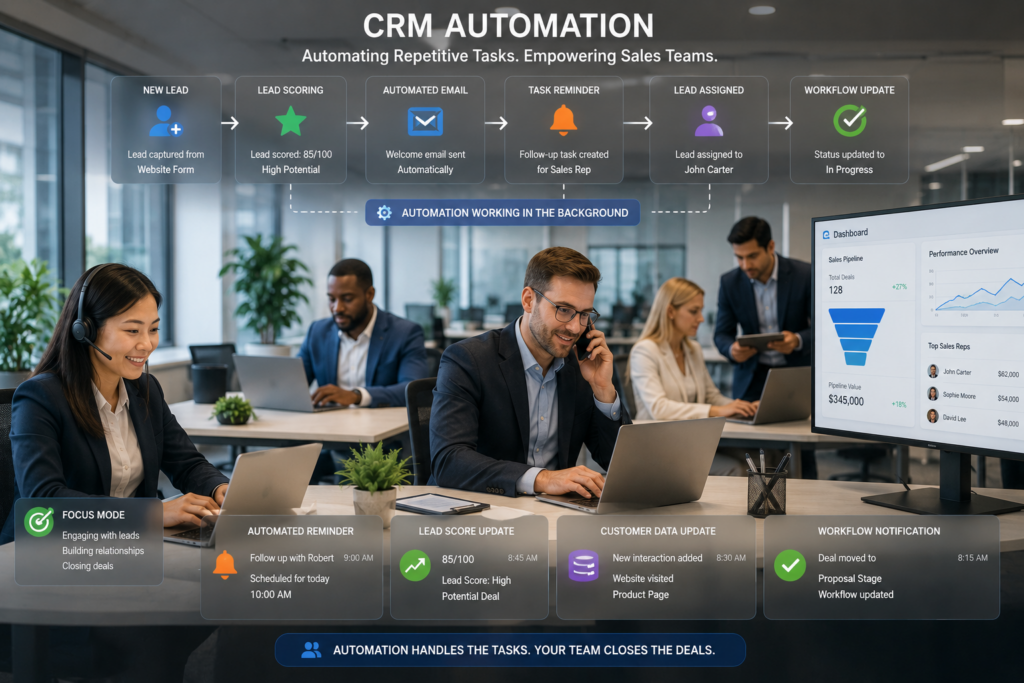
If you searched for what is CRM automation, the simple answer is that it uses software to automate customer management tasks and business workflows. The more important takeaway, however, is how those automated processes improve efficiency, strengthen customer relationships, and support growth across sales, marketing, and service teams.
Organizations that use automation effectively often gain more than just time savings. They create more reliable systems, deliver better customer experiences, and build a stronger foundation for future growth. Businesses exploring smarter ways to manage customer relationships and digital operations often work with experts such as Best Website Builder Group to develop scalable systems that support long-term success.