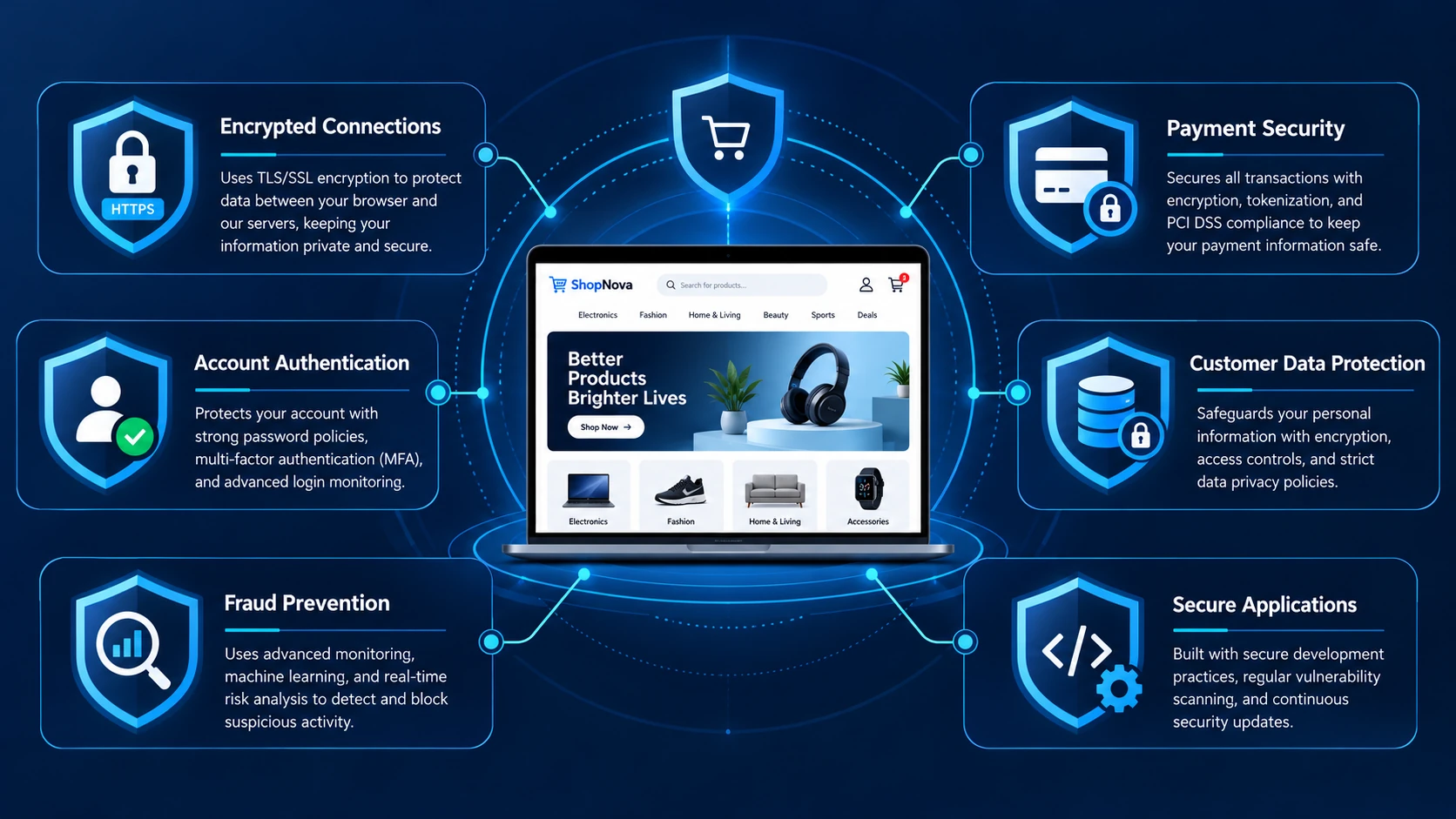
Yes, Shopify is a secure ecommerce platform that provides encrypted connections, PCI DSS-compliant payment infrastructure, account protection, and fraud detection tools. It helps businesses protect online transactions and customer information. However, no ecommerce platform can eliminate every security risk. When asking is Shopify safe, you should consider both Shopify’s built-in protections and the security practices followed by individual store owners.
Shopify handles many technical security responsibilities through its hosted infrastructure. Still, merchants must protect their accounts, manage third-party applications, and monitor suspicious transactions. Understanding these responsibilities helps businesses create trustworthy online stores and reduce avoidable security problems.
Shopify’s Security Infrastructure
Shopify operates as a hosted ecommerce platform, meaning the company manages much of the infrastructure supporting online stores. This includes hosting systems, platform updates, and several important security protections. Unlike self-hosted solutions, merchants do not need to maintain Shopify’s core server software independently. The platform uses established security standards and technical safeguards to protect its services and support reliable online transactions.
When evaluating is Shopify safe for business operations, its centralized infrastructure offers an important advantage. Shopify maintains security controls across its hosted platform, reducing certain responsibilities for merchants. However, store owners still control important areas, including account access, third-party apps, and customer communications. Weak passwords, phishing attacks, and unsafe integrations can create vulnerabilities despite the platform’s protections. Therefore, businesses should combine Shopify’s security features with responsible store management.
SSL Encryption And Secure Website Connections
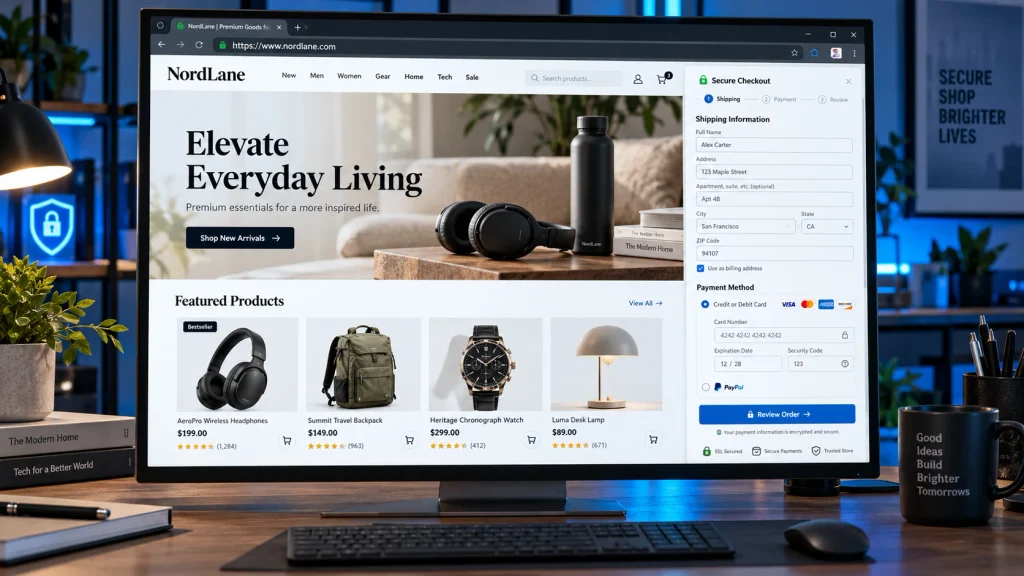
Secure website connections protect information traveling between customers’ browsers and online stores. Shopify uses Transport Layer Security, commonly called TLS, to encrypt these communications. TLS is the modern technology behind what users often refer to as SSL security. Websites using properly configured TLS connections display HTTPS in their addresses. Encryption helps prevent unauthorized parties from reading information transmitted over the connection.
Understanding is Shopify safe for customer browsing involves recognizing the importance of encrypted connections. Shopify provides TLS certificates for supported store domains, helping merchants establish secure connections without purchasing separate certificates. However, HTTPS does not prove that every seller is trustworthy. A fraudulent website can also use encryption. Customers should still verify store information, payment details, and business credibility before purchasing. Store owners must also check that their connected domains display secure connections correctly.
Payment Security And PCI Compliance
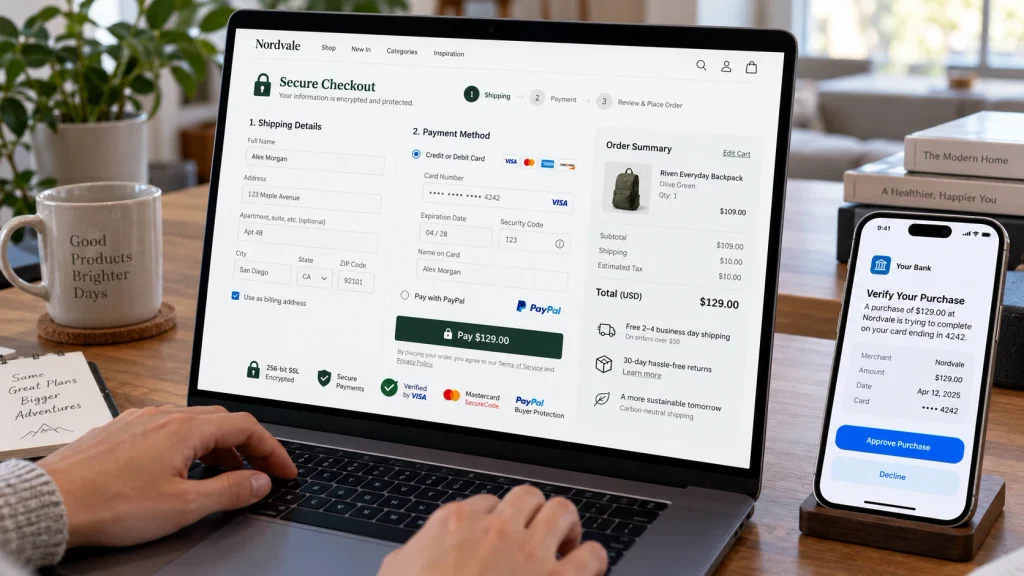
Payment security is one of Shopify’s most important features. The platform maintains Level 1 PCI DSS compliance, which covers its hosted ecommerce infrastructure. PCI DSS establishes security requirements for organizations involved in processing, storing, or transmitting payment card information. Shopify’s compliance helps merchants use a payment environment designed around recognized security standards.
The following table summarizes Shopify’s main security protections.
| Security Feature | Primary Purpose |
|---|---|
| TLS Encryption | Protects data during transmission |
| PCI DSS Compliance | Supports secure payment card handling |
| Two-Step Authentication | Reduces unauthorized account access |
| Fraud Analysis | Helps identify potentially suspicious orders |
| Staff Permissions | Restricts access to sensitive store functions |
| Security Monitoring | Supports detection and management of threats |
Shopify explains its certification and security responsibilities on its official PCI compliance page. However, PCI compliance does not guarantee protection against every type of fraud. Merchants must still follow applicable security responsibilities, including protecting account credentials and reviewing payment activity.
Customer Data Protection And Privacy
Customer information includes names, email addresses, shipping details, and purchase records. Shopify provides features that help merchants manage this information within its ecommerce platform. Secure connections protect transmitted data, while administrative access controls help restrict who can view certain information. These safeguards support customer privacy, but merchants must also handle personal information responsibly.
When considering is Shopify safe for customer data, privacy practices deserve particular attention. Store owners should collect only necessary information and explain how they use customer details. Depending on their location and customers, businesses may need to comply with laws such as GDPR or applicable US privacy regulations. Merchants should also review data-sharing arrangements with marketing tools, analytics services, and third-party applications. Clear privacy policies and responsible data management help strengthen customer confidence.
Shopify Account Security And Staff Permissions
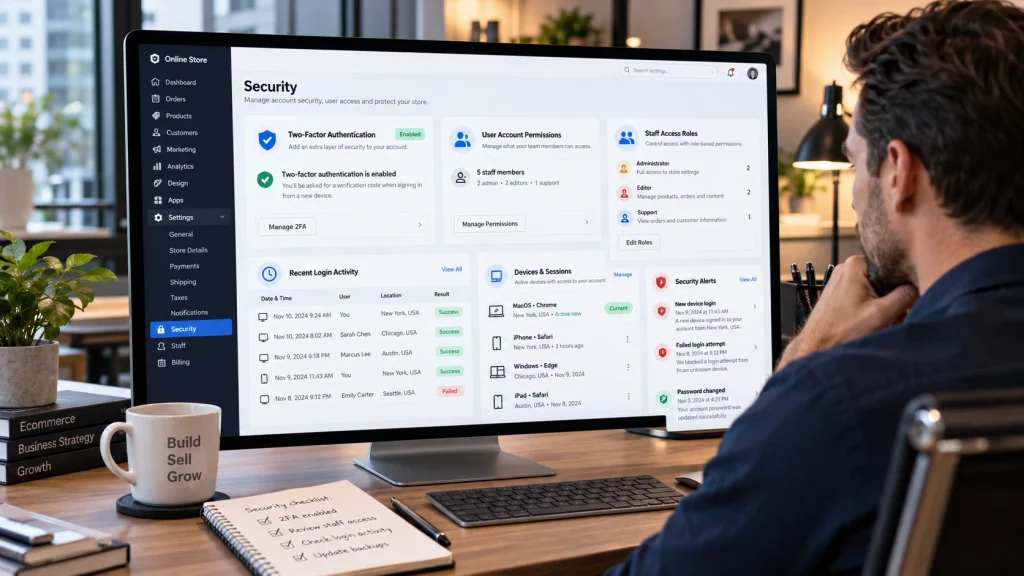
A secure ecommerce store requires strong administrative account protection. Shopify supports two-step authentication, which adds another verification step beyond a password. This protection makes unauthorized access more difficult when someone obtains or guesses account credentials. Shopify Payments also requires two-step authentication for eligible merchants using that payment service. Store owners should protect recovery information and use secure authentication methods whenever possible.
Another important part of is Shopify safe involves managing staff access. Businesses should provide employees with individual accounts and permissions appropriate to their responsibilities. For example, customer support employees may need order information without requiring access to sensitive financial settings. Avoid sharing administrator passwords or granting unnecessary permissions. Review staff accounts regularly and remove access when employees leave. These practices reduce the likelihood of accidental changes, unauthorized transactions, and account misuse.
Security Risks From Apps, Themes, And Integrations
Shopify applications extend store functionality through features such as customer reviews, marketing automation, product filtering, and inventory management. Although these tools can improve operations, third-party applications may introduce additional security and privacy risks. Some apps request access to customer records, product information, or administrative functions. Therefore, merchants should review requested permissions before approving installations.
Businesses evaluating is Shopify safe with third-party integrations should consider application reliability and developer reputation. Check reviews, documentation, privacy policies, and update histories before installing extensions. Remove unused apps and review their permissions periodically. Custom integrations also require secure authentication and careful data handling. Professional Shopify support services can help businesses review store configurations, troubleshoot integrations, and maintain functional ecommerce systems. Responsible app management reduces unnecessary exposure to security problems.
Protecting Your Store Against Fraud And Scams
Online stores can experience fraudulent purchases, unauthorized transactions, and phishing attempts. Shopify offers fraud analysis features that help merchants identify potentially suspicious orders. Depending on the payment provider and available features, the platform may display risk indicators and recommendations. However, these tools cannot detect every fraudulent transaction. Store owners should review unusual orders before fulfilling them, particularly when transaction details raise concerns.
Phishing presents another significant risk. Criminals may send messages impersonating Shopify, payment providers, or customers to obtain passwords and financial information. Employees should verify suspicious requests through official channels instead of opening unknown links. Merchants should also monitor payout information and investigate unexpected account changes. When asking is Shopify safe against fraud, remember that technology provides assistance rather than complete protection. Consistent monitoring and employee awareness remain essential.
Best Practices For Maintaining A Secure Shopify Store
Maintaining security requires regular attention after launching an ecommerce website. Begin by enabling two-step authentication and protecting administrator credentials. Review user permissions, installed applications, payment settings, and connected domains. Monitor suspicious orders and confirm that customer-facing forms function correctly. Businesses should also maintain accurate contact information and clear policies to help customers recognize legitimate communications.
Understanding is Shopify safe for long-term business use means treating security as an ongoing responsibility. Merchants should review account activity, update third-party integrations when necessary, and investigate unusual behavior promptly. Organizations with custom applications may also benefit from professional web development services to support secure integrations and reliable functionality. Regular security reviews help identify potential weaknesses before they become serious problems. A dependable store combines platform protections with responsible management practices.
Conclusion
So, is Shopify safe for online stores and customers? Shopify provides a strong security foundation through encrypted connections, PCI DSS-compliant infrastructure, account protection, and fraud analysis tools. These features make it a credible option for businesses selling products online.
However, security also depends on merchant behavior. Strong passwords, two-step authentication, careful app selection, and transaction monitoring help reduce avoidable risks. Customers should also verify store credibility before making purchases. At Best Website Builder Group, businesses can access Shopify support and professional website development solutions. These services help maintain functional, reliable ecommerce stores while supporting secure business operations.