
Yes, Shopify is worth it for businesses that want an ecommerce platform with built-in hosting, payment processing, inventory management, and store customization tools. It simplifies online selling without requiring extensive coding knowledge. However, subscription fees, transaction charges, and paid applications can increase operating expenses. When deciding is Shopify worth it, consider your business size, sales volume, budget, and required features.
Shopify supports small businesses, established retailers, and growing ecommerce brands. Its tools help store owners manage products, process orders, and reach customers through multiple sales channels. However, understanding its advantages and limitations is essential before investing in the platform.

Shopify And Its Ecommerce Features
Shopify is a hosted ecommerce platform that allows businesses to create and manage online stores. It provides website templates, product management tools, secure checkout functionality, and order tracking features. Store owners can add products, organize collections, configure shipping settings, and monitor sales through a central dashboard. Shopify also handles core hosting infrastructure, reducing the technical responsibilities associated with managing an independent ecommerce system.
The platform supports physical products, digital goods, and various retail business models. Businesses can connect selected social media channels, marketplaces, and point-of-sale systems to manage sales across different locations. Additionally, Shopify offers applications that extend store functionality. These features make it suitable for entrepreneurs who prefer managing their operations through one platform rather than combining several independent services.
Shopify Pricing And Additional Business Costs
Pricing plays an important role when evaluating is Shopify worth it for your business. Shopify offers several subscription plans with different features, staff permissions, and transaction rates. The Basic plan generally targets smaller operations, while Grow and Advanced provide additional capabilities. Shopify Plus serves businesses with more complex requirements. Subscription costs depend on the selected plan, billing cycle, and country.
The following table shows Shopify’s advertised US subscription prices as of October 2026.
| Shopify Plan | Monthly Billing | Annual Billing (Per Month) |
|---|---|---|
| Basic | $39 | $29 |
| Grow | $105 | $79 |
| Advanced | $399 | $299 |
| Plus | Custom contract | From $2,300 |
These prices exclude additional expenses such as premium themes, paid apps, payment processing, and custom development. Shopify may also charge third-party transaction fees depending on your payment setup. Review the official Shopify pricing page before choosing a subscription because plans and promotions can change.

Advantages Of Using Shopify For Online Stores
Shopify’s biggest advantage is its convenient store management system. Beginners can create product listings, update inventory, and process customer orders through an organized dashboard. The platform also provides professionally designed themes that simplify storefront creation. Its hosted infrastructure handles many technical tasks, including core platform maintenance and hosting security. This allows business owners to focus more on products, marketing, and customer service.
Another advantage is scalability. Businesses can begin with a small catalog and expand their operations without rebuilding the entire website. Shopify supports integrations for marketing, shipping, analytics, and customer management. Its ecosystem also includes developers and applications that provide additional functionality. When asking is Shopify worth it for ecommerce growth, these management tools and expansion options are significant benefits. However, choosing appropriate integrations remains important for controlling expenses.
Shopify Limitations And Potential Drawbacks
Although Shopify offers convenient tools, it has limitations. Subscription costs continue regardless of sales performance, which can challenge businesses with limited revenue. Premium applications, advanced themes, and custom development may increase expenses further. Additionally, some payment configurations incur extra transaction charges. Store owners should estimate these ongoing costs before deciding whether the platform fits their budget.
Customization can also become challenging when businesses require specialized functionality. Shopify themes support many design changes, but certain features depend on apps, custom code, or plan availability. Merchants must also operate within Shopify’s platform rules and technical architecture. Migrating to another ecommerce system can require additional effort, particularly when transferring design elements or specialized integrations. These drawbacks do not make Shopify unsuitable, but they deserve consideration during platform selection.
Shopify Themes, Apps, And Customization Options
Shopify provides a collection of themes that control storefront appearance and layout. Businesses can customize colors, fonts, product sections, navigation menus, and other visual elements. Many themes support responsive design, helping stores function across smartphones, tablets, and desktop computers. A consistent appearance strengthens branding and makes product information easier to understand. However, advanced design requirements may involve editing theme code or hiring a developer.
Apps provide additional capabilities such as customer reviews, email marketing, loyalty programs, and product filtering. Some offer free features, while others require recurring payments. Installing unnecessary applications can increase costs and complicate store management. Businesses should evaluate compatibility, performance, and actual requirements before adding extensions. Professional Shopify support services can help troubleshoot theme problems, manage integrations, and optimize existing stores for smoother operation.
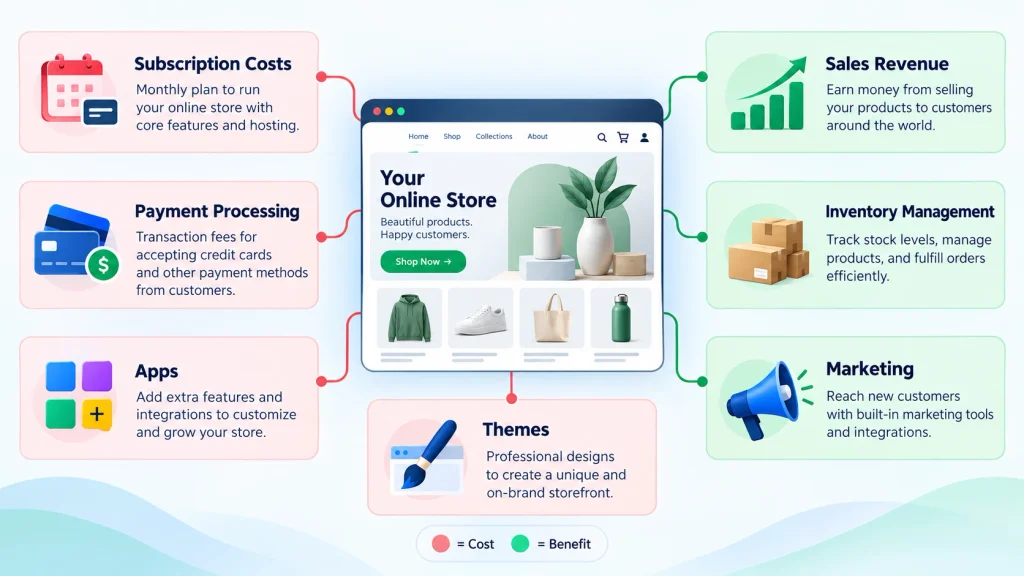
Payment Processing, Inventory, And Store Management
Shopify provides tools for processing transactions, tracking orders, and organizing product inventory. Store owners can configure payment options according to regional availability and business requirements. Shopify Payments offers integrated processing in supported countries, while third-party providers are available in other situations. Processing rates and additional transaction charges depend on the selected payment configuration. Therefore, businesses should calculate these expenses when comparing ecommerce platforms.
Inventory management is another useful feature. Merchants can update stock quantities, organize product variants, and monitor orders through the administration dashboard. Shopify also supports various shipping and fulfillment integrations. For businesses managing both physical and online sales, compatible point-of-sale tools can help coordinate inventory. These capabilities reduce repetitive administrative work and simplify daily operations. However, advanced inventory requirements may still need specialized applications or integrations.
Shopify Compared With Other Ecommerce Platforms
Shopify competes with ecommerce solutions such as WooCommerce, BigCommerce, and Wix. Each platform offers different advantages regarding hosting, customization, technical control, and operating costs. Shopify provides a managed environment with integrated selling tools. WooCommerce operates through WordPress and offers extensive customization, although store owners must manage hosting and additional maintenance responsibilities. Other hosted platforms also provide ecommerce features with different pricing structures and design options.
When considering is Shopify worth it compared with alternative platforms, examine your technical experience and long-term needs. Businesses wanting straightforward store management may prefer Shopify’s integrated tools. Those requiring extensive control over hosting or specialized development might choose another solution. No platform guarantees better sales simply because it offers more features. Product quality, marketing, customer experience, and store performance remain essential. Businesses requiring specialized ecommerce functionality can explore web development services to build custom integrations and applications.
Choosing Shopify Based On Business Size And Goals
Small businesses often benefit from Shopify because it simplifies product management and online selling. Entrepreneurs can launch stores without building custom checkout systems or maintaining independent hosting infrastructure. However, businesses with very limited budgets should consider subscription costs alongside expected revenue. Shopify becomes more practical when its convenience and management features justify the recurring expenses.
For growing businesses, scalability and integration options can provide additional value. Companies handling larger product catalogs, multiple sales channels, or specialized customer requirements should review available plans carefully. When evaluating is Shopify worth it for long-term operations, consider transaction fees, application costs, design flexibility, and maintenance requirements. Calculate the total cost rather than focusing only on the advertised subscription price. Choosing the right platform should support both current operations and future business growth.

Conclusion
So, is Shopify worth it for an online business? For businesses seeking convenient store management, integrated ecommerce tools, and reliable hosting, Shopify can be a practical investment. It provides features that simplify product organization, customer orders, and online payments.
However, recurring subscriptions, app expenses, and customization limitations should influence your decision. Compare these costs with your expected sales and technical requirements before committing. At Best Website Builder Group, businesses can access professional website development and ecommerce support solutions. These services help improve Shopify store functionality, performance, and long-term management.