
Understanding upper funnel vs lower funnel marketing is essential for businesses that want predictable growth rather than inconsistent spikes in traffic or sales. Marketing funnels exist to explain how people move from first exposure to final conversion, yet many businesses focus too heavily on one stage while ignoring the other. This imbalance often leads to wasted ad spend, weak conversion rates, or slow long term growth. Businesses that master the relationship between upper funnel vs lower funnel marketing create smoother customer journeys, stronger brand trust, and more consistent revenue over time.

How the marketing funnel reflects real customer behavior
The marketing funnel exists because customer behavior follows patterns, even in a digital environment filled with distractions. Most people do not discover a brand and make a purchase in the same moment. They first become aware of a problem or opportunity, then explore possible solutions, and finally decide which option feels right. Upper funnel vs lower funnel marketing reflects these stages by aligning messaging with customer intent rather than pushing for immediate conversion.
Google research on consumer decision making shows that buyers often move back and forth between research and evaluation before committing. This behavior explains why upper funnel vs lower funnel marketing must work together rather than compete for attention. Upper funnel content builds familiarity and credibility, while lower funnel content reinforces trust and removes hesitation. When businesses understand this relationship, they create marketing systems that support decision making instead of rushing it.
What defines upper funnel marketing in practice
Upper funnel marketing focuses on reaching people who may not yet know your brand or even realize they need your product or service. At this stage, the goal is visibility, education, and relevance. Businesses use upper funnel marketing to introduce ideas, answer broad questions, and establish authority within an industry. This stage often includes educational content, thought leadership, and brand driven messaging designed to spark interest rather than demand action.
In the context of upper funnel vs lower funnel marketing, upper funnel efforts set expectations and frame the conversation. Forbes frequently discusses how brands that invest in awareness build stronger long term equity, which you can explore further at Forbes. When businesses neglect this stage, they rely entirely on lower funnel tactics, which often leads to higher costs and lower trust.

What defines lower funnel marketing in practice
Lower funnel marketing targets people who already understand their problem and are actively considering solutions. At this stage, prospects compare options, evaluate credibility, and look for reassurance before making a decision. Lower funnel vs upper funnel marketing becomes especially important here because messaging must shift from education to persuasion without feeling aggressive or forced.
Lower funnel marketing often includes detailed service pages, case studies, testimonials, and conversion focused messaging. These assets answer practical questions and reduce perceived risk. Harvard Business Review emphasizes that trust and clarity play a critical role in purchase decisions, which you can explore further at Harvard Business Review. Without strong lower funnel support, upper funnel awareness fails to convert into measurable outcomes.
Why upper funnel vs lower funnel marketing must work together
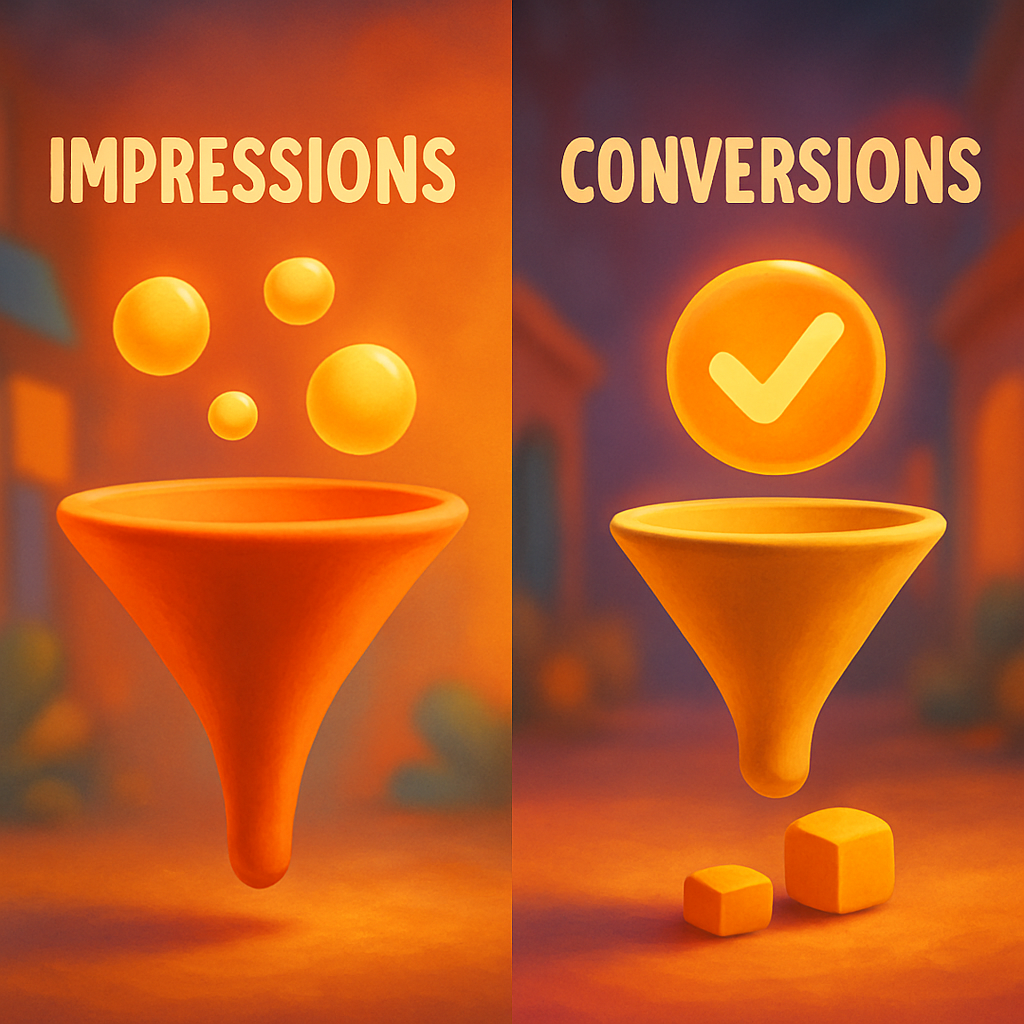
The biggest mistake businesses make is treating upper funnel vs lower funnel marketing as separate strategies rather than connected stages of one system. Upper funnel marketing warms the audience by building familiarity, while lower funnel marketing capitalizes on that familiarity by guiding prospects toward action. When one stage is weak, the entire funnel suffers.
Statista data on digital advertising shows that brands with full funnel strategies achieve stronger conversion efficiency over time, which you can review at Statista. Businesses that invest only in lower funnel marketing often see short term results but struggle to sustain growth. Those that focus only on upper funnel awareness may generate traffic but fail to convert interest into revenue.

The role of content in upper funnel vs lower funnel marketing
Content plays a central role in shaping upper funnel vs lower funnel marketing outcomes. Upper funnel content educates, informs, and positions the brand as a helpful authority. Lower funnel content provides specificity, proof, and reassurance. Both require different tones, structures, and success metrics.
Search engines reward content that matches intent. Educational content attracts early stage users, while transactional content serves users closer to conversion. This is why businesses often align content planning with SEO Services, ensuring each stage of the funnel receives targeted visibility. When content strategy ignores funnel stages, rankings and conversions both suffer.
How websites support funnel progression
A website serves as the bridge between upper funnel vs lower funnel marketing. Visitors often arrive through informational content and gradually move toward service pages as trust builds. Website structure, internal linking, and messaging consistency all influence how smoothly this progression occurs.
Poor website structure forces visitors to jump between unrelated pages, which increases drop off rates. Strong website architecture guides users naturally from educational content to conversion focused pages. This approach mirrors principles used in WordPress Website Design, where scalability and user flow receive priority over isolated page design.
Measurement differences between funnel stages
Upper funnel vs lower funnel marketing also differ in how success is measured. Upper funnel performance focuses on reach, engagement, and visibility. Lower funnel performance emphasizes conversion rates, lead quality, and revenue impact. Confusing these metrics often leads to flawed conclusions about marketing effectiveness.
Google Analytics documentation explains how different user actions represent different levels of intent, which reinforces the importance of separating awareness metrics from conversion metrics. When businesses evaluate funnel stages independently while tracking their interaction, they gain clearer insight into what drives growth and where improvements are needed.
Maintaining funnel performance over time
Marketing funnels require ongoing attention rather than one time setup. Customer behavior evolves, platforms change, and competition increases. This long term mindset aligns with the philosophy behind Website Maintenance, where consistent optimization prevents gradual performance decline. Businesses that revisit funnel performance regularly stay ahead of changes rather than reacting after results drop.
Conclusion
Understanding upper funnel vs lower funnel marketing allows businesses to build marketing systems that support the full customer journey rather than isolated moments. When awareness, education, and conversion work together, marketing becomes more efficient and predictable.
Businesses that align funnel strategy with broader digital efforts such as SEO Services often see stronger long term results. Best Website Builder Group approaches funnel strategy with this holistic perspective, helping businesses connect awareness, engagement, and conversion into a cohesive system designed for sustainable growth.
