
If you are searching how to plan website properly, you are already ahead of many business owners who rush into design without strategy. A website should not start with colors or templates. It should begin with clarity about goals, audience, structure, and long term growth. Planning determines whether your site becomes a lead generator or just an online placeholder. When done correctly, website planning aligns messaging, SEO, user experience, and technical performance from the beginning. This guide explains how to plan website step by step so your final build supports visibility, conversions, and scalability instead of requiring costly corrections later.
Define Clear Business Objectives Before Anything Else
The first step in how to plan website effectively is defining your primary goal. Are you generating local service leads, selling products online, building authority through content, or supporting existing customers? Every structural decision depends on that objective. Without clarity, your site becomes unfocused and difficult to optimize. Your objectives should connect directly to measurable outcomes. For example, a service business may focus on form submissions and calls. An ecommerce store may prioritize completed purchases. A content driven brand may measure newsletter signups. Clear objectives influence layout, navigation, and calls to action throughout the site.
Planning also helps you choose the right foundation. Businesses seeking flexibility and long term content growth often choose WordPress Website Design because it supports scalable publishing and customization. The key is selecting a platform that matches your goals instead of chasing trends.
Research Your Audience and Their Search Intent
Another essential part of how to plan website structure is understanding your target audience. You need to know what problems they are trying to solve, what questions they are asking, and how they search for solutions. Planning without audience research leads to generic messaging that fails to convert. Keyword research helps uncover search intent. Tools can show you whether users are looking for information, comparisons, or direct services. When planning content around real search behavior, you increase the chances of ranking and attracting qualified visitors.
Google provides guidance on understanding user intent and search behavior through its Search Central documentation. Reviewing official recommendations can help you align structure and content with how search engines evaluate pages. You can explore those guidelines here: Google SEO Starter Guide.

Create a Strategic Site Structure and Sitemap
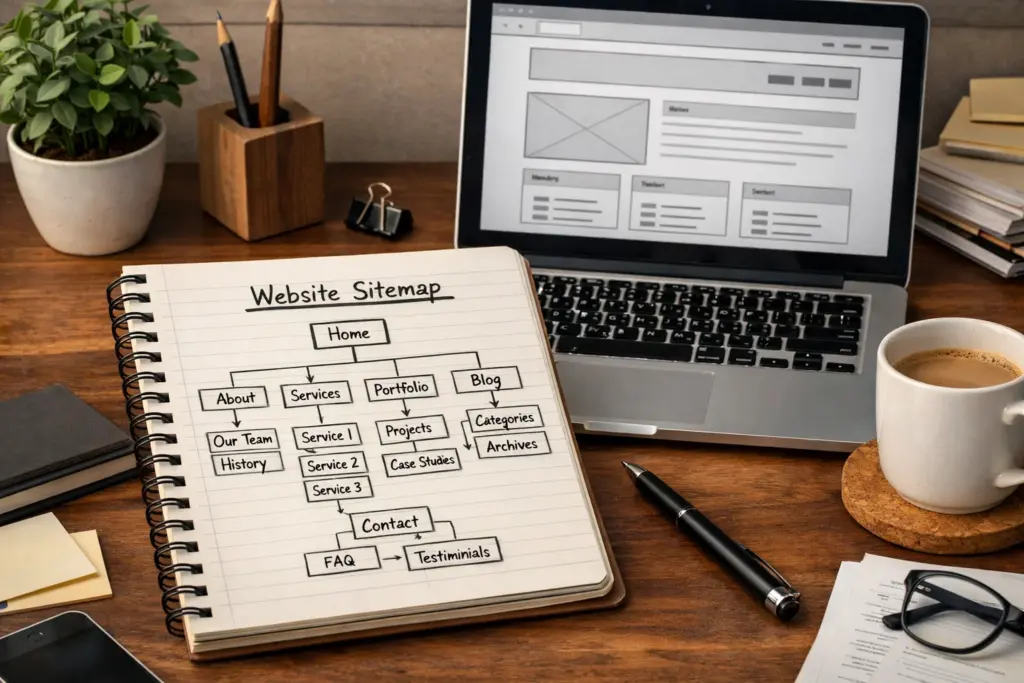
When learning how to plan website architecture, think about structure before design. A sitemap outlines all main pages and subpages in a logical hierarchy. This step ensures your site remains organized and easy to navigate. Clear structure also improves search engine crawlability. Your homepage should connect naturally to service pages, about pages, blog content, and contact information. Internal linking patterns should make sense to both users and search engines. A confusing structure often leads to high bounce rates and weak rankings.
If you are planning an online store, your structure must support categories, product pages, and checkout flow. Businesses building online shops frequently explore Ecommerce Website Design solutions to ensure product organization supports usability and search visibility.
Plan Content Before Designing Layout
A common mistake in how to plan website projects is designing first and writing later. This often creates empty sections or awkward messaging. Content should guide layout, not the other way around. Start by outlining key pages and the core message each page must communicate. Service pages should clearly explain problems, solutions, benefits, and next steps. About pages should build trust and authority. Blog sections should support SEO and answer common questions. Planning this content early prevents inconsistent messaging later.
Content planning also supports future growth. If you expect to add services or expand into new markets, your structure should allow new pages without disrupting existing navigation. Planning with expansion in mind reduces future redesign costs.

Choose the Right Platform and Technical Foundation
Understanding how to plan website infrastructure includes selecting the right technical platform. The best choice depends on business type, scalability needs, and management preferences. Some platforms prioritize flexibility, while others prioritize simplicity. For example, businesses focused heavily on content marketing and SEO often lean toward WordPress. Ecommerce brands that want built in commerce tools may consider platforms that specialize in online selling. Those using WooCommerce extensions rely on strong development oversight to prevent conflicts.
If your store will use WooCommerce, planning for performance and scalability is critical. Structured development within WooCommerce Website Design ensures payment systems, product management, and checkout processes remain stable as traffic increases.
Integrate SEO From the Beginning
Many businesses treat SEO as an afterthought. Effective planning requires integrating SEO before development begins. When asking how to plan website properly, include keyword mapping, metadata planning, internal linking strategy, and technical optimization in the initial phase. Keyword mapping assigns primary keywords to specific pages. This prevents duplication and strengthens topical relevance. Planning headings, URL structures, and meta descriptions early keeps the site organized for search engines.
Technical elements such as sitemap generation, schema markup, and performance optimization are easier to implement during development rather than after launch. Aligning planning with SEO Services ensures your website launches with a strong visibility foundation instead of requiring reactive fixes.

Prioritize User Experience and Conversion Flow
A strategic approach to how to plan website design includes mapping the user journey. Identify how visitors will arrive, what information they need first, and what action you want them to take. Each page should guide users naturally toward that next step. Conversion flow planning includes form placement, call to action clarity, mobile usability, and trust signals. Overcomplicated navigation or excessive content can distract visitors from completing desired actions. Performance also affects user experience. Slow pages frustrate users and weaken engagement. Ongoing oversight through Website Maintenance helps preserve speed, security, and consistent functionality as your business grows.
Plan for Analytics, Tracking, and Continuous Improvement
Learning how to plan website growth includes preparing for measurement. Without analytics, you cannot evaluate performance. Install tracking systems from the start so you can monitor traffic, conversions, and engagement patterns. Define what counts as a successful action. For service businesses, it may be form submissions or calls. For ecommerce, it may be completed purchases. Tracking these metrics allows you to refine messaging and improve user paths over time. Continuous improvement should be part of your mindset. A website is not a finished product. It is an evolving asset. Planning for testing, updates, and content expansion ensures your digital presence strengthens rather than stagnates.

Conclusion
Understanding how to plan website strategically can prevent wasted time, budget overruns, and weak performance. Start with clear objectives, research your audience, build a logical structure, and integrate SEO from the beginning. Choose a platform that aligns with growth goals and plan content before design decisions. Prioritize user experience, speed, and measurable outcomes. When planning is handled carefully, development becomes smoother and long term scalability becomes achievable. Businesses that treat website planning as a strategic investment rather than a design task tend to see stronger visibility and higher conversions. In this regard, Best Website Builder Group approaches website planning with performance and clarity in mind for companies seeking structured digital growth.
