
A website may look simple when you browse it, but many decisions shape the experience behind the screen. Colors, typography, page structure, images, menus, buttons, spacing, mobile layouts, and content placement all influence how visitors interact with a site. This is why beginners often ask what is web designing and what work actually goes into creating a professional website.
Web designing is the process of planning and creating the visual structure and user experience of a website. It focuses on how pages look, how information is organized, and how easily users can move through the site. Designers also think about responsiveness, accessibility, navigation, branding, and the actions a business wants visitors to take.
Best Website Builder Group approaches web design as a combination of appearance and usability. A website should represent the brand clearly, but it should also make information easy to understand. Whether someone is creating a business website, ecommerce store, portfolio, or landing page, strong web design helps turn content into a clear and usable digital experience.
What Is Web Designing?
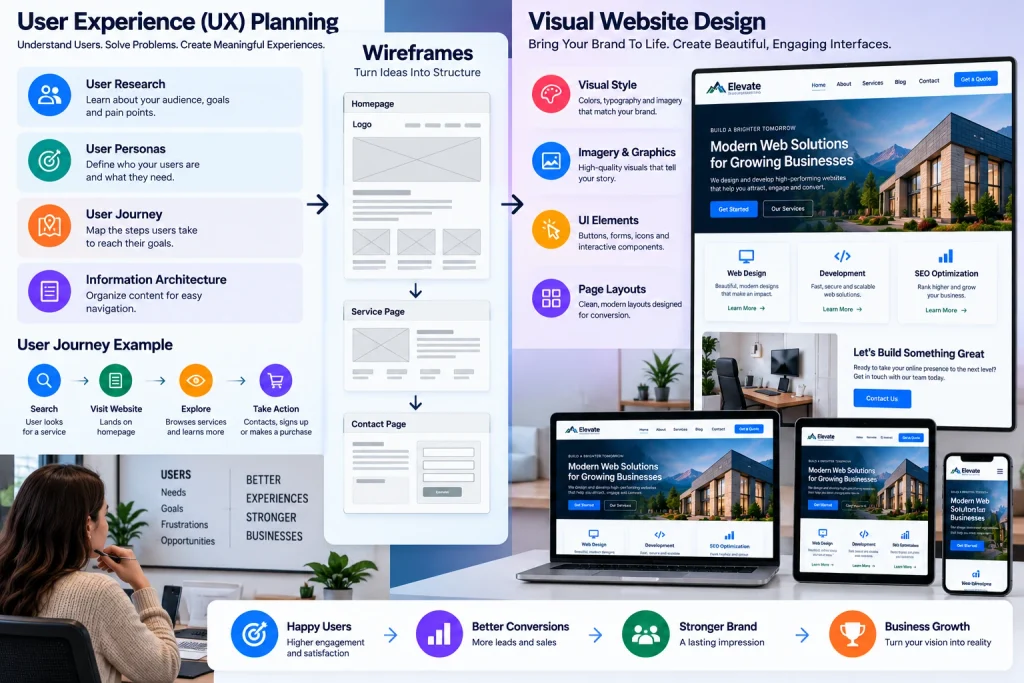
Web designing is the process of planning the appearance, structure, and user experience of a website. It includes visual choices such as colors, fonts, images, buttons, and spacing. It also involves practical decisions about navigation, page hierarchy, content placement, responsiveness, and interaction. The goal is to create pages that look professional while remaining easy for visitors to understand and use.
A web designer often works with wireframes, layouts, design systems, visual editors, or website-building platforms before the final pages go live. Some designers also understand HTML and CSS, while others work mainly with no-code tools. Coding knowledge can be useful, but it is not the only part of the job. Strong web design depends on understanding users, business goals, visual communication, and website structure. A beautiful page can still be poorly designed if visitors cannot find information or complete important actions.
The Main Elements Of Website Design
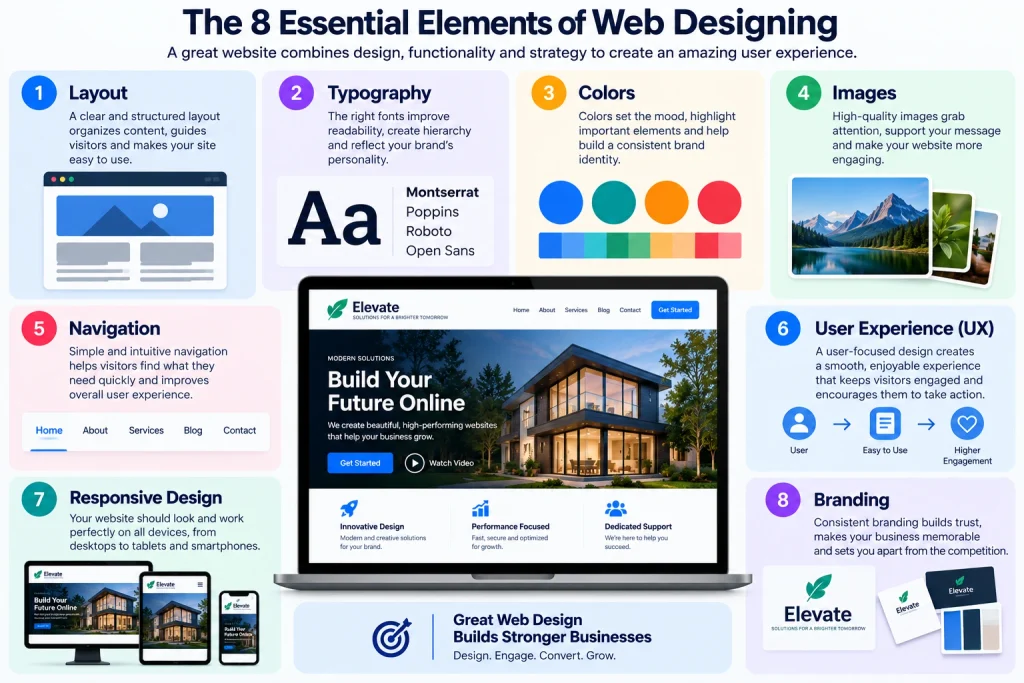
Several elements work together to create a complete website design. Layout controls where content appears and how sections relate to one another. Typography affects readability and visual personality. Color choices support branding and help important elements stand out. Images, icons, illustrations, and videos can explain ideas or create visual interest. Buttons and forms help visitors interact with the website.
Spacing and hierarchy are equally important. Designers use size, contrast, and position to show visitors what they should notice first. A large heading may introduce the main message, while smaller sections provide supporting information. Consistency also matters across the entire site. Buttons should behave similarly, headings should follow a clear system, and pages should feel connected. Businesses that need help developing this type of consistent visual structure can use professional web design services from Best Website Builder Group. Good design creates a system rather than treating every page as a separate visual experiment.
How User Experience Shapes Design
Web designing is closely connected with user experience, often called UX. User experience focuses on how easy and satisfying it is for people to complete tasks on a website. Visitors may want to read information, compare services, buy a product, fill out a form, or contact the business. Designers should make these tasks simple rather than forcing users to search through confusing menus or crowded pages.
A good user experience starts with understanding the audience. A website for a law firm will have different priorities from a fashion store or gaming platform. Designers consider what information visitors need, how quickly they need it, and what questions may prevent them from taking action. Clear navigation, readable content, logical page order, and visible calls to action all improve usability. Strong UX design does not remove creativity. It simply makes sure creative choices support the visitor instead of becoming obstacles. A professional website should feel intuitive even when the user has never visited it before.
Responsive Design For Different Devices
Modern websites need to work across desktops, laptops, tablets, and smartphones. Responsive design allows the same website to adapt to different screen sizes. A three-column desktop section may become one column on a phone. Navigation menus may collapse into smaller mobile controls. Images may resize, while typography and spacing change to remain readable.
Designers should test responsive layouts instead of assuming that software will handle everything automatically. A section that looks balanced on a large monitor can appear crowded on a smaller screen. Buttons may become too small, headings may wrap badly, and images may crop important details. Mobile visitors should be able to complete the same important tasks as desktop visitors. The World Wide Web Consortium provides extensive standards and guidance for building accessible and usable web experiences through W3C Web Standards. Following established web standards helps designers create websites that work more reliably across devices, browsers, and different user needs.
Branding And Visual Identity
A website often becomes one of the most visible parts of a company’s brand. Designers use color, typography, imagery, logos, and other visual elements to create a consistent identity. These elements should match the business rather than follow random design trends. A financial company may need a different visual tone from a children’s entertainment brand, even if both websites use similar page structures.
Consistency improves recognition. A visitor who sees the same colors, imagery, and style across the website, social media, and advertising can connect those experiences more easily. However, branding should never damage usability. Light gray text on a white background may match a minimalist brand but remain difficult to read. Decorative fonts can add personality but become frustrating when used for long paragraphs. Strong design balances brand personality with clarity. The goal is not simply to create something visually different. It is to create a recognizable website that represents the business while remaining easy for customers to use.
The Typical Web Design Process
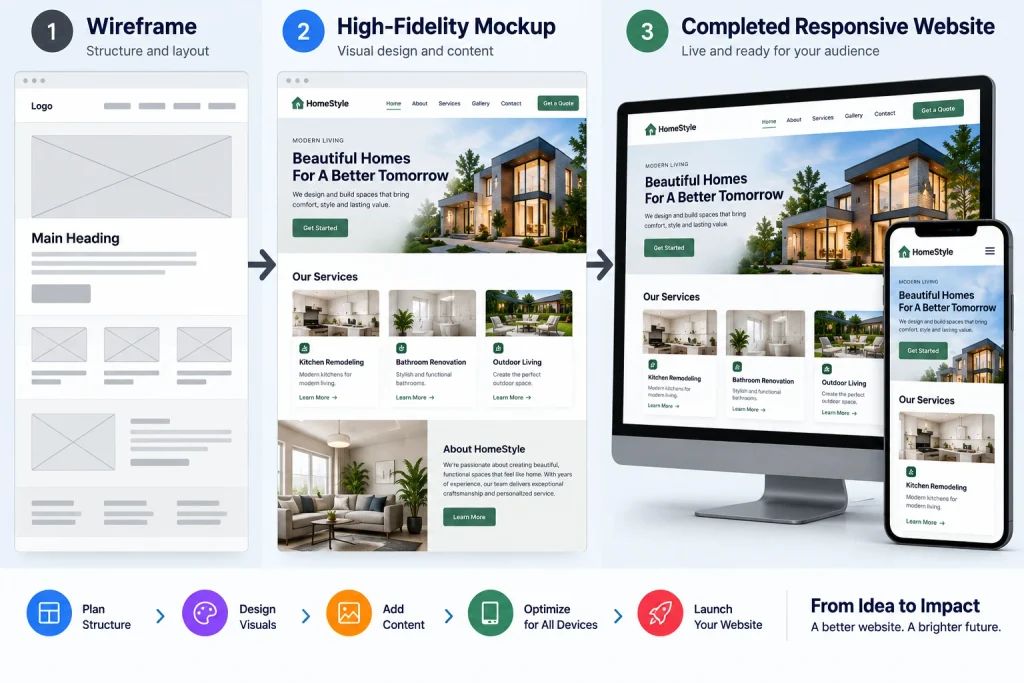
Most professional web design projects follow a series of stages. The process usually begins with research and planning. Designers identify the purpose of the website, target audience, required pages, content needs, and business goals. They may create a sitemap to organize the structure. Wireframes can then show where major sections, images, text, and calls to action will appear before detailed visual styling begins.
After the structure is approved, designers develop the visual direction. They select colors, fonts, imagery, spacing, and interface elements. Pages are then built in the chosen platform or passed to developers for implementation. Testing follows before launch. The team checks responsiveness, navigation, forms, links, images, content, and other important functions. Changes may continue after launch as the business receives new data and feedback. A structured process reduces unnecessary revisions because major decisions are made in the right order instead of designing pages randomly and trying to organize them later.
Tools And Skills Used By Web Designers
Web designers use different tools depending on their workflow. Design applications can help create wireframes, mockups, graphics, and prototypes before a website is built. Content management systems and visual page builders allow designers to create actual pages without writing every line of code manually. Image editing tools may also be used to prepare photographs, banners, icons, and other graphics.
The most important skills go beyond learning individual programs. Designers need a strong understanding of layout, typography, color, spacing, hierarchy, responsive design, and user experience. Communication is also important because designers work with business owners, marketers, developers, writers, and other team members. Basic knowledge of HTML and CSS can help designers understand how websites work, although many modern projects can be completed with visual tools. Good designers continue learning because devices, browsers, accessibility expectations, design practices, and website platforms change over time. The tool may change, but the underlying principles of clear communication and usability remain important.
Why Professional Web Designing Matters
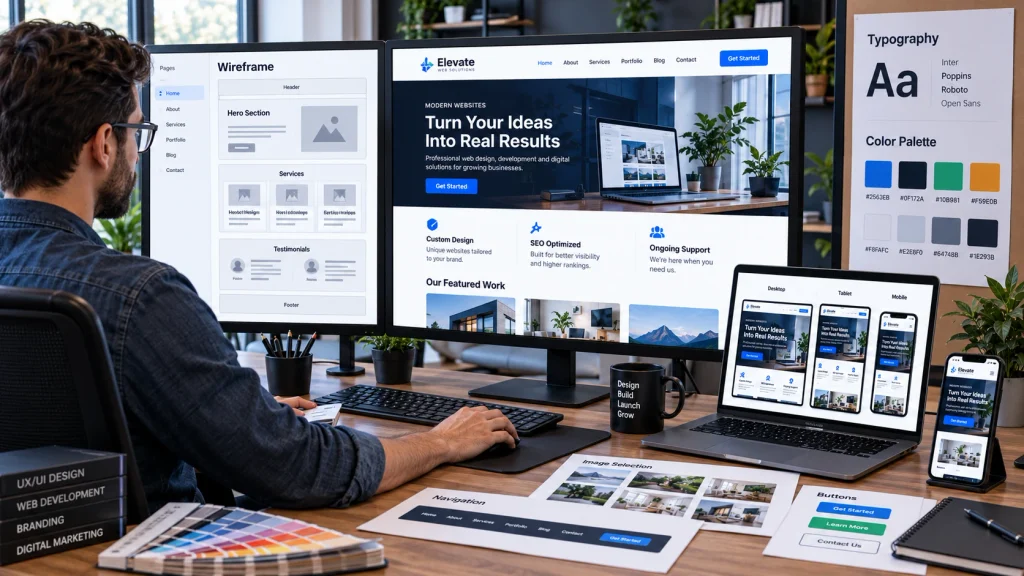
Professional web designing affects how visitors experience a business from the moment they enter the website. A clear layout can help people understand services quickly, while good navigation makes important pages easier to reach. Responsive pages improve the experience on mobile devices, and consistent branding helps the company appear more organized. Good design can also support marketing by giving campaigns and search traffic a strong destination after users click.
A professional website should continue supporting the business after launch. New pages, services, products, and campaigns can be added more easily when the original design follows a clear system. Businesses should also review the site regularly and improve areas that no longer perform well. Best Website Builder Group helps businesses create and improve websites with attention to layout, responsiveness, branding, usability, and business goals. Understanding web designing makes one point clear: successful websites are not created by decoration alone. They come from thoughtful decisions about how information looks, how it works, and how visitors move from one part of the website to another.
