
Competitor research can reveal how other businesses communicate with customers, promote products, and structure their offers. This is why marketers often want to know how to check competitors email marketing campaigns without relying on guesswork. You cannot see another company’s private open rates, conversion data, or subscriber lists. However, you can study many parts of its email strategy using information that the company sends publicly to subscribers.
The simplest approach is to join competitor mailing lists and observe what arrives in your inbox. You can also use public email archives, monitor promotions, study automated sequences, and compare the landing pages connected to each message. Over time, these observations reveal useful patterns in subject lines, offers, design, timing, and campaign frequency.
The goal should not be to copy another company’s emails. Competitive research works best when it helps you understand market expectations and identify opportunities for your own brand. Best Website Builder Group recommends studying several competitors together so one company’s strategy does not become the blueprint for your entire marketing program.
How To Check Competitors Email Marketing Campaigns
Start with the most direct method: subscribe to the competitor’s public email list. Visit its website and look for newsletter forms, discount popups, account registration options, or other subscription opportunities. Use an email address created specifically for competitive research so these messages remain separate from your normal inbox. After subscribing, record when you joined and what action triggered the signup. This makes it easier to understand whether later messages belong to a welcome sequence, promotional campaign, or regular newsletter.
Do not stop after receiving the first email. Monitor the account for several weeks because email strategy becomes clearer over time. Note the sender name, subject line, preheader, arrival date, offer, call to action, and destination page. You may discover that a competitor sends promotional messages every weekend, introduces discounts near the end of each month, or uses educational content between sales campaigns. A single email shows a tactic. A collection of messages begins to show the strategy behind it.
Create A Dedicated Competitor Research Inbox
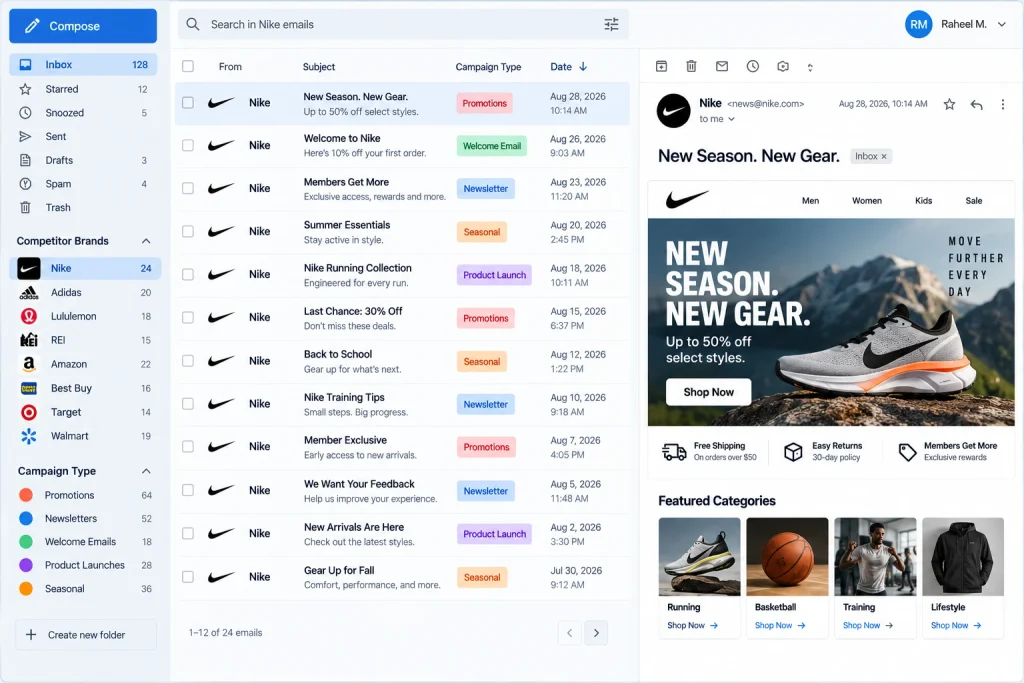
A separate research inbox makes competitor monitoring much easier. Instead of allowing dozens of promotional emails to mix with business correspondence, create one account that is used only for legitimate public subscriptions. You can then create folders or labels for individual companies. Another option is to organize competitors by category, such as direct competitors, larger industry brands, local businesses, and companies whose email design you want to study. Consistent organization becomes especially important after several months of collecting messages.
Keep the research process realistic. If a company offers different mailing lists for customers, prospects, or specific product categories, join only the public lists that are relevant to your analysis. Avoid attempting to access private systems, customer accounts that do not belong to you, or information that the company has not intentionally made public. The goal is competitive intelligence based on normal customer experiences. A dedicated inbox gives you enough material to examine frequency, seasonal changes, recurring promotions, welcome emails, and campaign patterns without crossing ethical boundaries.
Use Public Email Archives For Historical Research
Subscribing to newsletters helps you monitor future campaigns, but it does not show what a competitor sent before you joined. Public email archives can help fill that gap. Milled, for example, maintains a searchable database of marketing emails from many brands. Its current free plan includes access to recent email data, while paid plans provide deeper historical access and organization features. You can search the official Milled email database to see whether brands relevant to your industry are included.
Email archives are especially useful when studying seasonal campaigns. You can look at how brands approached Black Friday, holiday promotions, product launches, summer sales, or other recurring events. Historical research also makes it easier to identify changes in messaging. A company may have shifted from constant discounts toward bundles, loyalty offers, or educational content. Remember that archive coverage varies by brand, so missing emails do not necessarily mean a company stopped sending campaigns. Treat public databases as an additional research source rather than a complete record of everything a competitor has sent.
Analyze Subject Lines And Email Content
Subject lines deserve careful attention because they reveal how competitors try to earn attention in crowded inboxes. Record whether a company commonly uses discounts, curiosity, urgency, questions, personalization, product names, or straightforward announcements. Also examine the preheader because it often extends the subject line and provides another reason to open the message. Looking at several months of campaigns can reveal whether a competitor relies heavily on one approach or regularly changes its style.
Inside each message, study the content hierarchy. Note what appears first, how much copy the company uses, where products appear, and how frequently calls to action are repeated. Examine whether the email relies on photographs, illustrations, customer reviews, educational information, or promotional banners. Also identify the primary goal. Some campaigns encourage immediate purchases, while others introduce products, promote content, or reactivate existing customers. Do not copy wording, layouts, or creative assets. Instead, identify patterns and ask why the structure may fit that particular audience. The useful insight is the reasoning behind a campaign, not the exact execution.
Monitor Send Frequency And Promotional Patterns
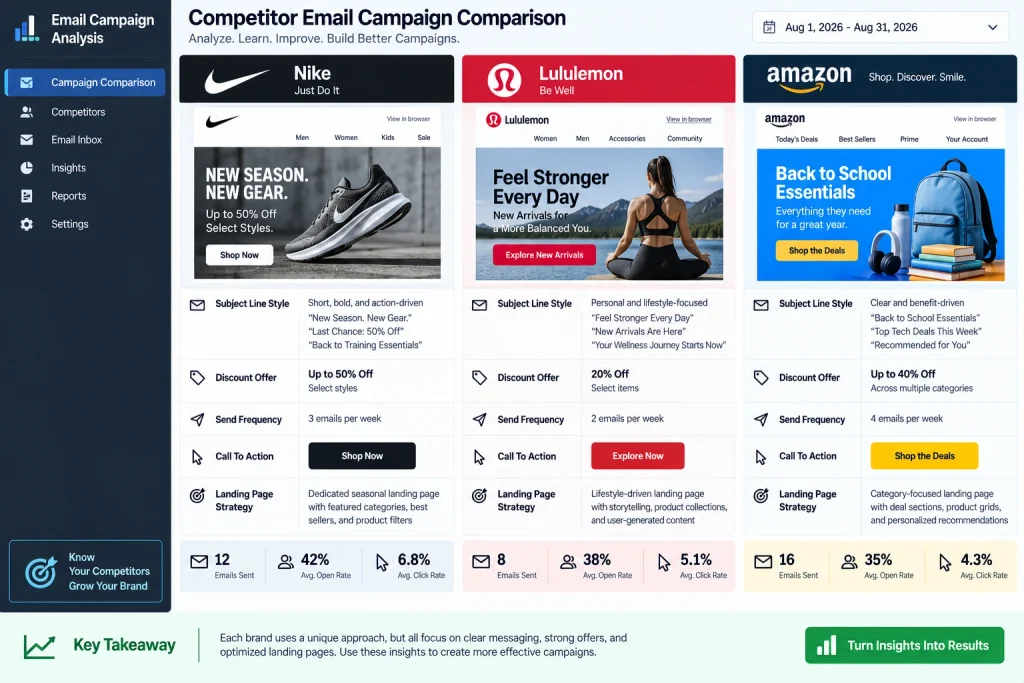
Campaign frequency can tell you a great deal about a competitor’s marketing strategy. Record each message in a spreadsheet with the date, approximate time, campaign type, and main offer. After several weeks, patterns should begin to appear. One company may send twice per week, while another communicates almost daily. You may also notice increased frequency before holidays or important sales periods. These observations can help you understand how aggressively businesses in your market communicate with subscribers.
Pay close attention to promotions as well. Track percentage discounts, fixed-price offers, free shipping, bundles, loyalty rewards, limited-time deals, and other incentives. Record how long promotions remain active and how many reminder emails accompany them. Some businesses introduce an offer once, while others send an announcement, reminder, final-day message, and last-chance email. This information can reveal how competitors structure promotional cycles. However, their frequency should not automatically become yours. Your audience may have different expectations. Use competitor activity as context, then test your own cadence according to engagement, unsubscribe behavior, conversions, and customer feedback.
Study Welcome Emails And Automated Sequences
Automated emails can reveal more about a company’s customer journey than regular newsletters. Begin by subscribing as a new visitor and documenting what happens next. You may receive an immediate welcome email, followed by educational content, product recommendations, testimonials, or a discount reminder. Record the delay between messages and how the sequence progresses. This helps you understand how the competitor moves a new subscriber from initial interest toward a purchase or another action.
You can also observe other public customer journeys when you genuinely interact with the business. For example, adding a product to a cart may lead to an abandoned-cart sequence if you have voluntarily provided your email address. Purchasing from a competitor as a real customer can reveal legitimate post-purchase communication, such as confirmations, product education, review requests, and repeat-purchase offers. Do not create fake transactions or misuse forms solely to trigger systems. Focus on normal customer actions. Automated sequences often show how a company approaches retention and conversion beyond the promotional emails that every subscriber receives.
Follow Emails Through To Their Landing Pages
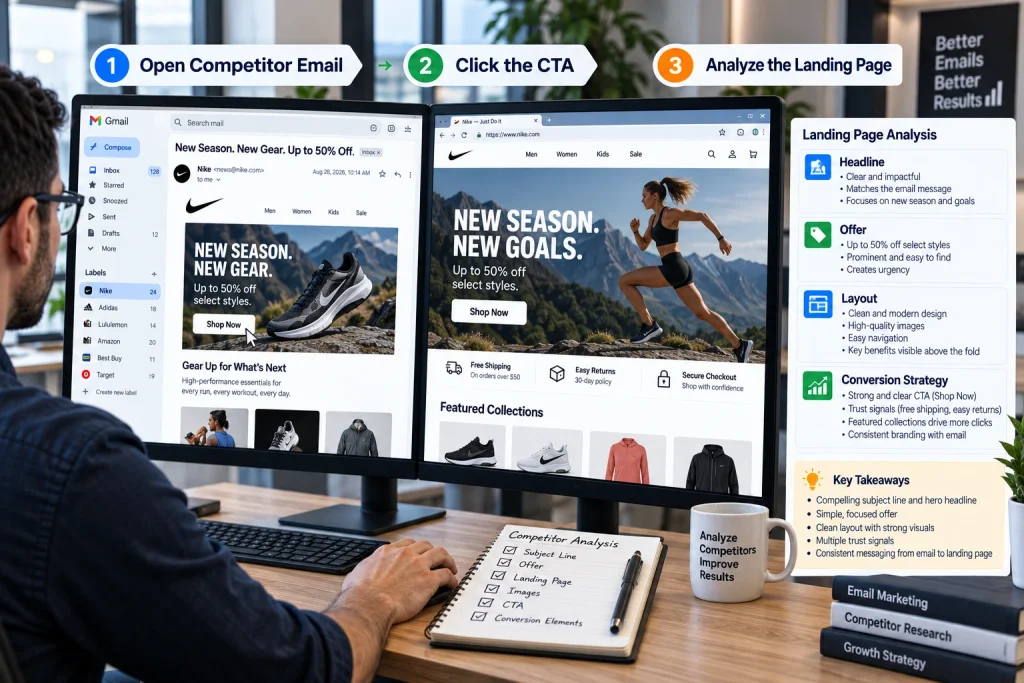
An email campaign does not end when someone clicks a button. Open the public links inside competitor emails and examine where they lead. Some campaigns direct visitors to product pages, while others use dedicated landing pages, collection pages, service pages, or educational content. Compare the message in the email with the destination page. Strong campaigns usually maintain consistency between the promise that earned the click and the information visitors receive afterward.
Look at page structure, headline wording, product presentation, calls to action, forms, mobile usability, and supporting information. Also note whether the promotion shown in the email remains clearly visible after the click. This part of competitive analysis can expose weaknesses as well as strengths. A competitor may have excellent email creative but send traffic to a confusing page. Another may use simple emails because its landing pages do most of the selling. These observations help you think about the complete customer journey. Your own campaign should connect email content with a relevant, easy-to-use destination rather than treating the message and website as separate marketing activities.
Turn Competitor Research Into A Better Strategy
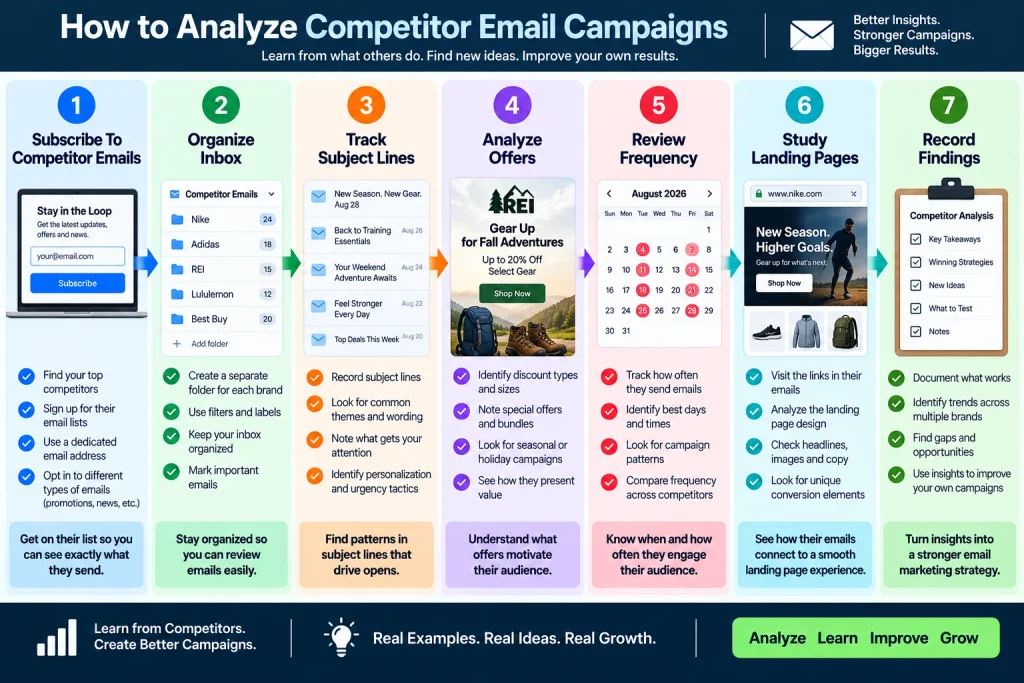
Competitive email research becomes useful only when you turn observations into decisions. Create a simple comparison sheet that records each competitor’s frequency, common campaign types, subject-line approaches, promotions, design patterns, calls to action, and landing-page strategies. After collecting enough information, look for repeated patterns across the market. These patterns can reveal what customers probably expect. More importantly, look for gaps. If every competitor relies on discounts, your business might differentiate itself through education, stronger product benefits, better customer stories, or another approach that fits your audience.
Avoid treating competitor emails as templates to reproduce. Their strategy reflects their products, margins, customer database, brand position, and marketing goals. You do not have access to the private performance data required to know whether every campaign actually works. Use competitive research to generate hypotheses, then test those ideas with your own subscribers. Track clicks, conversions, revenue, unsubscribes, and other meaningful results. Best Website Builder Group helps businesses strengthen their broader digital presence so marketing campaigns connect with a professional website and clear customer journey. The best competitor research should inspire better decisions, not imitation.
