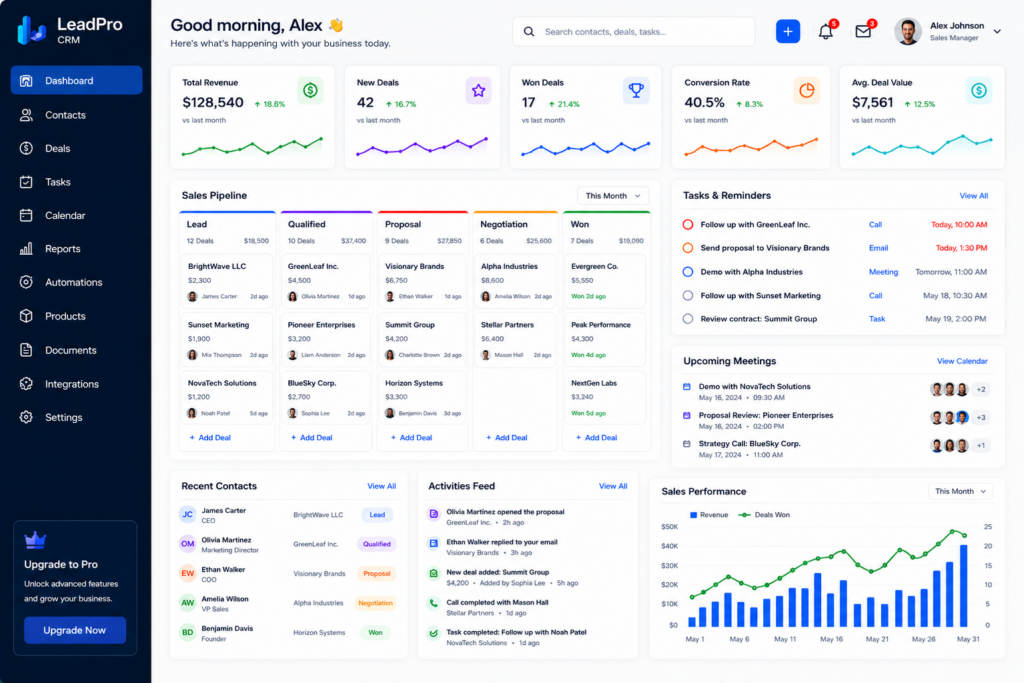
Sales teams often lose opportunities because customer information becomes scattered across emails, spreadsheets, notebooks, and messaging apps. Important follow-ups get delayed, conversations are forgotten, and potential buyers choose competitors who respond faster. How does CRM help sales? A customer relationship management system brings every lead, conversation, task, and customer record into one organized platform. Instead of searching through different tools, sales representatives can view the complete history of every prospect in one place. They know when a customer first contacted the business, which products generated interest, what conversations have already taken place, and which actions should happen next. This visibility helps sales teams respond more quickly, build stronger relationships, and close more deals.
A CRM also reduces manual work by automating repetitive tasks, allowing sales professionals to spend more time selling and less time managing administrative activities. As businesses grow, a well-managed CRM becomes one of the most valuable tools for improving sales performance and customer satisfaction.
Why Sales Teams Lose Leads Without A CRM
Many small businesses begin by managing leads manually. They collect inquiries through contact forms, emails, phone calls, and social media messages. At first, this process seems manageable because the number of inquiries remains relatively small. As the business expands, however, keeping track of every conversation becomes increasingly difficult. Different employees may communicate with the same customer without knowing what previous discussions occurred. Follow-up reminders become inconsistent, and valuable opportunities disappear simply because nobody contacted the prospect at the right time.
A CRM solves these challenges by creating one centralized location for customer information. Every interaction is recorded automatically, making it easy for anyone on the sales team to understand the customer’s history. Instead of relying on memory or handwritten notes, representatives can immediately see previous conversations, scheduled meetings, proposals, and pending follow-up tasks. This organized approach reduces confusion while helping businesses respond faster and more consistently. Companies that improve lead management often discover that better organization alone increases conversions without generating additional leads.
Centralized Customer Information Improves Sales Conversations
One of the biggest advantages of a CRM is that it gives sales representatives complete visibility into every customer relationship. Before making a phone call or responding to an email, the representative can review previous conversations, purchase history, service requests, documents, notes, and communication preferences. This preparation creates more meaningful conversations because the customer does not need to repeat information that the business already knows.
Personalized communication also builds trust. Customers appreciate speaking with representatives who understand their previous interactions and current needs. Instead of asking the same introductory questions repeatedly, sales professionals can focus on solving problems and moving the conversation toward a decision. Better preparation often shortens the sales cycle because representatives spend less time gathering information and more time addressing customer concerns. Businesses that combine organized customer data with a professional digital presence often strengthen lead generation through solutions such as WordPress Website Design, allowing CRM systems to capture and manage incoming opportunities more efficiently.
CRM Automation Keeps Follow-Up Consistent
Many sales opportunities disappear because businesses fail to follow up consistently. Representatives become busy with meetings, new inquiries, and administrative work, causing older prospects to receive less attention. A CRM reduces this problem through automation. Instead of relying entirely on memory, the system creates reminders, schedules follow-up activities, assigns tasks, and tracks every stage of the customer journey.
Automation also improves consistency across the entire sales team. New inquiries can automatically enter the sales pipeline, receive initial responses, and move through predefined stages based on customer activity. Managers gain visibility into outstanding tasks and can quickly identify opportunities that require immediate attention. Sales representatives no longer need to manually organize every reminder because the CRM continuously supports daily workflow. This allows the team to focus more attention on building relationships and closing deals instead of managing repetitive administrative work.
Sales Pipelines Give Teams Clear Visibility
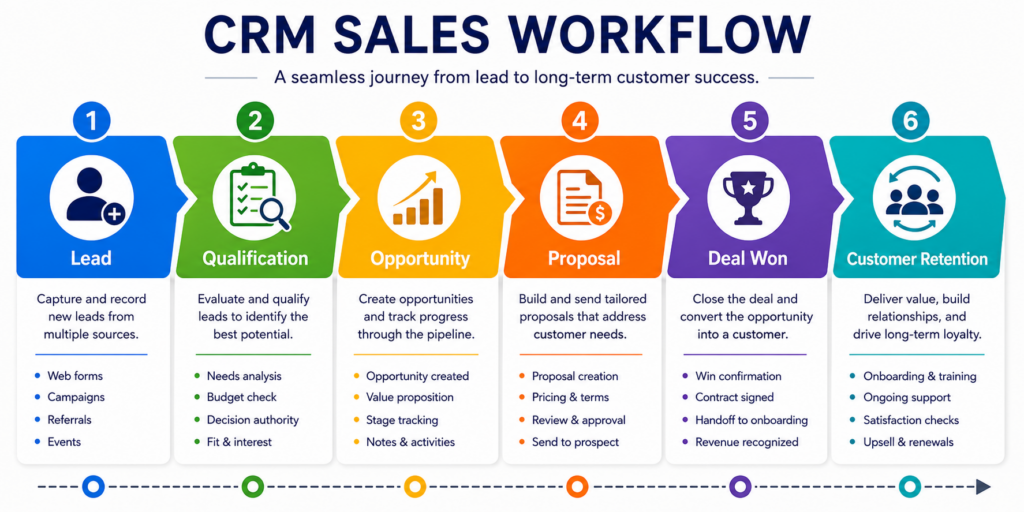
A well-designed sales pipeline helps businesses understand exactly where every opportunity stands. Instead of viewing leads as a simple contact list, the CRM organizes prospects into stages such as new inquiry, qualified lead, proposal sent, negotiation, and closed sale. This structure allows sales representatives to prioritize their work while giving managers a clear overview of business performance. Opportunities that remain inactive for too long become easy to identify, allowing the team to take action before valuable prospects lose interest.
Pipeline visibility also improves forecasting. Managers can estimate future revenue by reviewing opportunities at different stages and identifying patterns in conversion rates. This information supports better staffing decisions, marketing investments, and business planning. Learning how does CRM help sales often begins with recognizing that organized pipelines create structure, accountability, and greater confidence throughout the entire sales process.
CRM Reports Help Businesses Make Better Decisions
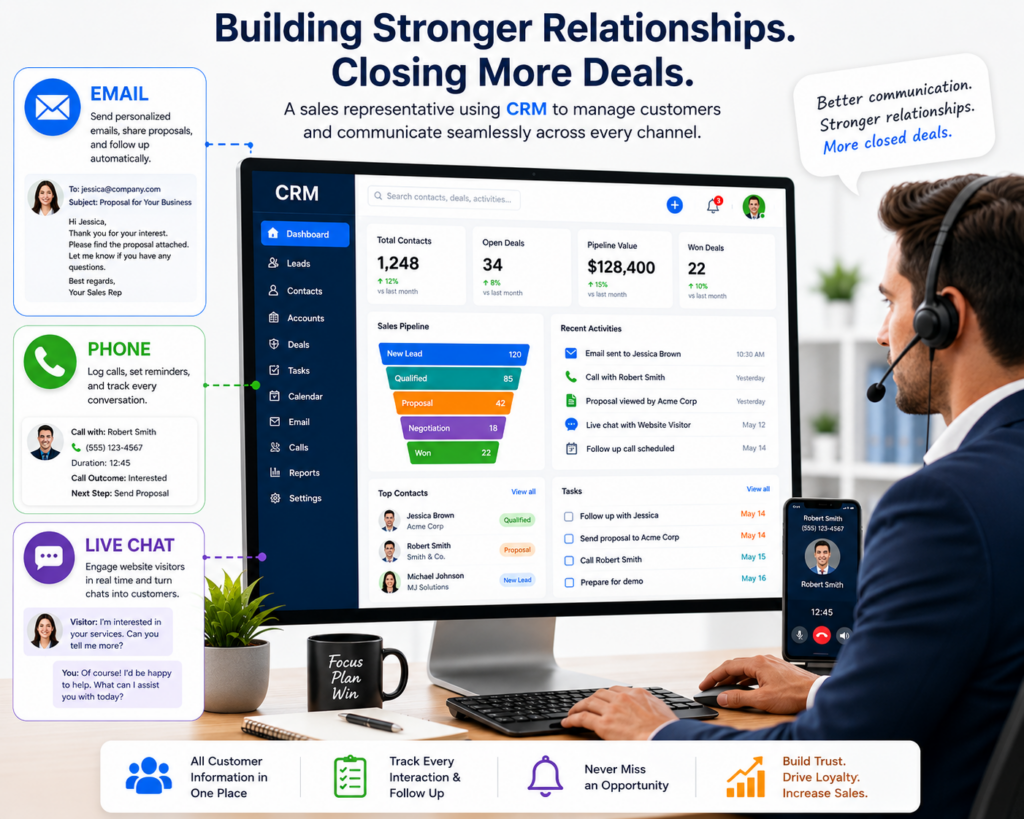
Successful sales teams rely on accurate information rather than assumptions. A CRM records every customer interaction, giving managers access to reports that show how the sales process is performing. Instead of guessing why revenue has increased or declined, decision-makers can review data on lead sources, conversion rates, sales cycle length, follow-up activity, and representative performance. These insights help businesses identify strengths as well as areas that need improvement. If one lead source consistently produces higher-quality prospects, marketing efforts can shift toward that channel. If opportunities frequently stall at a specific pipeline stage, managers can investigate the cause and improve the sales process.
Reporting also improves accountability because every activity is visible. Managers can see whether follow-up tasks are completed on time and whether opportunities continue moving through the pipeline. Sales representatives benefit as well because they gain clear visibility into their own performance and priorities. Reliable reporting allows businesses to make informed decisions that support steady growth instead of reacting to problems after revenue has already been affected.
Better Team Collaboration Leads To Higher Sales
Sales rarely happens through the efforts of one person alone. Marketing teams generate leads, customer service representatives answer questions, managers approve proposals, and technical specialists may provide product expertise during complex discussions. Without a centralized system, communication between departments often becomes fragmented. Important information may remain trapped inside email inboxes or individual spreadsheets, making collaboration difficult.
A CRM improves teamwork by giving every authorized employee access to the same customer information. Team members can review notes, track conversations, upload documents, and monitor progress without requesting updates from colleagues. This shared visibility reduces duplicate work while ensuring customers receive consistent communication regardless of who responds. Better collaboration also creates smoother customer experiences because every department works from the same information instead of relying on separate records or personal memory.
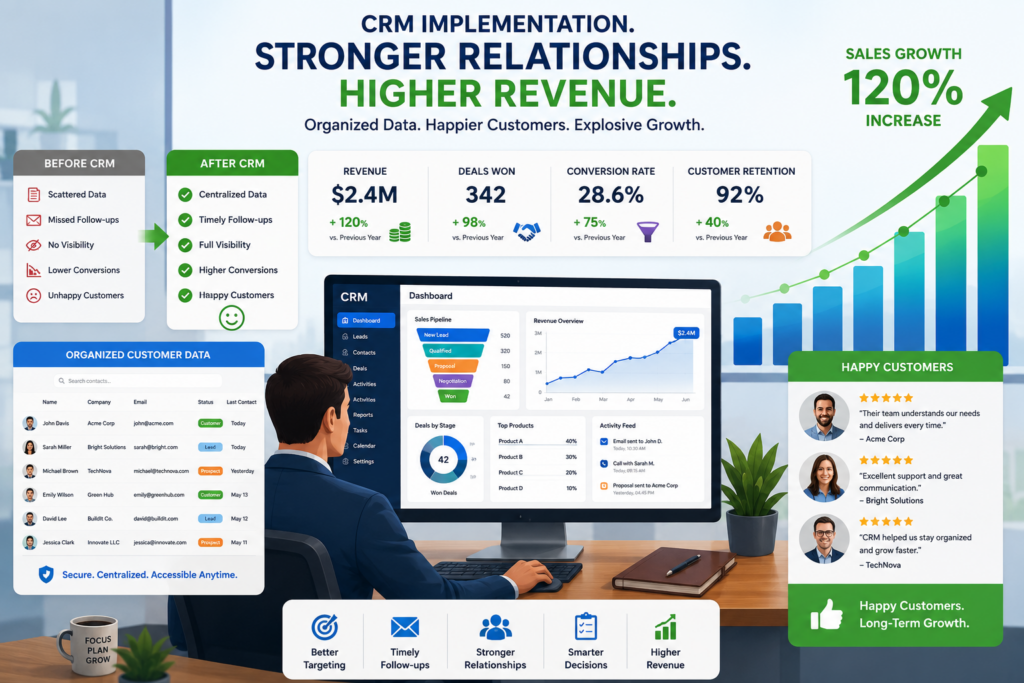
CRM Helps Businesses Build Stronger Customer Relationships
Closing a sale is important, but maintaining long-term customer relationships often generates even greater value. Existing customers frequently purchase additional products, renew services, and recommend businesses to others. A CRM helps companies continue nurturing these relationships by storing purchase history, communication records, service requests, and customer preferences in one place. Sales representatives can reach out with relevant recommendations instead of sending generic messages that fail to address individual needs.
Regular follow-up also becomes much easier because the system reminds employees about scheduled calls, contract renewals, or customer check-ins. These timely interactions demonstrate that the business values the relationship beyond the initial sale. Organizations that combine strong relationship management with effective digital marketing often improve long-term customer retention while creating more opportunities for referrals and repeat business.
Choosing The Right CRM For Your Business
Not every CRM offers the same capabilities, so businesses should evaluate their needs carefully before making a decision. Some organizations need basic contact management, while others require advanced automation, marketing integration, reporting, appointment scheduling, and customer communication tools. The ideal solution should support current operations while remaining flexible enough to grow with the business. Ease of use also matters because a complicated system may discourage employees from using it consistently.
Businesses should also consider how the CRM connects with their existing website, email platform, and other software. Strong integration reduces duplicate data entry and creates a smoother workflow across the organization. Companies planning long-term digital growth often combine CRM implementation with professional SEO Services to generate more qualified leads while ensuring every opportunity enters an organized sales process.
The Future Of Sales Is Built Around CRM Technology
Customer expectations continue rising as businesses adopt more advanced digital tools. Buyers expect faster responses, personalized communication, and seamless experiences across multiple channels. CRM platforms continue evolving by adding automation, artificial intelligence, predictive analytics, and deeper integrations that help businesses meet these expectations. According to the National Institute of Standards and Technology (NIST), artificial intelligence continues improving how organizations analyze information and support decision-making across many industries. These advancements are helping CRM platforms become more intelligent while reducing manual work for sales teams.
Companies that invest in modern customer relationship management systems position themselves to respond more quickly, serve customers more effectively, and make smarter business decisions. Rather than replacing sales professionals, technology supports them by providing better information, stronger organization, and more efficient workflows.

Conclusion
How does CRM help sales? It helps businesses organize customer information, automate follow-up, improve collaboration, strengthen relationships, and provide clear visibility into every stage of the sales process. Instead of relying on disconnected spreadsheets or memory, sales teams work from one centralized platform that supports faster responses and better decision-making. This organized approach reduces missed opportunities while helping representatives focus on building meaningful customer relationships.
The greatest value of a CRM extends beyond closing individual deals. It creates repeatable processes that support long-term growth, improve customer retention, and give managers the information they need to guide future strategy. Businesses looking to modernize their sales process and create stronger digital customer experiences often partner with Best Website Builder Group to implement solutions that combine websites, CRM systems, automation, and AI into one connected growth strategy.
